Sunflower Seeds: Benefits & Dosha Effects
Sanskrit: Suryamukhi Bija (सूर्यमुखी बीज)
Sunflower Seeds is especially balancing for Vata and Pitta. With sweet rasa (taste), cold virya (potency) and sweet vipaka, it is light and oily in quality and a source of vitamin e.

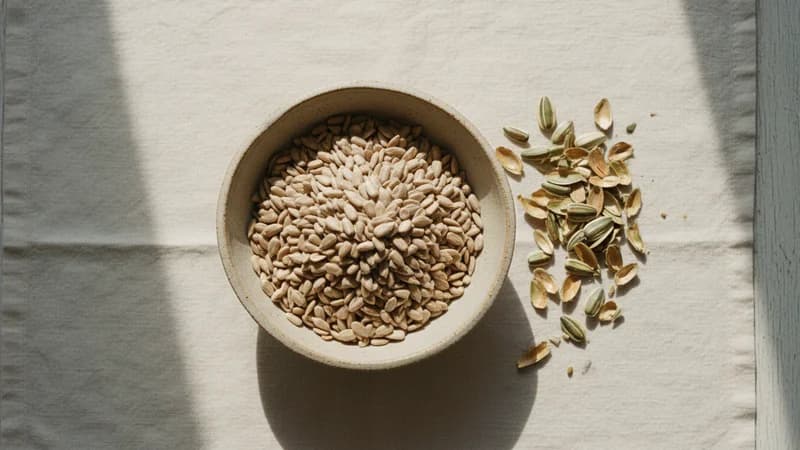
Sunflower Seeds is best suited to Vata and Pitta, which it helps pacify. The plump, teardrop kernel is one of the richest whole-food sources of Vitamin E, an antioxidant traditionally valued for nourishing Rasa dhatu and lending skin its lustre from within.. Suitable year-round.
Ayurvedic Profile
Sunflower Seeds (Suryamukhi Bija (सूर्यमुखी बीज)) is a strengthening nuts seeds treasured in Ayurvedic nutrition. Referenced in Bhavaprakasha Nighantu, it is characterised by sweet rasa (taste), cooling virya (potency), and sweet vipaka (post-digestive effect). Sunflower seeds are one of the richest plant sources of Vitamin E, making them excellent for Bhrajaka Pitta (skin health) and antioxidant protection; their Sheeta virya and Laghu guna make them well-tolerated by most constitutions. Its light and oily gunas make it particularly suited for specific constitutional types. It pacifies Vata, pacifies Pitta, and has a neutral effect on Kapha. From a nutritional standpoint, sunflower seeds provides approximately 584 calories per 100g, with 20.8g protein, 20.0g carbohydrates, and is a valuable source of Vitamin E, Selenium, Copper. Best enjoyed during all-seasons, sunflower seeds supports healthy Agni (digestive fire) when prepared according to Ayurvedic principles, helping prevent Ama (toxin) accumulation and nourish the dhatus (body tissues).
Ayurvedic Properties
Rasa (Taste)
sweet
Virya (Potency)
cold
Vipaka (Post-digestive)
sweet
Guna (Qualities)
light, oily
How Sunflower Seeds Affects Vata, Pitta & Kapha
Ayurveda reads every food through the three doshas. Here is how sunflower seeds’s qualities interact with each: Not sure which is yours? Take the free dosha quiz — about 4 minutes.
Sunflower Seeds helps pacify Vata. Its cold virya (potency) and light and oily qualities, with its sweet rasa (taste), counterbalance Vata's tendencies — which is why it traditionally suits Vata dosha in regular use. Vata meal plan
Sunflower Seeds helps pacify Pitta. Its cold virya (potency) and light and oily qualities, with its sweet rasa (taste), counterbalance Pitta's tendencies — which is why it traditionally suits Pitta dosha in regular use. Pitta meal plan
Sunflower Seeds has a broadly neutral effect on Kapha. Its sweet rasa and light and oily qualities neither strongly aggravate nor pacify Kapha, so those with Kapha dosha can enjoy it in moderation within a varied diet. Kapha meal plan
Nutrition Facts (per 100g)
584kcal
Calories
20.8g
Protein
20g
Carbs
51.5g
Fat
8.6g
Fibre
Ayurvedic Benefits
- The plump, teardrop kernel is one of the richest whole-food sources of Vitamin E, an antioxidant traditionally valued for nourishing Rasa dhatu and lending skin its lustre from within.
- Its sweet rasa and cooling virya settle an aggravated Vata, so a soaked handful may help steady a restless, wind-driven mind without heating the body.
- Because the seed cools rather than kindles, it suits a heated Pitta constitution and may help soothe the burning, sharp qualities that flare in summer and midlife.
- Selenium and copper in the kernel support the body's own antioxidant defences, complementing the Ojas-building tendency of its sweet, unctuous nature.
- The light-yet-oily guna lubricates dry tissues and joints while staying easy on Agni, making it a gentle, non-heavy way to add good fats to a plant-based day.
How to Use
- As sunflower seeds is cooling (shita virya), favour it in warmer weather and pair it with warming spices like ginger or black pepper when the seasons turn cold.
- Soak a small handful of raw kernels for 4 to 6 hours, then rinse; this softens their oily quality and makes them kinder to a delicate digestion.
- Stir sunflower seed butter (a naturally nut-free 'sunbutter') into warm porridge or spread it on toast as a school-safe alternative to almond or peanut butter.
- Scatter lightly dry-toasted kernels over kitchari, roasted-vegetable grain bowls, or a green salad for crunch and a hit of Vitamin E.
- Blend soaked kernels with dates, cardamom and warm milk into a smooth, Ojas-building drink when you want nourishment without heaviness.
- Toast the kernels with a pinch of rock salt and cumin to gently offset their cooling virya, keeping the snack digestible even on a cool day.
Contraindications
- Those managing weight or a sluggish Kapha should keep to a small handful, as the kernels are calorie-dense (around 584 kcal per 100g) and the oily quality can feel heavy in excess.
- When Agni is weak or the weather is cold, pair the seeds with warming spices such as cumin or ginger so their cooling nature does not dampen digestion.
- Sunflower is a recognised allergen for some people; anyone with a known seed allergy should avoid it, and those on medication or who are pregnant should seek a practitioner's guidance before using it therapeutically.
“Ayurveda classifies Sunflower Seeds by its sweet rasa (taste), cold virya (thermal potency), and sweet vipaka (post-digestive effect). InnerVeda reads these three lenses together to map Sunflower Seeds to your dosha and season.”
Frequently Asked Questions
Yes. Sunflower seeds are botanically a seed, not a tree nut or legume, so sunflower seed butter and toasted kernels are widely used as a school-safe, nut-free swap for almond or peanut butter. If you have a specific seed allergy, however, they should still be avoided, so check your own sensitivities first.
All three work, but Ayurveda favours soaking raw kernels for a few hours to lighten their oily quality and ease digestion. A light dry-toast with cumin or rock salt suits cooler days and weaker Agni by taking the edge off their cooling virya. Heavily salted, oil-fried packets are best kept as an occasional treat.
A small handful, roughly one to two tablespoons of kernels, gives you meaningful Vitamin E, selenium and copper without tipping into heaviness. Because they are calorie-dense and oily, larger amounts can aggravate Kapha and sit heavily, so treat them as a garnish or snack rather than a main course.
Your dosha is the balance of Vata, Pitta and Kapha you were born with. Take the dosha quiz — free, about 4 minutes.
Three questions towards your dosha
These are the first three questions of the full dosha quiz. Answer them here and carry on where you left off.
Prefer to start from the beginning? Take the full dosha quiz.
Dietary information provided is for educational purposes only and is rooted in Ayurvedic tradition. It is not a substitute for professional nutritional or medical advice. Consult a qualified healthcare provider before making significant changes to your diet, especially if you have food allergies, intolerances, or a medical condition.
Want a meal plan matched to your dosha?
Take the free dosha assessment (about 4 minutes) and get a personalised nutrition plan with nearly 300 foods in the app, rated for your body.
Find Your Dosha: FreeAbout 4 minutes