Ayurveda vs Intermittent Fasting
How does Ayurveda view intermittent fasting? Langhana therapy, dosha fasting guidelines, and where IF and Ayurvedic meal timing agree and differ.

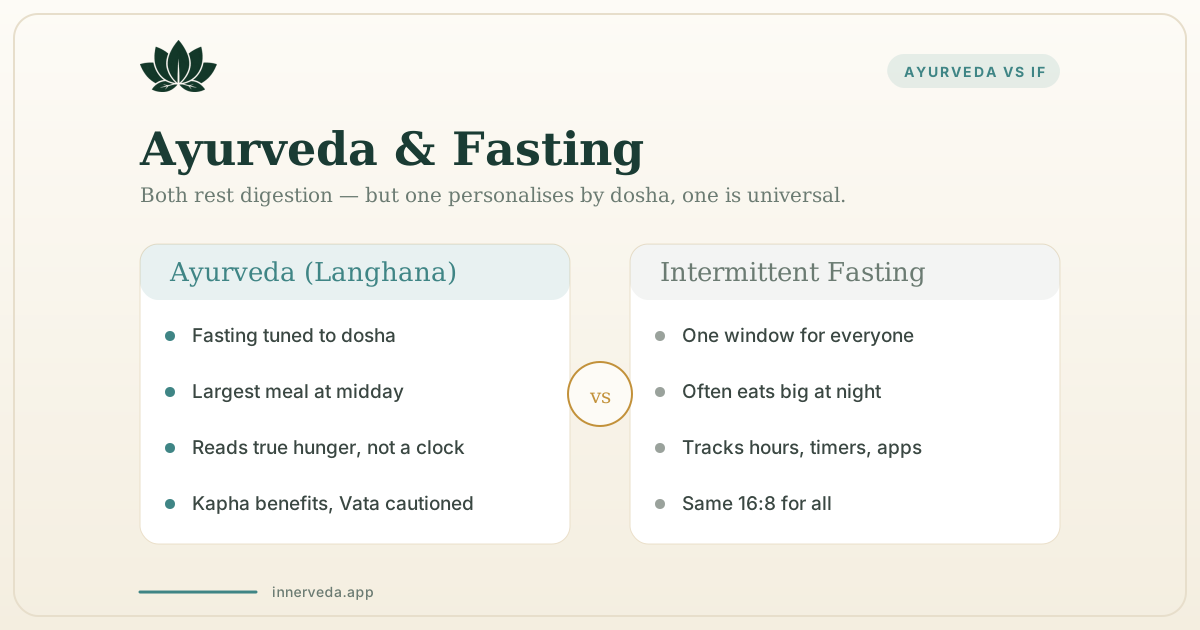
Ayurveda and intermittent fasting share one principle: give digestion regular rest. Ayurveda personalises fasting by dosha. Kapha types may benefit most from extended gaps, Pitta types need regular fuel, Vata types are traditionally cautioned against aggressive fasting. Both agree late-night eating is the worst.
Two Traditions of Mindful Eating
Intermittent fasting has had a big moment. Structured meal timing, backed by a growing pile of preliminary research, sold as something new. But strategic fasting isn't new at all. Ayurveda has used fasting as a therapeutic tool for thousands of years, long before "intermittent fasting" was a hashtag.
This article compares the two. Where they line up, where they part ways, and how your dosha may decide which fasting strategy actually suits you.
Intermittent Fasting: A Modern Overview
Intermittent fasting is not a diet in the traditional sense. It tells you when to eat, not what to eat. Several popular protocols exist:
- 16:8 Method: Fast for 16 hours, eat within an 8-hour window (e.g., noon to 8 PM)
- 5:2 Method: Eat normally five days per week, restrict calories to 500-600 on two non-consecutive days
- OMAD (One Meal a Day): Consume all daily calories in a single meal
- Eat-Stop-Eat: One or two complete 24-hour fasts per week
- Alternate Day Fasting: Alternate between normal eating days and fasting or very low-calorie days
Proponents cite preliminary research suggesting potential benefits for metabolic health, cellular repair processes (autophagy), insulin sensitivity, and weight management. Long-term human studies remain limited, and individual responses vary a lot.
Important: IF is not appropriate for everyone. People with a history of eating disorders, pregnant or nursing women, children, those with certain medical conditions, and anyone on medications that require food should consult a healthcare provider before attempting any fasting protocol.
The Ayurvedic View of Fasting: Langhana Therapy
Ayurveda places fasting under the broader concept of Langhana, which translates as "lightening" or "reducing therapy." Langhana is one of the two fundamental therapeutic approaches in Ayurveda. The other is Brimhana (nourishing therapy). The choice between them depends on the person's constitution, current state, and specific imbalances.
The Charaka Samhita describes Langhana as one of the six primary therapeutic strategies and lists fasting (Upavasa) as one of its ten sub-types.
Key Ayurvedic Fasting Principles
1. Fasting to strengthen Agni, not to starve
The point of fasting in Ayurveda is to rekindle digestive fire, not to create a caloric deficit. When Agni is low, signalled by a coated tongue, sluggish digestion, lack of appetite, or heaviness after eating, a period of lightening lets the digestive system recover.
2. Personalisation by dosha
Ayurveda never prescribes a universal fasting protocol. What strengthens one constitution may weaken another. This is probably the most important distinction between Ayurvedic fasting and modern IF.
3. Seasonal fasting
Ayurveda recommends lighter eating and occasional fasting during specific seasons, particularly at the junctions between seasons (Ritu Sandhi) and during spring when Kapha naturally accumulates.
4. Breaking the fast matters as much as the fast itself
Ayurveda cares deeply about how you resume eating. The classical texts recommend breaking a fast with light, warm, easily digestible foods. Thin rice porridge (Peya), mung dal soup, or warm water with ginger. Jumping straight into heavy meals after fasting is considered harmful to Agni.
Dosha Fasting Guide
Kapha Types: Most Suited to Fasting
Kapha dosha is heavy, stable, slow-metabolising. Of the three constitutions, Kapha types traditionally benefit most from Langhana therapy.
Why fasting may suit Kapha:
- Naturally slower digestive fire that benefits from periodic rest
- Efficient energy storage means the body has reserves to draw on
- The lightening quality of fasting directly counters Kapha's natural heaviness
- May wake without morning appetite, making breakfast-skipping natural
Recommended approach:
- 16:8 fasting may be well-tolerated, eating between approximately 10 AM and 6 PM
- One full liquid-fast day per week (warm water, herbal teas, light broth) during spring season
- Favour warm, spiced foods when eating. Avoid cold or raw foods during the eating window.
- Drink warm water with ginger, black pepper, or honey between meals
Signs to ease off: Excessive fatigue, feeling cold, dry skin, anxiety (these suggest Vata aggravation)
Pitta Types: Regular Meals Recommended
Pitta dosha is sharp digestive fire, intensity, transformation. Pitta types typically have the strongest Agni of all three constitutions.
Why aggressive fasting may not suit Pitta:
- Strong Agni means Pitta types genuinely need regular fuel
- Skipping meals may increase irritability, acidity, and sharp hunger
- When Pitta's fire has no food to process, it may "burn" the tissues instead
- Pitta types are more prone to acid reflux and gastric discomfort when fasting
Recommended approach:
- If exploring IF, a milder 14:10 window may be more comfortable than 16:8
- Keep three meals as the baseline, with the largest at midday
- Short mono-diet fasts (eating only Kitchari for a day) may be better tolerated than complete fasts
- Focus on cooling, calming foods during the eating window
- Stay well hydrated with room-temperature or cool water
Signs to ease off: Increased irritability, acid reflux, headaches, skin breakouts, disturbed sleep
Vata Types: Caution Strongly Advised
Vata dosha is light, mobile, irregular. Vata types are generally the least suited to extended fasting.
Why fasting may aggravate Vata:
- Vata is already light and dry. Fasting amplifies these qualities.
- Irregular meal timing disrupts Vata's need for routine
- The emptiness of fasting can increase anxiety and restlessness
- Vata types often have lower body weight and fewer reserves to draw on
- May worsen constipation, insomnia, and nervous system sensitivity
Recommended approach:
- Regular meal timing is generally more important than fasting windows
- If any fasting is desired, limiting to a 12:12 pattern (e.g., 7 AM to 7 PM eating window) is gentler
- Always eat a warm, grounding breakfast. Never skip it.
- Seasonal fasting only under practitioner guidance
- Favour warm, oily, nourishing foods during all meals
Signs to ease off: Anxiety, constipation, insomnia, feeling ungrounded, weight loss, cold extremities
Ayurvedic Meal Timing: The Original Eating Window
Long before IF protocols existed, Ayurveda prescribed a daily eating pattern that shares some striking similarities:
The Ayurvedic Daily Eating Rhythm
- Morning (6-8 AM): Light, warm breakfast suited to your dosha. Kapha types may skip or just sip warm water with honey. Vata and Pitta types benefit from eating.
- Midday (12-1 PM): The largest meal of the day. Agni mirrors the sun. It is strongest when the sun is highest. This is when the body can best handle complex foods, heavier proteins, and larger portions.
- Evening (6-7 PM): A lighter supper, finished well before bedtime. The classical texts recommend at least 3 hours between the last meal and sleep.
- After sunset: Ideally, no eating. The digestive fire naturally wanes as darkness falls.
This traditional pattern creates a natural eating window of roughly 11-12 hours (7 AM to 7 PM) with the heaviest meal in the middle. That has notable overlap with moderate IF protocols.
Why Ayurveda Insists on Midday as the Main Meal
Modern IF practitioners often eat their largest meal in the evening, within their eating window. Ayurveda would disagree.
Classical Ayurveda (Ashtanga Hridaya, Sutrasthana ch. 1) maps the day into Kapha (morning), Pitta (midday) and Vata (afternoon) periods, so digestive fire is considered strongest at midday during the Pitta phase. Eating a heavy dinner when digestive fire is naturally low can lead to incomplete digestion, Ama formation, sluggish mornings, and weight gain. Regardless of whether the meal falls within a fasting window.
This is the key distinction. It is not just when you eat, but how your meals are distributed within the eating window that matters.
Where IF and Ayurveda Agree
Different origins, surprising overlap:
1. No Late-Night Eating
Both systems strongly discourage eating late at night. IF eliminates it by closing the eating window. Ayurveda explains that Agni is weakest after sunset, and late eating creates Ama.
2. Digestive Rest Is Valuable
Both recognise that the digestive system benefits from regular periods of rest. IF achieves this through defined fasting windows. Ayurveda achieves it through adequate spacing between meals (traditionally 4-6 hours) and avoiding snacking.
3. Processed Food and Snacking Are Problematic
Neither system supports constant grazing or frequent snacking on processed foods. IF restricts eating by time. Ayurveda teaches that each meal should be fully digested before the next. Adding food to a partially digested meal is compared to adding raw rice to a half-cooked pot.
4. Hydration During Non-Eating Periods
Both support drinking water and herbal teas between meals or during fasting periods. Ayurveda specifically recommends warm or room-temperature water. Cold water is said to dampen Agni.
Where They Differ
1. Universality vs Personalisation
IF protocols are the same for everyone. Ayurveda would never prescribe a 16:8 fast to all people regardless of constitution. This fundamental difference in philosophy shapes everything else.
2. Metrics vs Awareness
IF often involves tracking hours, apps, and timers. Ayurveda relies on internal awareness. True hunger, digestive comfort, energy levels, mental clarity. The question Ayurveda asks is not "have 16 hours passed?" but "is my Agni ready for food?"
3. Breakfast Matters (for Some)
Many IF protocols skip breakfast. Ayurveda considers this appropriate only for Kapha types with no morning appetite. For Vata types, skipping breakfast can be destabilising. For Pitta types, it may cause acidity and irritability.
What IF Gets Right That Ayurveda Often Misses
One honest concession. Modern IF research has produced cleaner data on autophagy, insulin sensitivity, and metabolic markers than anything in classical Ayurveda. The texts describe what fasting does in terms of Agni and Ama. IF studies measure cellular mechanisms in molecular detail. A practitioner using both gets a clearer picture than one using either alone.
Ayurvedic Fasting Practices You Can Try
If you are drawn to fasting but want to incorporate Ayurvedic wisdom, consider these traditional approaches:
Weekly Ekadashi fast: Many Ayurvedic practitioners recommend a light fast on Ekadashi (the 11th day of each lunar fortnight). This might involve eating only fruits and light foods, or consuming only Kitchari.
Seasonal transition fasting: At the junction between seasons, a 1-3 day period of lighter eating (soups, Kitchari, steamed vegetables) helps the body adjust. Spring is considered the most important time for this practice.
Post-illness Langhana: After recovering from digestive illness, Ayurveda recommends a graduated return to normal eating. Start with warm water, then thin rice porridge, then thicker porridge, then normal meals.
Mono-diet fasting: Eating only Kitchari (a simple mung dal and rice porridge) for 1-7 days. Gentler than complete fasting. Provides nourishment while giving the digestive system rest.
Comparison Summary
| Aspect | Ayurveda (Langhana) | Intermittent Fasting |
|---|---|---|
| Philosophy | Personalised fasting by dosha, season, and digestive state | Universal time-based protocols for everyone |
| Purpose | Strengthen Agni (digestive fire) and clear Ama (toxins) | Metabolic benefits, weight management, autophagy |
| Protocol | Varies by individual constitution | Fixed windows (16:8, 5:2, OMAD, etc.) |
| Breakfast | Depends on dosha; essential for Vata | Often skipped in most protocols |
| Largest Meal | Always at midday when Agni is strongest | Often in the evening within the eating window |
| Best Suited For | Kapha types benefit most; Vata cautioned against | Same protocol for all doshas |
| Seasonal Variation | Fasting adjusted by season; spring favoured | Same protocol year-round |
| Tracking Method | Internal awareness, hunger signals, energy levels | Hours, timers, and apps |
| Breaking the Fast | Warm, light, easily digestible foods (Peya, mung dal) | No specific guidelines on what to eat |
| Duration | Short, purposeful fasts; extended fasts under guidance only | Ongoing daily or weekly practice |
| History | Thousands of years of personalised therapeutic use | Modern research-driven approach (~2010s popularity) |
Safety Considerations
Whether you choose IF, Ayurvedic fasting, or a combination, keep these in mind:
- Listen to your body: Persistent hunger, anxiety, irritability, or weakness are signals to eat, not willpower challenges to overcome
- Fasting is not for everyone: Avoid fasting if you are pregnant, nursing, recovering from illness, underweight, or have a history of disordered eating
- Break fasts gently: Resume eating with warm, light, easily digestible foods
- Stay hydrated: Drink adequate warm or room-temperature water throughout
- Consult a practitioner: If you have any health conditions or take medications, speak with both your doctor and a qualified Ayurvedic practitioner before fasting
- Observe your digestion: The point of fasting is to strengthen Agni. If your digestion feels weaker after fasting, your approach needs adjustment.
The Bottom Line
Intermittent fasting and Ayurvedic fasting share a core insight: the digestive system benefits from periodic rest. Where they part ways is in application. IF offers a simple, universal protocol. Ayurveda offers a personalised, constitution-based approach that considers who you are, what season it is, and what your body is telling you.
The most important takeaway from both traditions may be the simplest. Eat when you are truly hungry, stop before you are full, make midday your main meal, avoid eating late at night, and give your digestion regular rest. Whether you call it IF, Langhana, or just mindful eating, you are practising wisdom that both modern science and ancient tradition support.
Disclaimer
This article is for educational and informational purposes only and does not constitute medical or dietary advice. Fasting is not appropriate for everyone and may be harmful for certain individuals. The information presented reflects traditional Ayurvedic perspectives alongside general wellness information and should not be interpreted as treatment recommendations. Always consult a qualified healthcare provider before beginning any fasting regimen, particularly if you have diabetes, blood sugar regulation concerns, a history of eating disorders, are pregnant or nursing, or take medications that require food intake.
Frequently Asked Questions
Ayurveda has its own fasting tradition called Langhana, which means 'lightening therapy.' It supports periodic fasting as a way to strengthen Agni (digestive fire) and clear Ama (toxins). However, Ayurveda personalises fasting by dosha and season rather than prescribing a universal protocol. The 16:8 method may suit some constitutions but not others.
Kapha types traditionally benefit most from lighter eating and extended fasting windows. Their naturally slower metabolism and efficient energy storage mean they can comfortably go longer between meals. Pitta types have strong Agni and typically need regular meals to maintain energy and even temperament. Vata types are generally cautioned against extended fasts.
Ayurveda recommends eating the largest meal at midday, between approximately 12 PM and 1 PM, when Pitta energy and the sun are at their peak. This is when Agni (digestive fire) is traditionally considered strongest. A lighter breakfast and even lighter dinner align with both Ayurvedic principles and some intermittent fasting approaches.
Extended fasting may aggravate Vata dosha in susceptible individuals. Vata's qualities are light, dry, and mobile. Fasting amplifies these qualities by creating emptiness and irregularity. Signs of Vata aggravation from fasting may include anxiety, insomnia, constipation, feeling ungrounded, or excessive weight loss. If you experience these, a gentler approach is advisable.
It depends on your dosha and appetite. Ayurveda teaches that you should eat when genuinely hungry, not by the clock. Kapha types often wake without appetite and may naturally skip or delay breakfast without issues. Pitta types usually wake hungry and benefit from eating early. Vata types often need something warm and grounding in the morning to stabilise their energy.
References & sources
- Prakriti and its associations with metabolism, chronic diseases, and genotypes— Journal of Ayurveda and Integrative Medicine, 2014
- Recapitulation of Ayurveda constitution types by machine learning of phenotypic traits— Scientific Reports, 2017
- Intermittent fasting and health outcomes: an umbrella review of systematic reviews and meta-analyses of randomised controlled trials— eClinicalMedicine (Lancet Discovery Science), 2024
- The effect of fasting or calorie restriction on autophagy induction: A review of the literature— Ageing Research Reviews, 2018 (Bagherniya et al.), Vol 47:183-197
- Early Time-Restricted Feeding Improves Insulin Sensitivity, Blood Pressure, and Oxidative Stress Even without Weight Loss in Men with Prediabetes— Cell Metabolism, 2018 (Sutton, Beyl, Early, Cefalu, Ravussin, Peterson) — randomized crossover trial
- Intermittent fasting: consider the risks of disordered eating for your patient— Clinical Diabetes and Endocrinology, 2023 (Blumberg, Hahn, Bakke)
Classical sources
- Charaka Samhita— Sutrasthana, Chapter 22 (Langhanabrimhaniya Adhyaya), verses 4 and 18 Su. 22.4
- Ashtanga Hridaya— Sutrasthana, Chapter 14 (Dvividhopakramaniyam Adhyayam), verses 17 (benefits) and 29-30 (harms of excess) AH Su. 14.17
- Charaka Samhita— Siddhisthana, Chapter 1 (Kalpanasiddhi), verses 11-12 (Peyadi Samsarjana Krama) Siddhisthana 1.11-12
- Ashtanga Hridaya— Sutrasthana 1 (Ayushkamiyam Adhyaya) 1.8
This article is for educational purposes only and reflects traditional Ayurvedic perspectives alongside selected research. It is not medical advice. Always consult a qualified healthcare provider before acting on any information presented here.
Written by
Ganesh Kompella
Founder, InnerVeda
Research assisted by Vaidya AI
Trained on 500+ classical Ayurvedic texts

Medically reviewed by Dr. Sheetal Rajput
BAMS (Bachelor of Ayurvedic Medicine & Surgery)
Practise this
Guided sessions that put this article into practice.
Continue Reading
Ayurveda vs Keto: A Comparison

Ayurvedic Nutrition: Eating for Your Dosha Type
Ayurveda for Digestion: Fix Bloating, Gas & Gut Health
Ayurveda vs Modern Nutrition: Can They Work Together?
Ayurveda vs Traditional Chinese Medicine: Key Differences
Put this into practice
Take the free dosha assessment. Get a personalised wellness plan with nutrition, meditation, and daily routines matched to your body.
Find Your Dosha — Free~3 min · no signup