Ajwain (Carom Seeds): Benefits & Dosha Effects
Sanskrit: Yavani (यवानी)
Ajwain (Carom Seeds) is especially balancing for Vata and Kapha and tends to aggravate Pitta. With pungent and bitter rasa (taste), hot virya (potency) and pungent vipaka, it is light, dry and sharp in quality and a source of thymol.

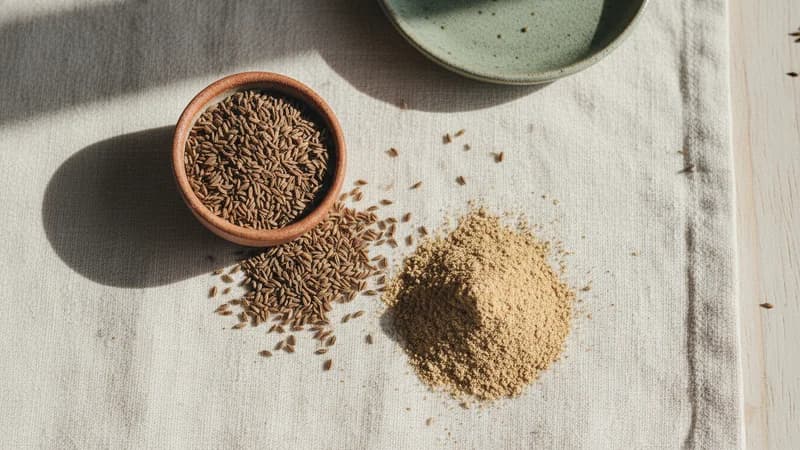
Ajwain (Carom Seeds) is best suited to Vata and Kapha, which it helps pacify. It can aggravate Pitta, so people with Pitta as their leading dosha should use it sparingly. Ajwain's pungent, hot and sharp qualities strongly kindle Agni and are traditionally used to relieve the trapped wind, bloating and cramping that trouble Vata types, especially after beans, pulses and heavy grains.. Best enjoyed during winter.
Ayurvedic Profile
Ajwain (Carom Seeds) (Yavani (यवानी)) is a therapeutic spices treasured in Ayurvedic nutrition. Referenced in Dhanvantari Nighantu, it is characterised by pungent and bitter rasa (taste), heating virya (potency), and pungent vipaka (post-digestive effect). Yavani is revered in Charaka Samhita as Shulahara (pain-reliever) for abdominal colic and the supreme Deepaniya for igniting weak Agni; its thymol content gives it powerful antimicrobial properties in Ayurvedic medicine. Its light and dry and sharp gunas make it particularly suited for specific constitutional types. It pacifies Vata, may increase Pitta, and pacifies Kapha. From a nutritional standpoint, ajwain (carom seeds) provides approximately 305 calories per 100g, with 16.0g protein, 43.0g carbohydrates, and is a valuable source of Thymol, Iron, Calcium. Best enjoyed during winter, ajwain (carom seeds) supports healthy Agni (digestive fire) when prepared according to Ayurvedic principles, helping prevent Ama (toxin) accumulation and nourish the dhatus (body tissues).
Ayurvedic Properties
Rasa (Taste)
pungent, bitter
Virya (Potency)
hot
Vipaka (Post-digestive)
pungent
Guna (Qualities)
light, dry, sharp
How Ajwain (Carom Seeds) Affects Vata, Pitta & Kapha
Ayurveda reads every food through the three doshas. Here is how ajwain (carom seeds)’s qualities interact with each: Not sure which is yours? Take the free dosha quiz — about 4 minutes.
Ajwain (Carom Seeds) helps pacify Vata. Its hot virya (potency) and light, dry and sharp qualities, with its pungent and bitter rasa (taste), counterbalance Vata's tendencies — which is why it traditionally suits Vata dosha in regular use. Vata meal plan
Ajwain (Carom Seeds) tends to increase Pitta. Its hot virya and light, dry and sharp qualities, with its pungent and bitter rasa, align with Pitta's own nature, so those with Pitta dosha are best using it sparingly and pairing it with Pitta-pacifying foods. Pitta meal plan
Ajwain (Carom Seeds) helps pacify Kapha. Its hot virya (potency) and light, dry and sharp qualities, with its pungent and bitter rasa (taste), counterbalance Kapha's tendencies — which is why it traditionally suits Kapha dosha in regular use. Kapha meal plan
Nutrition Facts (per 100g)
305kcal
Calories
16g
Protein
43g
Carbs
25g
Fat
21.2g
Fibre
Ayurvedic Benefits
- Ajwain's pungent, hot and sharp qualities strongly kindle Agni and are traditionally used to relieve the trapped wind, bloating and cramping that trouble Vata types, especially after beans, pulses and heavy grains.
- The seed's dry, light guna helps mop up excess Kapha and dampness in the gut, so a pinch of roasted ajwain is a classic Indian remedy taken after a rich or oily meal to ease that over-full, sluggish feeling.
- Rich in thymol, the aromatic compound behind its unmistakable sharp scent, ajwain is prized for its warming, carminative action on a chilled, gassy winter digestion.
- Its Vata-pacifying warmth is why ajwain is a staple in traditional postnatal cooking and is often stirred into warm water for the new mother to support the return of steady, comfortable digestion.
- Beyond thymol, ajwain contributes useful dietary iron and calcium, minerals that support the blood and the strength of the bones and teeth as part of a varied diet.
How to Use
- As ajwain (carom seeds) is heating (ushna virya), balance it with cooling accompaniments such as coriander, fennel or a little ghee — especially through the warmer months.
- Ajwain (Carom Seeds) is at its best during winter — eating it in season keeps its Prana (vital energy) and benefit at their peak.
- Dry-roast a teaspoon of seeds until fragrant, then steep in a cup of hot water for a few minutes to make ajwain water (ajwain ka pani), a time-honoured after-dinner drink for a heavy or gassy stomach.
- Temper whole seeds in hot ghee or oil at the start of a tarka for dals, kadhi and pulse dishes; the sizzling releases the thymol and helps make the lentils less wind-forming.
- Knead a pinch of ajwain into paratha, puri or savoury cracker dough — the classic ajwain-flecked flatbread — where it lends its sharp aroma and eases the digestion of the wheat.
- Toast the seeds with a little rock salt and take a small pinch after a rich meal, chewed slowly, as a traditional digestive mukhwas that also freshens the breath.
- Add a small measure to spice blends for roasted root vegetables, savoury snacks and pickles, where its bold, thyme-like bite stands up well to strong flavours; a little goes a long way.
Contraindications
- Its hot virya and pungent vipaka make ajwain heating, so those with a Pitta imbalance — acidity, heartburn, gastritis, mouth ulcers or piles — should use it sparingly and reduce it if it brings on a burning sensation.
- In pregnancy ajwain is best kept to ordinary culinary amounts within food rather than taken as strong, concentrated infusions or supplements, and anyone with a peptic ulcer should be similarly cautious with large doses.
- As a precaution, anyone on blood-thinning medication or approaching surgery is best staying within normal culinary quantities rather than taking concentrated therapeutic doses, and those managing blood sugar or on diabetes medication should keep to food amounts and check with their own doctor.
“Ayurveda classifies Ajwain (Carom Seeds) by its pungent, bitter rasa (taste), hot virya (thermal potency), and pungent vipaka (post-digestive effect). InnerVeda reads these three lenses together to map Ajwain (Carom Seeds) to your dosha and season.”
Ajwain (Carom Seeds) by Dosha
See how ajwain (carom seeds) interacts with each dosha and get personalised guidance.
Frequently Asked Questions
Roasted ajwain steeped in warm water is one of the most trusted household digestives in India, and its action fits its Ayurvedic profile: the hot, pungent, sharp seed kindles Agni and moves stagnant Vata, which is what drives bloating and trapped wind. It works best as an occasional after-meal drink for a heavy or gassy stomach, and suits Vata and Kapha types more than those prone to acidity.
Though all three are carminative seeds, they are quite distinct. Ajwain is sharp, hot and thyme-like, and is drying, so it excels with heavy pulses and in flatbreads. Cumin is earthier and more grounding, while fennel is sweet and cooling and better suits Pitta and hot conditions. In practice, cooks reach for ajwain when they want the most heating, wind-relieving bite of the three, and use only a little because its flavour is strong.
Ajwain used as an ordinary seasoning in food — tempered into dal or kneaded into paratha — is part of everyday Indian cooking and is generally treated as fine in those culinary amounts. What is best avoided is taking strong, concentrated ajwain infusions or supplements, since it is a heating seed. As with any spice taken for a purpose during pregnancy, it is wise to check with your own doctor or midwife first.
Your dosha is the balance of Vata, Pitta and Kapha you were born with. Take the dosha quiz — free, about 4 minutes.
Three questions towards your dosha
These are the first three questions of the full dosha quiz. Answer them here and carry on where you left off.
Prefer to start from the beginning? Take the full dosha quiz.
Dietary information provided is for educational purposes only and is rooted in Ayurvedic tradition. It is not a substitute for professional nutritional or medical advice. Consult a qualified healthcare provider before making significant changes to your diet, especially if you have food allergies, intolerances, or a medical condition.
Want a meal plan matched to your dosha?
Take the free dosha assessment (about 4 minutes) and get a personalised nutrition plan with nearly 300 foods in the app, rated for your body.
Find Your Dosha: FreeAbout 4 minutes