Banana: Benefits & Dosha Effects
Sanskrit: Kadali (कदली)
Banana is especially balancing for Vata but can raise Pitta when eaten in excess and tends to aggravate Kapha. With sweet rasa (taste), cold virya (potency) and sour vipaka, it is heavy, oily and smooth in quality and a source of potassium.

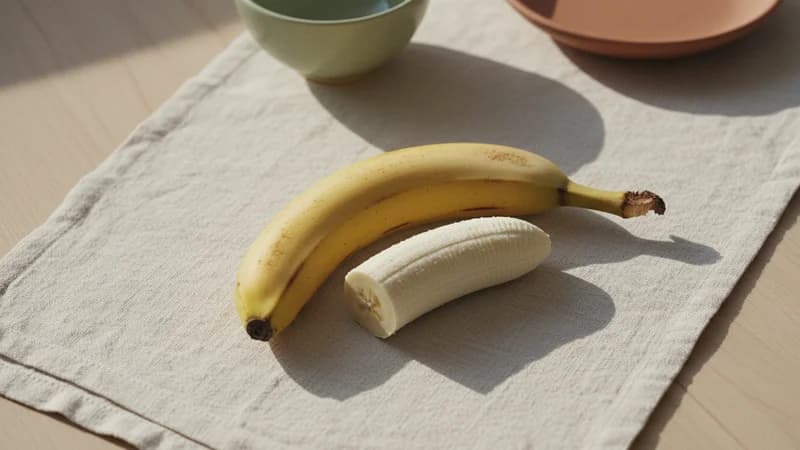
Banana is best suited to Vata, which it helps pacify. It can aggravate Kapha, so people with Kapha as their leading dosha should use it sparingly. Deeply grounding and Vata-pacifying due to heavy, sweet, and cold qualities. Suitable year-round.
Ayurvedic Profile
Banana, known as Kadali in Sanskrit, is one of the most commonly consumed fruits worldwide and holds an interesting dual position in Ayurvedic dietetics. The Bhavaprakasha Nighantu describes Kadali as possessing Madhura (sweet) rasa, Sheeta (cold) virya, and notably Amla (sour) vipaka. This sour post-digestive effect is critically important and distinguishes banana from most other sweet fruits. It means that while banana tastes sweet initially, its final metabolic effect tends toward sour, which can increase Pitta and Kapha over time.
The Charaka Samhita classifies Kadali as Guru (heavy), Snigdha (oily), and Sheeta (cold), making it one of the most grounding fruits available. These qualities are profoundly Vata-pacifying, and for Vata-dominant individuals experiencing dryness, anxiety, or wasting, ripe banana with honey and cardamom is a traditional Brinhana (nourishing) preparation. However, the same heavy qualities make it Kapha-aggravating, which is why Ayurveda advises moderation.
The Ashtanga Hridaya notes that Kadali is Trishnahara (thirst-quenching), Shukrala (reproductive tissue-nourishing), and Balya (strength-giving). Its exceptional potassium content supports Mamsa Dhatu (muscle tissue) health and prevents cramping, aligning with the classical strength-giving classification. The high Vitamin B6 content supports Manovaha Srotas (mind-carrying channels) function and healthy neurotransmitter production.
An important Ayurvedic principle regarding bananas is timing and combination. The Charaka Samhita's Viruddha Ahara (incompatible food) chapter advises against combining banana with milk, a common modern smoothie combination. This mixture is considered Viruddha (incompatible) because both are sweet, cold, and heavy but have conflicting digestive requirements, potentially leading to Ama formation. Banana with honey, ghee, or cardamom is considered harmonious.
Green plantains and raw bananas are used differently in Ayurvedic cooking, particularly in South Indian cuisine. The raw banana is less sweet, more astringent, and lighter than ripe banana, making it more suitable for Kapha types and for use as a vegetable in curries. This distinction between ripe and unripe forms is a classic example of how the same food can serve different therapeutic purposes based on its stage of development.
Ayurvedic Properties
Rasa (Taste)
sweet
Virya (Potency)
cold
Vipaka (Post-digestive)
sour
Guna (Qualities)
heavy, oily, smooth
How Banana Affects Vata, Pitta & Kapha
Ayurveda reads every food through the three doshas. Here is how banana’s qualities interact with each: Not sure which is yours? Take the free dosha quiz — about 4 minutes.
Banana helps pacify Vata. Its cold virya (potency) and heavy, oily and smooth qualities, with its sweet rasa (taste), counterbalance Vata's tendencies — which is why it traditionally suits Vata dosha in regular use. Vata meal plan
Banana is well tolerated by those with Pitta dosha in normal amounts, but its cold virya and heavy, oily and smooth qualities may aggravate Pitta in excess — so people with Pitta as their leading dosha are best keeping to measured portions. Pitta meal plan
Banana tends to increase Kapha. Its cold virya and heavy, oily and smooth qualities, with its sweet rasa, align with Kapha's own nature, so those with Kapha dosha are best using it sparingly and pairing it with Kapha-pacifying foods. Kapha meal plan
Nutrition Facts (per 100g)
89kcal
Calories
1.1g
Protein
22.8g
Carbs
0.3g
Fat
2.6g
Fibre
Ayurvedic Benefits
- Deeply grounding and Vata-pacifying due to heavy, sweet, and cold qualities
- Excellent Shukrala (reproductive tissue nourisher) and Balya (strength builder)
- Rich in potassium supporting Mamsa Dhatu (muscle tissue) and preventing cramps
- Quick energy source with Brinhana (nourishing) action for those needing weight gain
- Trishnahara (thirst-quenching) fruit useful during dehydration
How to Use
- As banana is cooling (shita virya), favour it in warmer weather and pair it with warming spices like ginger or black pepper when the seasons turn cold.
- Eat ripe banana with a drizzle of honey and pinch of cardamom for Vata-pacifying snack
- Avoid combining with milk (Viruddha Ahara); combine with honey or ghee instead
- Use raw/green banana as a vegetable in curries for a lighter, more Kapha-friendly preparation
- Eat between meals rather than after a heavy meal for better digestion
- Mash ripe banana with ghee and cinnamon for a comforting Vata-soothing dessert
Contraindications
- Increases Kapha significantly; Kapha-dominant individuals should limit intake
- Sour vipaka can aggravate Pitta over time; avoid in excess during Pitta flare-ups
- Do not combine with milk (Viruddha Ahara) as per classical Ayurvedic food combining rules
“Ayurveda classifies Banana by its sweet rasa (taste), cold virya (thermal potency), and sour vipaka (post-digestive effect). InnerVeda reads these three lenses together to map Banana to your dosha and season.”
Frequently Asked Questions
Ayurveda classifies banana-milk combination as Viruddha Ahara (incompatible food). Both are sweet, cold, and heavy with conflicting digestive processes, potentially creating Ama (toxins). Instead, pair banana with honey, ghee, or cardamom. If you must combine with dairy, use warm spiced milk.
Yes, banana is one of the best Brinhana (nourishing/weight-building) fruits. Its heavy, sweet, and oily qualities build tissues effectively. Combine with honey and ghee for enhanced Brinhana effect. However, this same quality means Kapha types should limit intake to avoid unwanted weight gain.
Mid-morning or as an afternoon snack, between meals rather than after a full meal. Avoid bananas at night, especially for Kapha types, as their heavy quality combined with lowered nighttime Agni can create Ama. Pre-exercise is also an excellent time for the quick energy banana provides.
Your dosha is the balance of Vata, Pitta and Kapha you were born with. Take the dosha quiz — free, about 4 minutes.
Three questions towards your dosha
These are the first three questions of the full dosha quiz. Answer them here and carry on where you left off.
Prefer to start from the beginning? Take the full dosha quiz.
Dietary information provided is for educational purposes only and is rooted in Ayurvedic tradition. It is not a substitute for professional nutritional or medical advice. Consult a qualified healthcare provider before making significant changes to your diet, especially if you have food allergies, intolerances, or a medical condition.
Want a meal plan matched to your dosha?
Take the free dosha assessment (about 4 minutes) and get a personalised nutrition plan with nearly 300 foods in the app, rated for your body.
Find Your Dosha: FreeAbout 4 minutes