Mango: Benefits & Dosha Effects
Sanskrit: Amra (आम्र)
Mango is especially balancing for Vata but can raise Pitta and Kapha when eaten in excess. With sweet and sour rasa (taste), hot virya (potency) and sweet vipaka, it is heavy and oily in quality and a source of vitamin c.

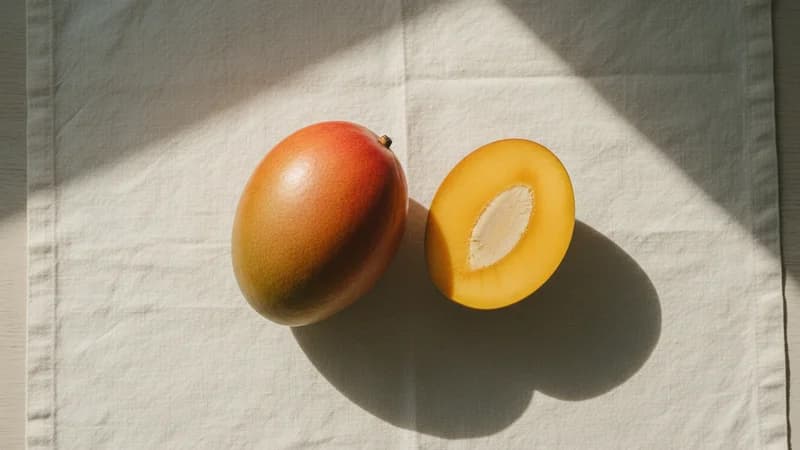
Mango is best suited to Vata, which it helps pacify. In excess it can raise Pitta and Kapha. As a heavy (guru), oily (snigdha) fruit with sweet rasa and sweet vipaka, ripe mango is deeply nourishing and traditionally valued in Ayurveda as a Vata-pacifying food that supports the rebuilding of the body's tissues (dhatu) and helps sustain strength and Ojas after depletion or fatigue.. Best enjoyed during summer.
Ayurvedic Profile
Mango, revered as Amra in Sanskrit and celebrated as the 'King of Fruits' in Indian culture, holds an exceptionally prominent position in Ayurvedic literature. The Bhavaprakasha Nighantu dedicates an extensive section to Amra Phala, distinguishing between ripe mango (Pakva Amra) and unripe mango (Amra), each with distinct therapeutic profiles. Ripe mango possesses Madhura-Amla (sweet-sour) rasa, Ushna (hot) virya, and Madhura (sweet) vipaka with Guru (heavy) and Snigdha (oily) gunas, making it profoundly nourishing.
The Charaka Samhita classifies ripe mango as Brinhana (nourishing), Balya (strength-giving), and Vrishya (virility-promoting). It is one of the few fruits considered capable of building all seven Dhatus (tissues), from Rasa (plasma) through Shukra (reproductive tissue). This tissue-building capacity, combined with its Madhura vipaka, means that mango ultimately strengthens Ojas, the vital essence that governs immunity, vitality, and spiritual radiance.
The Ashtanga Hridaya notes an important distinction that modern consumption patterns often overlook: ripe mango should be consumed with milk or ghee to balance its Ushna virya and prevent Pitta aggravation. The classical preparation Amra Panak (mango drink with cardamom and saffron) and Aam Ras (mango pulp with milk) reflect this balancing wisdom. Without these cooling accompaniments, excess mango consumption can lead to Pitta-related skin breakouts and digestive heat.
Unripe mango (Kairi) has a completely different Ayurvedic profile: predominantly Amla (sour) and Kashaya (astringent) rasa with stronger Ushna virya. The Bhavaprakasha notes that raw mango aggravates all three doshas when consumed alone but becomes therapeutic when processed into Aam Panna (green mango drink with cumin and sugar), which is classically recommended for preventing heat stroke during Grishma Ritu (summer).
Mango's connection to Indian spiritual tradition runs deep. It is considered a Sattvic fruit when consumed ripe and in moderation. The Charaka Samhita places mango among the Phala Varga (fruit category) elite, and its seasonal availability during summer was traditionally respected, reflecting the Ayurvedic wisdom of eating fruits only in their natural season.
Ayurvedic Properties
Rasa (Taste)
sweet, sour
Virya (Potency)
hot
Vipaka (Post-digestive)
sweet
Guna (Qualities)
heavy, oily
How Mango Affects Vata, Pitta & Kapha
Ayurveda reads every food through the three doshas. Here is how mango’s qualities interact with each: Not sure which is yours? Take the free dosha quiz — about 4 minutes.
Mango helps pacify Vata. Its hot virya (potency) and heavy and oily qualities, with its sweet and sour rasa (taste), counterbalance Vata's tendencies — which is why it traditionally suits Vata dosha in regular use. Vata meal plan
Mango is well tolerated by those with Pitta dosha in normal amounts, but its hot virya and heavy and oily qualities may aggravate Pitta in excess — so people with Pitta as their leading dosha are best keeping to measured portions. Pitta meal plan
Mango is well tolerated by those with Kapha dosha in normal amounts, but its hot virya and heavy and oily qualities may aggravate Kapha in excess — so people with Kapha as their leading dosha are best keeping to measured portions. Kapha meal plan
Nutrition Facts (per 100g)
60kcal
Calories
0.8g
Protein
15g
Carbs
0.4g
Fat
1.6g
Fibre
Ayurvedic Benefits
- As a heavy (guru), oily (snigdha) fruit with sweet rasa and sweet vipaka, ripe mango is deeply nourishing and traditionally valued in Ayurveda as a Vata-pacifying food that supports the rebuilding of the body's tissues (dhatu) and helps sustain strength and Ojas after depletion or fatigue.
- Its natural sweetness and grounding quality make it a satisfying source of quick, wholesome energy, which may help ease the dryness, restlessness and low stamina that often accompany aggravated Vata in the hot, drying months.
- Mango is rich in vitamin C and beta-carotene (vitamin A), nutrients that support healthy skin, eyes and normal immune function, complementing its classical reputation as a complexion-friendly, tissue-building fruit.
- The soluble fibre and natural fruit sugars in ripe mango, paired with its unctuous quality, are traditionally used to support smooth, comfortable bowel movements and to ease the dry, hard stool typical of Vata imbalance.
- Folate and potassium in mango contribute to normal energy-yielding metabolism and healthy fluid balance, and its juicy, moisture-rich pulp is a pleasant way to replenish the body during summer, best enjoyed in sensible amounts since its potency is warming.
How to Use
- As mango is heating (ushna virya), balance it with cooling accompaniments such as coriander, fennel or a little ghee — especially through the warmer months.
- Mango is at its best during summer — eating it in season keeps its Prana (vital energy) and benefit at their peak.
- Choose fully ripe, soft, fragrant mango; unripe green mango is intensely sour, sharply heating and can aggravate Pitta, so it is best kept for pickles and chutneys rather than eaten as fruit.
- Enjoy mango on its own as a mid-morning or afternoon snack rather than immediately after a heavy meal, so its sweet, heavy quality digests cleanly without overloading Agni.
- A traditional summer favourite is aamras: ripe mango pulp loosened with a pinch of dry ginger, cardamom or a little ghee, which balances the fruit's heating virya and makes it gentler on Pitta.
- Blend ripe mango into a lassi with fresh curd, cardamom and a whisper of black pepper; the spices help offset the sour, heating edge that plain mango can bring in hot weather.
- Avoid the classic pairing of mango with milk if you are prone to skin flare-ups or sluggish digestion, and do not combine it with curd in the same sitting as a full dairy meal, since Ayurveda regards fruit-with-dairy as a heavy, incompatible (viruddha) mix for weak Agni.
Contraindications
- Because mango is heating (ushna virya) and Pitta-aggravating in excess, those with a fiery constitution or signs of heat, such as acidity, skin rashes or heat boils, should limit ripe mango and always avoid the very sour unripe fruit.
- Its sweet, heavy, Kapha-increasing nature means people managing weight, sluggish digestion or blood-sugar concerns should keep to small portions, and anyone with diabetes should treat it as an occasional treat and check with their clinician.
- Mango sap and skin can trigger contact reactions in those sensitive to the cashew and pistachio family (urushiol), so peel it well; stop and seek advice if you notice tingling or itching around the mouth.
“Ayurveda classifies Mango by its sweet, sour rasa (taste), hot virya (thermal potency), and sweet vipaka (post-digestive effect). InnerVeda reads these three lenses together to map Mango to your dosha and season.”
Frequently Asked Questions
In Ayurveda ripe mango has a hot potency (ushna virya), so it warms the body and can aggravate Pitta if eaten in large amounts or in the peak of summer. Its juicy, sweet pulp feels refreshing on the tongue, but its underlying energetic action is heating. Unripe green mango is even more heating and sour. Pairing ripe mango with cardamom, dry ginger or a little ghee helps balance this warmth.
Classic Indian recipes like mango milkshake are popular, but Ayurveda regards fruit combined with milk as a heavy, potentially incompatible (viruddha ahara) pairing, especially for those with weak digestion or a tendency to skin issues and congestion. If your Agni is strong and you tolerate it, an occasional mango-milk drink is fine; if you notice heaviness, mucus or breakouts, keep mango and milk separate and enjoy the fruit on its own.
For most people one small-to-medium ripe mango a day during the season is a sensible amount. Mango is sweet, heavy and Kapha-increasing, so larger quantities can feel heavy, add up in sugars and stoke Pitta in hot weather. Those with a Pitta or Kapha tendency, blood-sugar concerns or weight goals should keep to half a fruit and eat it as a standalone snack rather than after a big meal.
Your dosha is the balance of Vata, Pitta and Kapha you were born with. Take the dosha quiz — free, about 4 minutes.
Three questions towards your dosha
These are the first three questions of the full dosha quiz. Answer them here and carry on where you left off.
Prefer to start from the beginning? Take the full dosha quiz.
Dietary information provided is for educational purposes only and is rooted in Ayurvedic tradition. It is not a substitute for professional nutritional or medical advice. Consult a qualified healthcare provider before making significant changes to your diet, especially if you have food allergies, intolerances, or a medical condition.
Want a meal plan matched to your dosha?
Take the free dosha assessment (about 4 minutes) and get a personalised nutrition plan with nearly 300 foods in the app, rated for your body.
Find Your Dosha: FreeAbout 4 minutes