Black Cardamom: Benefits & Dosha Effects
Sanskrit: Brihat Ela (बृहत् एला)
Black Cardamom is especially balancing for Vata and Kapha but can raise Pitta when eaten in excess. With pungent and sweet rasa (taste), hot virya (potency) and sweet vipaka, it is light and dry in quality and a source of iron.

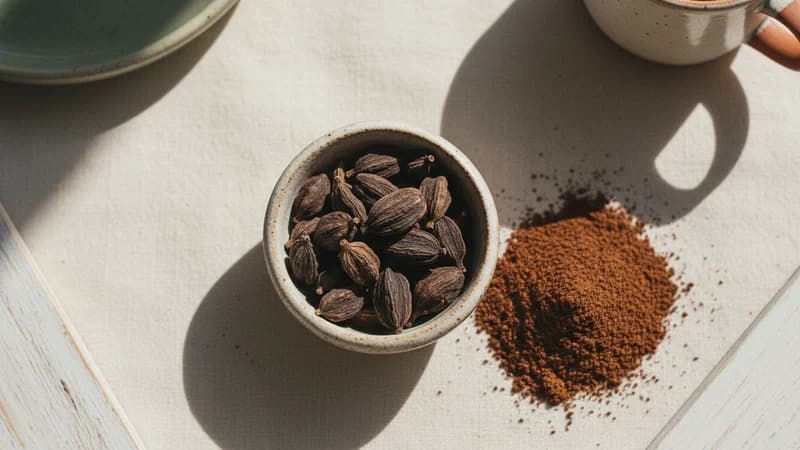
Black Cardamom is best suited to Vata and Kapha, which it helps pacify. In excess it can raise Pitta. Its bold, smoky-camphor aroma and pungent rasa make black cardamom a strong Kapha-pacifier, traditionally classed among the Shwasahara and Kasahara spices used in cold, damp winter cooking.. Best enjoyed during winter.
Ayurvedic Profile
Black Cardamom (Brihat Ela (बृहत् एला)) is a therapeutic spices treasured in Ayurvedic nutrition. Referenced in Sushruta Samhita, it is characterised by pungent and sweet rasa (taste), heating virya (potency), and sweet vipaka (post-digestive effect). Brihat Ela (greater cardamom) differs from green cardamom with its smoky flavour and stronger Kapha-clearing action; Bhavaprakasha classifies it as Shwasahara (anti-asthmatic) and Kasahara (anti-tussive) for respiratory Kapha disorders. Its light and dry gunas make it particularly suited for specific constitutional types. It pacifies Vata, can aggravate Pitta when consumed in excess, and pacifies Kapha. From a nutritional standpoint, black cardamom provides approximately 311 calories per 100g, with 10.8g protein, 68.5g carbohydrates, and is a valuable source of Iron, Manganese, Calcium. Best enjoyed during winter, black cardamom supports healthy Agni (digestive fire) when prepared according to Ayurvedic principles, helping prevent Ama (toxin) accumulation and nourish the dhatus (body tissues).
Ayurvedic Properties
Rasa (Taste)
pungent, sweet
Virya (Potency)
hot
Vipaka (Post-digestive)
sweet
Guna (Qualities)
light, dry
How Black Cardamom Affects Vata, Pitta & Kapha
Ayurveda reads every food through the three doshas. Here is how black cardamom’s qualities interact with each: Not sure which is yours? Take the free dosha quiz — about 4 minutes.
Black Cardamom helps pacify Vata. Its hot virya (potency) and light and dry qualities, with its pungent and sweet rasa (taste), counterbalance Vata's tendencies — which is why it traditionally suits Vata dosha in regular use. Vata meal plan
Black Cardamom is well tolerated by those with Pitta dosha in normal amounts, but its hot virya and light and dry qualities may aggravate Pitta in excess — so people with Pitta as their leading dosha are best keeping to measured portions. Pitta meal plan
Black Cardamom helps pacify Kapha. Its hot virya (potency) and light and dry qualities, with its pungent and sweet rasa (taste), counterbalance Kapha's tendencies — which is why it traditionally suits Kapha dosha in regular use. Kapha meal plan
Nutrition Facts (per 100g)
311kcal
Calories
10.8g
Protein
68.5g
Carbs
6.7g
Fat
28g
Fibre
Ayurvedic Benefits
- Its bold, smoky-camphor aroma and pungent rasa make black cardamom a strong Kapha-pacifier, traditionally classed among the Shwasahara and Kasahara spices used in cold, damp winter cooking.
- The hot virya with light, dry guna kindles a sluggish Agni and helps counter cold, damp heaviness, making it well suited to rich, oily Kapha-provoking meals like heavy dals and meats.
- Despite its heat it finishes with a sweet vipaka, so it warms the digestive tract while still nourishing the dhatus, easing Vata-type bloating and heaviness after a large meal.
- It is a natural Mukha Shodhana; chewing a seed or two after a smoky, spice-heavy meal freshens the breath and settles the stomach.
- Supplying iron and manganese, it lends mineral depth to the garam masala and slow-cooked winter dishes it flavours, complementing a warming Hemanta and Shishira diet.
How to Use
- As black cardamom is heating (ushna virya), balance it with cooling accompaniments such as coriander, fennel or a little ghee — especially through the warmer months.
- Black Cardamom is at its best during winter — eating it in season keeps its Prana (vital energy) and benefit at their peak.
- Bruise a whole pod and add it to the tempering for rajma, chana or a robust lentil dal, letting its smoky note infuse the base, then lift it out before serving.
- Grind the tiny black seeds (discarding the coarse husk) into homemade garam masala for biryani, kebabs and rich meat curries.
- Drop one pod into the water when cooking brown rice or pulao to lend a subtle, campfire-like fragrance to the grains.
- Simmer a lightly crushed pod in strong winter chai alongside ginger and clove for a warming, Kapha-pacifying brew on cold mornings.
- Use it in slow-cooked stews and shorbas rather than delicate dishes, as its assertive, resinous flavour needs long cooking to mellow and marry with other spices.
Contraindications
- Those with high Pitta, heartburn or a burning tendency should use it sparingly, as its pungent taste and hot virya can raise internal heat when overdone.
- Its drying guna means very dry, depleted Vata individuals are best balancing it with a little ghee or oil rather than using it alone in large amounts.
- If pregnant, breastfeeding or on medication, treat it as an occasional culinary spice and consult a qualified practitioner before using it in any concentrated or therapeutic quantity.
“Ayurveda classifies Black Cardamom by its pungent, sweet rasa (taste), hot virya (thermal potency), and sweet vipaka (post-digestive effect). InnerVeda reads these three lenses together to map Black Cardamom to your dosha and season.”
Black Cardamom by Dosha
See how black cardamom interacts with each dosha and get personalised guidance.
Frequently Asked Questions
Not interchangeably. Green cardamom is sweet, floral and cooling, suited to milk, sweets and chai, while black cardamom is smoky, resinous and firmly heating, meant for savoury dals, curries and meats. Swapping one for the other changes both the flavour and the Ayurvedic action of a dish.
The large pods are traditionally dried over open flames or in smoke-kilns, which gives them their distinctive campfire, camphor-like aroma. This smoke-drying is also why its warming, drying quality is more assertive than that of gently sun-dried green cardamom.
No. The tough, papery husk is added whole to flavour a dish and then removed before eating, or the small dark seeds inside are extracted and ground into spice blends. Biting into a whole husk is unpleasant and overpoweringly pungent.
Your dosha is the balance of Vata, Pitta and Kapha you were born with. Take the dosha quiz — free, about 4 minutes.
Three questions towards your dosha
These are the first three questions of the full dosha quiz. Answer them here and carry on where you left off.
Prefer to start from the beginning? Take the full dosha quiz.
Dietary information provided is for educational purposes only and is rooted in Ayurvedic tradition. It is not a substitute for professional nutritional or medical advice. Consult a qualified healthcare provider before making significant changes to your diet, especially if you have food allergies, intolerances, or a medical condition.
Want a meal plan matched to your dosha?
Take the free dosha assessment (about 4 minutes) and get a personalised nutrition plan with nearly 300 foods in the app, rated for your body.
Find Your Dosha: FreeAbout 4 minutes