Clove: Benefits & Dosha Effects
Sanskrit: Lavanga (लवङ्ग)
Clove is especially balancing for Vata and Kapha and tends to aggravate Pitta. With pungent and bitter rasa (taste), hot virya (potency) and pungent vipaka, it is light, oily and sharp in quality and a source of manganese.

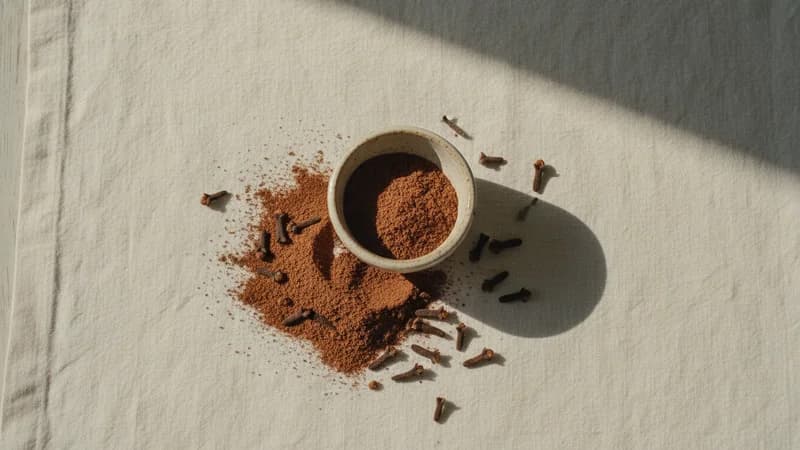
Clove is best suited to Vata and Kapha, which it helps pacify. It can aggravate Pitta, so people with Pitta as their leading dosha should use it sparingly. Clove's pungent, hot virya kindles Agni and supports the digestion of heavy, cold, oily foods, making it a traditional warming addition to winter meals for those with sluggish appetite.. Best enjoyed during winter.
Ayurvedic Profile
Clove (Lavanga (लवङ्ग)) is a therapeutic spices treasured in Ayurvedic nutrition. Referenced in Kaiyadeva Nighantu, it is characterised by pungent and bitter rasa (taste), heating virya (potency), and pungent vipaka (post-digestive effect). Lavanga is classified as Mukha Shodhana (mouth purifier) and Chardi Nigrahana (anti-emetic) in Ashtanga Hridaya; its potent eugenol content makes it Ayurveda's primary remedy for dental pain and Kapha-related oral conditions. Its light and oily and sharp gunas make it particularly suited for specific constitutional types. It pacifies Vata, may increase Pitta, and pacifies Kapha. From a nutritional standpoint, clove provides approximately 274 calories per 100g, with 6.0g protein, 65.5g carbohydrates, and is a valuable source of Manganese, Vitamin K, Vitamin C. Best enjoyed during winter, clove supports healthy Agni (digestive fire) when prepared according to Ayurvedic principles, helping prevent Ama (toxin) accumulation and nourish the dhatus (body tissues).
Ayurvedic Properties
Rasa (Taste)
pungent, bitter
Virya (Potency)
hot
Vipaka (Post-digestive)
pungent
Guna (Qualities)
light, oily, sharp
How Clove Affects Vata, Pitta & Kapha
Ayurveda reads every food through the three doshas. Here is how clove’s qualities interact with each: Not sure which is yours? Take the free dosha quiz — about 4 minutes.
Clove helps pacify Vata. Its hot virya (potency) and light, oily and sharp qualities, with its pungent and bitter rasa (taste), counterbalance Vata's tendencies — which is why it traditionally suits Vata dosha in regular use. Vata meal plan
Clove tends to increase Pitta. Its hot virya and light, oily and sharp qualities, with its pungent and bitter rasa, align with Pitta's own nature, so those with Pitta dosha are best using it sparingly and pairing it with Pitta-pacifying foods. Pitta meal plan
Clove helps pacify Kapha. Its hot virya (potency) and light, oily and sharp qualities, with its pungent and bitter rasa (taste), counterbalance Kapha's tendencies — which is why it traditionally suits Kapha dosha in regular use. Kapha meal plan
Nutrition Facts (per 100g)
274kcal
Calories
6g
Protein
65.5g
Carbs
13g
Fat
33.9g
Fibre
Ayurvedic Benefits
- Clove's pungent, hot virya kindles Agni and supports the digestion of heavy, cold, oily foods, making it a traditional warming addition to winter meals for those with sluggish appetite.
- The bitter-pungent rasa and light, sharp guna help clear Kapha from the chest and throat, and clove has long been chewed or taken in warm infusions to soothe a tickly cough and loosen sticky phlegm.
- As a Vata-pacifying and Kapha-reducing dravya, clove's carminative warmth may help ease the bloating, gurgling and gas that arise when digestive fire is low in the cold season.
- Clove is a notably rich dietary source of manganese, a mineral that contributes to normal bone formation and the body's antioxidant defences, alongside useful vitamin K and vitamin C.
- Traditionally held between the cheek and an aching tooth, clove's warming, numbing pungency has been used for centuries in Ayurvedic and folk oral care to bring temporary comfort to gum and tooth discomfort.
How to Use
- As clove is heating (ushna virya), balance it with cooling accompaniments such as coriander, fennel or a little ghee — especially through the warmer months.
- Clove is at its best during winter — eating it in season keeps its Prana (vital energy) and benefit at their peak.
- Dry-roast two or three whole cloves and grind them into masala chai with cardamom, ginger and cinnamon for a warming winter brew that supports digestion after a heavy meal.
- Stud an onion or add three to four whole buds to slow-cooked pulao, biryani or dals so the aromatic oils infuse the dish while the spice stays easy to remove before eating.
- Simmer a single clove in a cup of hot water with a little honey (added off the heat) as a soothing evening drink when the throat feels congested with cold-season Kapha.
- Grind cloves finely into garam masala or a spiced-jaggery mix; because the flavour is intense, a pinch is enough to season an entire pot of vegetables or lentils.
- For temporary tooth or gum discomfort, gently press one softened whole clove against the sore spot for a few minutes, then discard it; use occasionally rather than daily.
Contraindications
- Its hot virya and pungent vipaka can aggravate Pitta, so those with heartburn, acid reflux, mouth ulcers or a hot, inflamed constitution should keep clove to a light, occasional pinch.
- Concentrated clove intake and clove oil are best limited in pregnancy, in young children, and by anyone on blood-thinning medication, as the eugenol content may affect bleeding and clotting; keep to ordinary culinary amounts.
- Undiluted clove oil is potent and can irritate or burn gums and the mouth lining, so never apply neat oil to tissue and avoid it altogether on broken skin or open sores.
“Ayurveda classifies Clove by its pungent, bitter rasa (taste), hot virya (thermal potency), and pungent vipaka (post-digestive effect). InnerVeda reads these three lenses together to map Clove to your dosha and season.”
Clove by Dosha
See how clove interacts with each dosha and get personalised guidance.
Frequently Asked Questions
An occasional clove chewed after meals is a long-standing digestive and breath-freshening habit, but its virya is genuinely hot. Daily chewing can leave the mouth lining and gums feeling irritated and may unsettle a Pitta-prone stomach, so it is better kept as a now-and-then practice rather than a routine, and reduced if you feel any burning.
Whole buds release their oils slowly and can be lifted out before serving, which suits rice dishes, curries and infusions where you want the aroma but not the woody texture. Powder is far more concentrated and disperses instantly, so it belongs in garam masala and baking where a mere pinch flavours the whole dish; measure powder sparingly to avoid an overpowering, bitter result.
Ayurveda and folk practice have long used clove for temporary relief of tooth and gum discomfort, thanks to its warming, mildly numbing pungency. A softened whole bud pressed against the sore area can bring short-term comfort, but it does not address the underlying cause — persistent toothache needs a dentist, and undiluted clove oil should never be dabbed directly onto tender tissue.
Your dosha is the balance of Vata, Pitta and Kapha you were born with. Take the dosha quiz — free, about 4 minutes.
Three questions towards your dosha
These are the first three questions of the full dosha quiz. Answer them here and carry on where you left off.
Prefer to start from the beginning? Take the full dosha quiz.
Dietary information provided is for educational purposes only and is rooted in Ayurvedic tradition. It is not a substitute for professional nutritional or medical advice. Consult a qualified healthcare provider before making significant changes to your diet, especially if you have food allergies, intolerances, or a medical condition.
Want a meal plan matched to your dosha?
Take the free dosha assessment (about 4 minutes) and get a personalised nutrition plan with nearly 300 foods in the app, rated for your body.
Find Your Dosha: FreeAbout 4 minutes