Black-Eyed Peas: Benefits & Dosha Effects
Sanskrit: Lobia (लोबिया)
Black-Eyed Peas is especially balancing for Kapha but can raise Vata when eaten in excess. With sweet and astringent rasa (taste), cold virya (potency) and sweet vipaka, it is light and dry in quality and a source of folate.

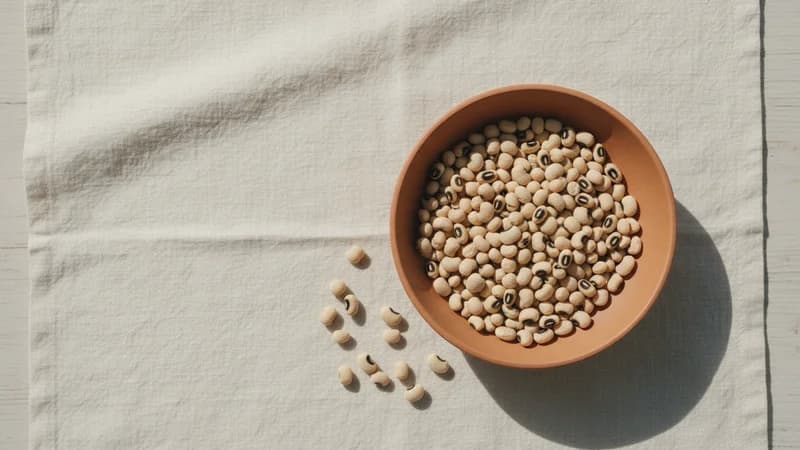
Black-Eyed Peas is best suited to Kapha, which it helps pacify. In excess it can raise Vata. Black-eyed peas carry a sweet vipaka and cooling virya, so they nourish the deeper tissues (dhatu) while their astringent rasa lends a gently firming quality to the stool, making them a grounding, Kapha-easing pulse for the cooler months.. Best enjoyed during winter.
Ayurvedic Profile
Black-Eyed Peas (Lobia (लोबिया)) is a protein-rich legumes treasured in Ayurvedic nutrition. Referenced in Charaka Samhita, it is characterised by sweet and astringent rasa (taste), cooling virya (potency), and sweet vipaka (post-digestive effect). Lobia is classified among Shimbi Dhanya (pod grains) in Ayurvedic texts as Madhura-Kashaya with moderate digestibility. When soaked overnight and cooked with Vata-reducing spices, black-eyed peas provide excellent plant protein while supporting Kapha balance through their Ruksha guna. Its light and dry gunas make it particularly suited for specific constitutional types. It can aggravate Vata when consumed in excess, has a neutral effect on Pitta, and pacifies Kapha. From a nutritional standpoint, black-eyed peas provides approximately 336 calories per 100g, with 23.5g protein, 60.0g carbohydrates, and is a valuable source of Folate, Iron, Potassium. Best enjoyed during winter, black-eyed peas supports healthy Agni (digestive fire) when prepared according to Ayurvedic principles, helping prevent Ama (toxin) accumulation and nourish the dhatus (body tissues).
Ayurvedic Properties
Rasa (Taste)
sweet, astringent
Virya (Potency)
cold
Vipaka (Post-digestive)
sweet
Guna (Qualities)
light, dry
How Black-Eyed Peas Affects Vata, Pitta & Kapha
Ayurveda reads every food through the three doshas. Here is how black-eyed peas’s qualities interact with each: Not sure which is yours? Take the free dosha quiz — about 4 minutes.
Black-Eyed Peas is well tolerated by those with Vata dosha in normal amounts, but its cold virya and light and dry qualities may aggravate Vata in excess — so people with Vata as their leading dosha are best keeping to measured portions. Vata meal plan
Black-Eyed Peas has a broadly neutral effect on Pitta. Its sweet and astringent rasa and light and dry qualities neither strongly aggravate nor pacify Pitta, so those with Pitta dosha can enjoy it in moderation within a varied diet. Pitta meal plan
Black-Eyed Peas helps pacify Kapha. Its cold virya (potency) and light and dry qualities, with its sweet and astringent rasa (taste), counterbalance Kapha's tendencies — which is why it traditionally suits Kapha dosha in regular use. Kapha meal plan
Nutrition Facts (per 100g)
336kcal
Calories
23.5g
Protein
60g
Carbs
1.3g
Fat
10.6g
Fibre
Ayurvedic Benefits
- Black-eyed peas carry a sweet vipaka and cooling virya, so they nourish the deeper tissues (dhatu) while their astringent rasa lends a gently firming quality to the stool, making them a grounding, Kapha-easing pulse for the cooler months.
- Their light, dry guna means they sit lighter on Agni than heavier beans, so they may suit those with a middling digestive fire who want a protein-rich pulse without the leaden fullness larger legumes can bring.
- Rich in folate, black-eyed peas are traditionally valued for nourishing Rakta (blood) and are a thoughtful everyday pulse for women planning a pregnancy, a time when folate needs are naturally higher.
- The plant iron and potassium they carry support steady energy and healthy fluid balance, qualities Ayurveda would read as quietly nourishing Ojas when the peas are cooked soft and well spiced.
- With their sweet-astringent taste and cooling virya, black-eyed peas offer substance in late summer or early autumn without adding to internal heat, so they sit comfortably with a Pitta constitution.
How to Use
- As black-eyed peas is cooling (shita virya), favour it in warmer weather and pair it with warming spices like ginger or black pepper when the seasons turn cold.
- Black-Eyed Peas is at its best during winter — eating it in season keeps its Prana (vital energy) and benefit at their peak.
- Soak overnight, then simmer with a bay leaf, a pinch of asafoetida and cumin until the peas hold their shape but yield easily; this classic lobia preparation keeps them light on the gut.
- Fold cooked peas through a warm salad with chopped tomato, coriander and a squeeze of lime for a summer lunch that tempers their dryness with a little moisture.
- Make a South-Indian style lobia sundal: temper mustard seeds, curry leaves and grated coconut, then toss the drained peas through as a warming, snackable dish.
- Add a handful of soaked peas to a mixed vegetable stew or khichdi so they lend body and folate without dominating the pot.
- Finish a lobia curry with a spoon of ghee and a scatter of fresh coriander; the ghee counters the peas' natural dryness and helps carry their nourishment into the tissues.
Contraindications
- Those with a strongly Vata constitution or a tendency to bloating and wind should limit portions and always cook the peas thoroughly with warming spices like asafoetida, ginger and cumin.
- People prone to gout or with raised uric acid may wish to keep servings modest, as pulses like black-eyed peas contribute dietary purines.
- If digestion feels weak or sluggish (low Agni), soak the peas well and eat them warm and freshly cooked rather than cold or in large amounts.
“Ayurveda classifies Black-Eyed Peas by its sweet, astringent rasa (taste), cold virya (thermal potency), and sweet vipaka (post-digestive effect). InnerVeda reads these three lenses together to map Black-Eyed Peas to your dosha and season.”
Frequently Asked Questions
Their light, dry guna and Kapha-reducing quality make them a sensible pulse when you are watching Kapha or aiming to eat more lightly. They give lasting fullness from protein and fibre without the heaviness of richer beans, though portions should still be moderate.
Yes. Black-eyed peas cook faster than many pulses, but an overnight soak still softens them, eases digestion and reduces the wind their dry quality can otherwise cause. Discard the soaking water and cook in fresh water with warming spices.
They can if eaten cold, undercooked or in large amounts, especially for a Vata-predominant person. Cooking them soft with asafoetida, cumin and ginger, and keeping the serving reasonable, greatly reduces the chance of wind and bloating.
Your dosha is the balance of Vata, Pitta and Kapha you were born with. Take the dosha quiz — free, about 4 minutes.
Three questions towards your dosha
These are the first three questions of the full dosha quiz. Answer them here and carry on where you left off.
Prefer to start from the beginning? Take the full dosha quiz.
Dietary information provided is for educational purposes only and is rooted in Ayurvedic tradition. It is not a substitute for professional nutritional or medical advice. Consult a qualified healthcare provider before making significant changes to your diet, especially if you have food allergies, intolerances, or a medical condition.
Want a meal plan matched to your dosha?
Take the free dosha assessment (about 4 minutes) and get a personalised nutrition plan with nearly 300 foods in the app, rated for your body.
Find Your Dosha: FreeAbout 4 minutes