Chickpeas: Benefits & Dosha Effects
Sanskrit: Chanaka (चणक)
Chickpeas is especially balancing for Kapha and tends to aggravate Vata. With sweet and astringent rasa (taste), cold virya (potency) and sweet vipaka, it is light, dry and rough in quality and a source of protein.

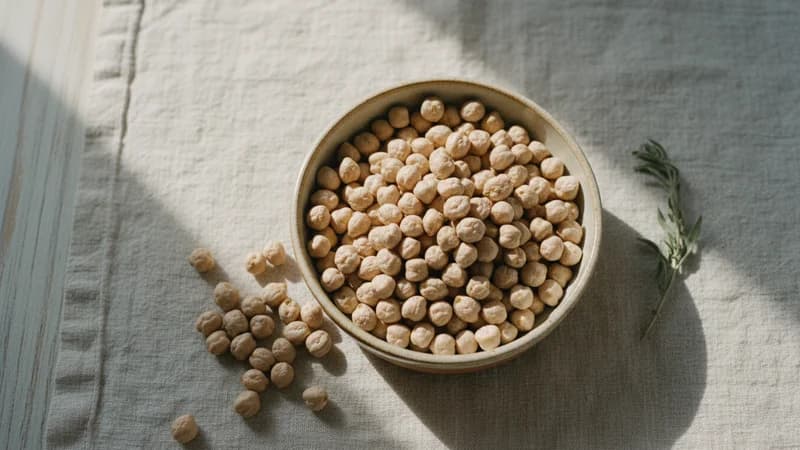
Chickpeas is best suited to Kapha, which it helps pacify. It can aggravate Vata, so people with Vata as their leading dosha should use it sparingly. Lekhana (scraping) quality helps reduce excess Kapha and Meda Dhatu for weight management. Best enjoyed during winter.
Ayurvedic Profile
Chickpeas, known as Chanaka in Sanskrit, occupy a complex position in the Ayurvedic dietary system. The Bhavaprakasha Nighantu classifies Chanaka under the Shimbi Dhanya Varga (legume group) and describes it as possessing Madhura-Kashaya (sweet-astringent) rasa, Sheeta (cold) virya, and Madhura (sweet) vipaka with Laghu (light), Ruksha (dry), and Khara (rough) gunas. This dry, rough quality profile makes chickpeas one of the more Vata-provoking legumes.
The Charaka Samhita places Chanaka among the Lekhana (scraping) foods, meaning it has a natural tendency to reduce excess Kapha and Meda Dhatu (fat tissue). This Lekhana property, combined with its high protein and fibre content, makes chickpeas valuable for individuals working on weight management or addressing Kapha-Meda imbalances. However, the same scraping quality means it can deplete tissues and increase dryness in Vata-dominant individuals.
The Ashtanga Hridaya notes that Chanaka is Vistambhi (causing constipation) when not prepared properly, reflecting the inherent dryness and roughness of the legume. This is why classical Indian cuisine always prepares chickpeas with adequate fat (ghee or oil), moisture (in curries and gravies), and Vata-pacifying spices like cumin, hing (asafoetida), ginger, and ajwain. The traditional chana masala with its rich, spiced gravy exemplifies this balancing preparation.
Chickpea flour (Besan), the roasted and ground form, is therapeutically distinct from whole chickpeas. The Bhavaprakasha describes roasted preparations as lighter and more digestible. Besan's use in Ayurvedic skincare as Ubtan (face cleansing paste) demonstrates its external therapeutic application where its Lekhana (scraping) quality removes dead skin and excess oil.
The sprouted form of chickpea is lighter than the cooked whole form and is recommended in modern Ayurvedic practice for those who want chickpea nutrition with less heaviness. Sprouting activates enzymes that pre-digest some of the complex carbohydrates responsible for gas formation, making sprouted chickpeas more Agni-friendly.
Ayurvedic Properties
Rasa (Taste)
sweet, astringent
Virya (Potency)
cold
Vipaka (Post-digestive)
sweet
Guna (Qualities)
light, dry, rough
How Chickpeas Affects Vata, Pitta & Kapha
Ayurveda reads every food through the three doshas. Here is how chickpeas’s qualities interact with each: Not sure which is yours? Take the free dosha quiz — about 4 minutes.
Chickpeas tends to increase Vata. Its cold virya and light, dry and rough qualities, with its sweet and astringent rasa, align with Vata's own nature, so those with Vata dosha are best using it sparingly and pairing it with Vata-pacifying foods. Vata meal plan
Chickpeas has a broadly neutral effect on Pitta. Its sweet and astringent rasa and light, dry and rough qualities neither strongly aggravate nor pacify Pitta, so those with Pitta dosha can enjoy it in moderation within a varied diet. Pitta meal plan
Chickpeas helps pacify Kapha. Its cold virya (potency) and light, dry and rough qualities, with its sweet and astringent rasa (taste), counterbalance Kapha's tendencies — which is why it traditionally suits Kapha dosha in regular use. Kapha meal plan
Nutrition Facts (per 100g)
364kcal
Calories
19.3g
Protein
60.7g
Carbs
6g
Fat
17.4g
Fibre
Ayurvedic Benefits
- Lekhana (scraping) quality helps reduce excess Kapha and Meda Dhatu for weight management
- High protein and fibre content supports sustained energy and satiety
- Rich in folate and iron, supporting Rakta Dhatu (blood tissue) health
- Chickpea flour (Besan) serves dual purpose as food and Ayurvedic skincare ingredient
- Good plant protein option for Kapha-Pitta constitutions with strong digestion
How to Use
- As chickpeas is cooling (shita virya), favour it in warmer weather and pair it with warming spices like ginger or black pepper when the seasons turn cold.
- Chickpeas is at its best during winter — eating it in season keeps its Prana (vital energy) and benefit at their peak.
- Soak overnight and cook in spiced gravy with cumin, hing, ginger, and ghee to manage Vata effect
- Use chickpea flour (besan) for protein-rich pancakes (chilla) and binding in cooking
- Prepare as chana masala with rich tomato-onion gravy to counter dryness
- Sprout for lighter, more digestible preparations in salads and snacks
- Roast with spices for a crunchy, protein-rich snack (chana dal namkeen)
Contraindications
- Strongly Vata-increasing due to dry, rough, light qualities; Vata types should eat sparingly
- Vistambhi (constipating) when prepared without adequate fat and moisture
- May cause flatulence if not soaked properly and cooked with anti-gas spices like hing
“Ayurveda classifies Chickpeas by its sweet, astringent rasa (taste), cold virya (thermal potency), and sweet vipaka (post-digestive effect). InnerVeda reads these three lenses together to map Chickpeas to your dosha and season.”
Frequently Asked Questions
Soak overnight and discard the soaking water. Cook with hing (asafoetida), cumin, ginger, and ajwain, which are classical anti-flatulent spices. Ensure thorough cooking until very soft. Sprouting before cooking also reduces gas-causing compounds. Adding a piece of kombu seaweed during cooking can help.
Vata types should eat chickpeas sparingly due to their dry, rough, light qualities that aggravate Vata. When consumed, prepare in rich, oily gravy with abundant ghee and Vata-pacifying spices. Better legume options for Vata include moong dal and red lentils, which are lighter and less drying.
Fresh home-cooked chickpeas are always preferred for their Sattvic quality and ability to be prepared with proper spices. Canned chickpeas are convenient but often contain preservatives and lack the therapeutic preparation. If using canned, rinse thoroughly and reheat with ghee and digestive spices.
Your dosha is the balance of Vata, Pitta and Kapha you were born with. Take the dosha quiz — free, about 4 minutes.
Three questions towards your dosha
These are the first three questions of the full dosha quiz. Answer them here and carry on where you left off.
Prefer to start from the beginning? Take the full dosha quiz.
Dietary information provided is for educational purposes only and is rooted in Ayurvedic tradition. It is not a substitute for professional nutritional or medical advice. Consult a qualified healthcare provider before making significant changes to your diet, especially if you have food allergies, intolerances, or a medical condition.
Want a meal plan matched to your dosha?
Take the free dosha assessment (about 4 minutes) and get a personalised nutrition plan with nearly 300 foods in the app, rated for your body.
Find Your Dosha: FreeAbout 4 minutes