Mung Beans (Whole): Benefits & Dosha Effects
Sanskrit: Mudga (मुद्ग)
Mung Beans (Whole) is especially balancing for Pitta and Kapha. With sweet and astringent rasa (taste), cold virya (potency) and sweet vipaka, it is light and dry in quality and a source of folate.

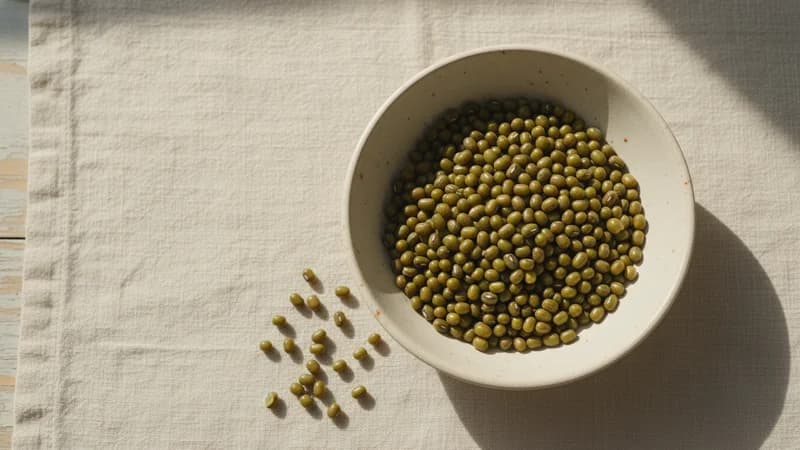
Mung Beans (Whole) is best suited to Pitta and Kapha, which it helps pacify. With their green skins intact, whole mung beans carry more fibre and manganese than the split dal, giving them a firmer, more grounding quality while keeping the same cooling, tridosha-friendly profile.. Suitable year-round.
Ayurvedic Profile
Mung Beans (Whole) (Mudga (मुद्ग)) is a protein-rich legumes treasured in Ayurvedic nutrition. Referenced in Raja Nighantu, it is characterised by sweet and astringent rasa (taste), cooling virya (potency), and sweet vipaka (post-digestive effect). Mudga is hailed in Charaka Samhita as the king of legumes (Shreshtha among Shimbi Dhanya), being the only pulse considered truly Tridoshic, Laghu, and suitable for consumption during illness and convalescence. Its light and dry gunas make it particularly suited for specific constitutional types. It has a neutral effect on Vata, pacifies Pitta, and pacifies Kapha. From a nutritional standpoint, mung beans (whole) provides approximately 347 calories per 100g, with 23.9g protein, 62.6g carbohydrates, and is a valuable source of Folate, Manganese, Iron. Best enjoyed during all-seasons, mung beans (whole) supports healthy Agni (digestive fire) when prepared according to Ayurvedic principles, helping prevent Ama (toxin) accumulation and nourish the dhatus (body tissues).
Ayurvedic Properties
Rasa (Taste)
sweet, astringent
Virya (Potency)
cold
Vipaka (Post-digestive)
sweet
Guna (Qualities)
light, dry
How Mung Beans (Whole) Affects Vata, Pitta & Kapha
Ayurveda reads every food through the three doshas. Here is how mung beans (whole)’s qualities interact with each: Not sure which is yours? Take the free dosha quiz — about 4 minutes.
Mung Beans (Whole) has a broadly neutral effect on Vata. Its sweet and astringent rasa and light and dry qualities neither strongly aggravate nor pacify Vata, so those with Vata dosha can enjoy it in moderation within a varied diet. Vata meal plan
Mung Beans (Whole) helps pacify Pitta. Its cold virya (potency) and light and dry qualities, with its sweet and astringent rasa (taste), counterbalance Pitta's tendencies — which is why it traditionally suits Pitta dosha in regular use. Pitta meal plan
Mung Beans (Whole) helps pacify Kapha. Its cold virya (potency) and light and dry qualities, with its sweet and astringent rasa (taste), counterbalance Kapha's tendencies — which is why it traditionally suits Kapha dosha in regular use. Kapha meal plan
Nutrition Facts (per 100g)
347kcal
Calories
23.9g
Protein
62.6g
Carbs
1.2g
Fat
16.3g
Fibre
Ayurvedic Benefits
- With their green skins intact, whole mung beans carry more fibre and manganese than the split dal, giving them a firmer, more grounding quality while keeping the same cooling, tridosha-friendly profile.
- Their sweet-astringent rasa and cooling virya settle Pitta heat and reduce Kapha heaviness, so a bowl of whole mung suits warmer seasons and those wanting a satisfying yet non-heating pulse.
- The intact skin makes them ideal for sprouting; sprouted whole mung become even lighter and livelier, traditionally valued for kindling Agni and refreshing a sluggish system in spring.
- Folate, iron and manganese together support the blood and connective tissues, useful for vegetarians and anyone building strength, while the fibre supports steady, unhurried bowel movements.
- Their firmer bite holds shape in salads, soups and stews, offering lasting fullness without the density of rajma or chana, so they nourish without dulling the body.
How to Use
- As mung beans (whole) is cooling (shita virya), favour it in warmer weather and pair it with warming spices like ginger or black pepper when the seasons turn cold.
- Soak whole beans overnight, then simmer for 30 to 40 minutes until tender but still holding shape for soups, dals and stews.
- Sprout them by soaking 8 hours then draining and rinsing for a day or two; eat the sprouts lightly steamed rather than raw so they stay easy on Agni.
- Cook them into a rustic, whole-bean stew with cumin, coriander, ginger and a squeeze of lime for a Pitta-cooling summer meal.
- Toss cooled cooked or steamed-sprouted beans with cucumber, coriander and lemon into a light chaat-style salad for warm weather.
- Pressure-cook with hing and ginger to soften the skins fully and reduce the wind that whole pulses can otherwise cause.
Contraindications
- The intact skins add fibre that can provoke gas and Vata bloating if under-cooked; Vata types should soak them well, cook them soft and add hing and ginger.
- Anyone with a legume allergy should avoid them, and raw sprouts carry a small food-safety risk, so lightly steam sprouts rather than eating them raw, especially if pregnant or immune-compromised.
- Best limited by those with very weak or delicate digestion, who will find the split, husked moong dal gentler than the whole skin-on bean.
“Ayurveda classifies Mung Beans (Whole) by its sweet, astringent rasa (taste), cold virya (thermal potency), and sweet vipaka (post-digestive effect). InnerVeda reads these three lenses together to map Mung Beans (Whole) to your dosha and season.”
Frequently Asked Questions
Yes. An overnight soak softens the skins, shortens cooking time and, in Ayurvedic terms, reduces the wind and heaviness whole pulses can cause. Cook them with hing and ginger afterwards to make them gentler still.
Sprouting makes them lighter and is traditionally valued for kindling Agni, so they suit spring and Kapha-heavy times. But eat sprouts lightly steamed rather than raw; raw sprouts are harder to digest and carry a small food-safety risk.
They are the same plant (Mudga). Whole mung beans keep their green skin, so they carry more fibre, hold their shape and are a touch more grounding. Moong dal is the same bean split and husked, cooking faster into a smooth, lighter puree for delicate digestion.
Your dosha is the balance of Vata, Pitta and Kapha you were born with. Take the dosha quiz — free, about 4 minutes.
Three questions towards your dosha
These are the first three questions of the full dosha quiz. Answer them here and carry on where you left off.
Prefer to start from the beginning? Take the full dosha quiz.
Dietary information provided is for educational purposes only and is rooted in Ayurvedic tradition. It is not a substitute for professional nutritional or medical advice. Consult a qualified healthcare provider before making significant changes to your diet, especially if you have food allergies, intolerances, or a medical condition.
Want a meal plan matched to your dosha?
Take the free dosha assessment (about 4 minutes) and get a personalised nutrition plan with nearly 300 foods in the app, rated for your body.
Find Your Dosha: FreeAbout 4 minutes