Dal Fry: Benefits & Dosha Effects
Sanskrit: Dala Bharjana (दाल भर्जन)
Dal Fry is especially balancing for Vata and Kapha. With sweet, pungent and astringent rasa (taste), hot virya (potency) and sweet vipaka, it is light and oily in quality and a source of protein.

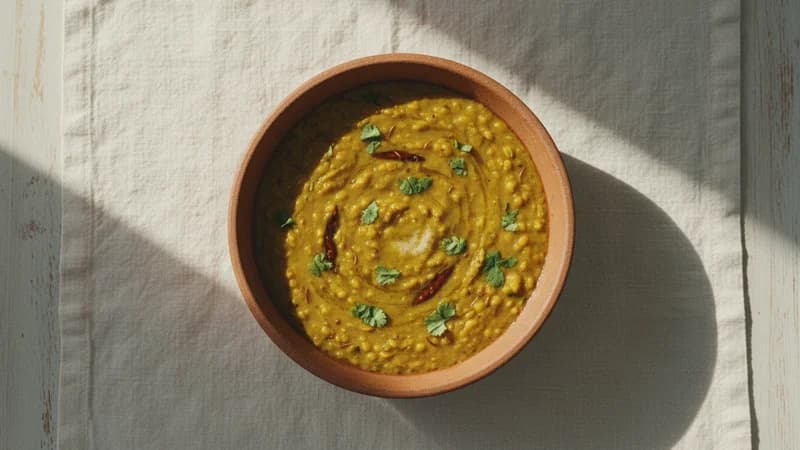
Dal Fry is best suited to Vata and Kapha, which it helps pacify. The dal is bhuna (fried) into a base of sautéed onions, tomatoes and ginger-garlic, a Samskara that deepens its Deepaniya (appetite-stirring) quality and can make a protein meal genuinely tempting when appetite is low. Suitable year-round.
Ayurvedic Profile
Dal Fry (Dala Bharjana (दाल भर्जन)) is a wholesome prepared foods treasured in Ayurvedic nutrition. Referenced in Charaka Samhita, it is characterised by sweet and pungent and astringent rasa (taste), heating virya (potency), and sweet vipaka (post-digestive effect). Dal Fry intensifies the therapeutic value of plain dal through the Bharjana (roasting/frying) technique with onions, tomatoes, and aromatic spices; this Samskara enhances Deepaniya (appetising) properties while the combination of dals provides complementary amino acids for complete Mamsa dhatu nourishment. Its light and oily gunas make it particularly suited for specific constitutional types. It pacifies Vata, has a neutral effect on Pitta, and pacifies Kapha. From a nutritional standpoint, dal fry provides approximately 140 calories per 100g, with 8.0g protein, 18.0g carbohydrates, and is a valuable source of Protein, Iron, Folate. Best enjoyed during all-seasons, dal fry supports healthy Agni (digestive fire) when prepared according to Ayurvedic principles, helping prevent Ama (toxin) accumulation and nourish the dhatus (body tissues).
Ayurvedic Properties
Rasa (Taste)
sweet, pungent, astringent
Virya (Potency)
hot
Vipaka (Post-digestive)
sweet
Guna (Qualities)
light, oily
How Dal Fry Affects Vata, Pitta & Kapha
Ayurveda reads every food through the three doshas. Here is how dal fry’s qualities interact with each: Not sure which is yours? Take the free dosha quiz — about 4 minutes.
Dal Fry helps pacify Vata. Its hot virya (potency) and light and oily qualities, with its sweet, pungent and astringent rasa (taste), counterbalance Vata's tendencies — which is why it traditionally suits Vata dosha in regular use. Vata meal plan
Dal Fry has a broadly neutral effect on Pitta. Its sweet, pungent and astringent rasa and light and oily qualities neither strongly aggravate nor pacify Pitta, so those with Pitta dosha can enjoy it in moderation within a varied diet. Pitta meal plan
Dal Fry helps pacify Kapha. Its hot virya (potency) and light and oily qualities, with its sweet, pungent and astringent rasa (taste), counterbalance Kapha's tendencies — which is why it traditionally suits Kapha dosha in regular use. Kapha meal plan
Nutrition Facts (per 100g)
140kcal
Calories
8g
Protein
18g
Carbs
4g
Fat
4.5g
Fibre
Ayurvedic Benefits
- The dal is bhuna (fried) into a base of sautéed onions, tomatoes and ginger-garlic, a Samskara that deepens its Deepaniya (appetite-stirring) quality and can make a protein meal genuinely tempting when appetite is low
- Cooking the masala until the fat separates unlocks the fat-soluble carotenoids of tomato and the pungent principles of onion and garlic, which are traditionally used to support a sluggish, Kapha-heavy digestion
- Its warming, pungent-forward profile and hot virya make it a satisfying, Vata-settling main dish for cold weather, served over rice or with roti
- The onion-tomato base adds vitamin C and lycopene on top of the lentils' plant protein, iron and folate, giving a fuller nutrient spread than a plain tempered dal
- The frying (Bharjana) softens the lentils thoroughly and the added masala carries digestive spices deep into the dish, supporting assimilation of the protein and helping the body avoid Ama when eaten warm
How to Use
- As dal fry is heating (ushna virya), balance it with cooling accompaniments such as coriander, fennel or a little ghee — especially through the warmer months.
- Sauté onions in ghee or oil until golden, add ginger-garlic, tomatoes and spices, cook until the fat separates, then fold in your boiled toor or masoor dal and simmer so the dal takes on the masala
- Serve it hot with jeera rice, plain basmati or a soft roti, as its thicker, richer body suits being mopped up rather than sipped like a thin soup
- Finish with a little kasuri methi and fresh coriander, and a small extra spoon of ghee, to round the fried masala and carry its warmth into the tissues
- Reserve this richer preparation for lunch when Agni is at its peak, rather than a late dinner, since the fried onion-tomato base is more demanding to digest
- Use a toor-masoor mix for a fuller, restaurant-style dal fry; balance the heat by keeping green chilli moderate and adding a squeeze of lime at the end
Contraindications
- The fried onion, garlic and tomato masala is heating and mildly sour, so those prone to acidity, heartburn or high Pitta should go easy, especially in summer (Grishma Ritu)
- It carries more oil and a heavier masala than a simple tadka dal, so anyone watching fat intake or with weak, slow digestion should take a smaller portion and eat it warm
- Sour tomato with pulses can feel heavy for some; if you tend to bloat, keep the tomato modest, cook the dal thoroughly and be sure cumin and hing are in the base
“Ayurveda classifies Dal Fry by its sweet, pungent, astringent rasa (taste), hot virya (thermal potency), and sweet vipaka (post-digestive effect). InnerVeda reads these three lenses together to map Dal Fry to your dosha and season.”
Frequently Asked Questions
Yes. Dal fry cooks the lentils into a fried onion-tomato-ginger-garlic masala, which makes it richer, more oily and slightly higher in calories than dal tadka, where a simple tempering is poured over boiled dal at the end. Ayurvedically, dal fry is more warming and more demanding on Agni, so it suits a strong appetite and cooler weather.
Toor (arhar) dal is the classic choice for its full body, often mixed with masoor or a little chana dal for a richer restaurant-style result. Masoor cooks down smoothly into the masala, while toor holds a little more texture. A toor-masoor blend gives the hearty, well-fried character people expect from dal fry.
It can if made very sour or very spicy, because the fried tomato, onion and green chilli are heating and can aggravate Pitta. To keep it gentler, moderate the tomato and chilli, cook the masala fully until the fat separates rather than leaving it raw, add cumin and a pinch of hing, and eat it warm at lunch rather than late at night.
Your dosha is the balance of Vata, Pitta and Kapha you were born with. Take the dosha quiz — free, about 4 minutes.
Three questions towards your dosha
These are the first three questions of the full dosha quiz. Answer them here and carry on where you left off.
Prefer to start from the beginning? Take the full dosha quiz.
Dietary information provided is for educational purposes only and is rooted in Ayurvedic tradition. It is not a substitute for professional nutritional or medical advice. Consult a qualified healthcare provider before making significant changes to your diet, especially if you have food allergies, intolerances, or a medical condition.
Want a meal plan matched to your dosha?
Take the free dosha assessment (about 4 minutes) and get a personalised nutrition plan with nearly 300 foods in the app, rated for your body.
Find Your Dosha: FreeAbout 4 minutes