Gotu Kola: Benefits & Dosha Effects
Sanskrit: Mandukaparni (मण्डूकपर्णी)
Gotu Kola is especially balancing for Vata, Pitta and Kapha. With bitter, astringent and sweet rasa (taste), cold virya (potency) and sweet vipaka, it is light and oily in quality and a source of vitamin c.

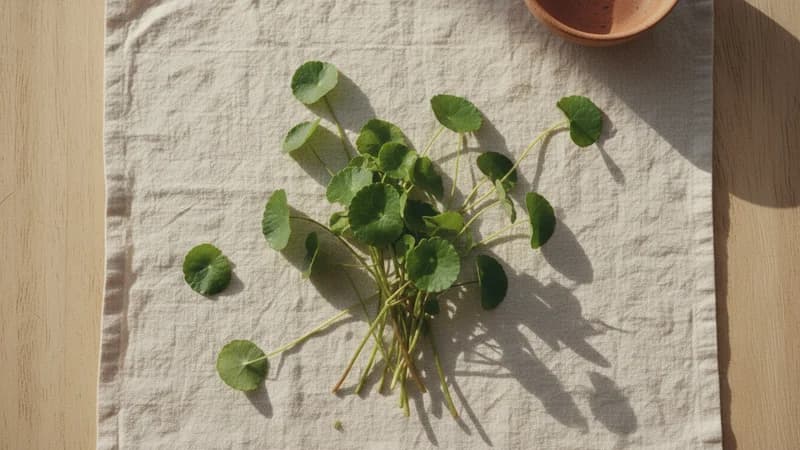
Gotu Kola is best suited to Vata, Pitta and Kapha, which it helps pacify. Known classically as Mandukaparni, it is a respected Medhya herb traditionally used to support concentration and a clear, steady mind, valued as much as a food as a remedy.. Suitable year-round.
Ayurvedic Profile
Gotu Kola (Mandukaparni (मण्डूकपर्णी)) is a medicinal herbs treasured in Ayurvedic nutrition. Referenced in Dhanvantari Nighantu, it is characterised by bitter and astringent and sweet rasa (taste), cooling virya (potency), and sweet vipaka (post-digestive effect). Mandukaparni is one of Ayurveda's supreme Medhya Rasayanas (brain tonics), described in Charaka Samhita as enhancing Buddhi (intellect), Smriti (memory), and Dhi (comprehension); it is truly Tridoshic and nourishes Majja dhatu. Its light and oily gunas make it particularly suited for specific constitutional types. It pacifies Vata, pacifies Pitta, and pacifies Kapha. From a nutritional standpoint, gotu kola provides approximately 49 calories per 100g, with 2.0g protein, 7.0g carbohydrates, and is a valuable source of Vitamin C, Vitamin A, Triterpenoids. Best enjoyed during all-seasons, gotu kola supports healthy Agni (digestive fire) when prepared according to Ayurvedic principles, helping prevent Ama (toxin) accumulation and nourish the dhatus (body tissues).
Ayurvedic Properties
Rasa (Taste)
bitter, astringent, sweet
Virya (Potency)
cold
Vipaka (Post-digestive)
sweet
Guna (Qualities)
light, oily
How Gotu Kola Affects Vata, Pitta & Kapha
Ayurveda reads every food through the three doshas. Here is how gotu kola’s qualities interact with each: Not sure which is yours? Take the free dosha quiz — about 4 minutes.
Gotu Kola helps pacify Vata. Its cold virya (potency) and light and oily qualities, with its bitter, astringent and sweet rasa (taste), counterbalance Vata's tendencies — which is why it traditionally suits Vata dosha in regular use. Vata meal plan
Gotu Kola helps pacify Pitta. Its cold virya (potency) and light and oily qualities, with its bitter, astringent and sweet rasa (taste), counterbalance Pitta's tendencies — which is why it traditionally suits Pitta dosha in regular use. Pitta meal plan
Gotu Kola helps pacify Kapha. Its cold virya (potency) and light and oily qualities, with its bitter, astringent and sweet rasa (taste), counterbalance Kapha's tendencies — which is why it traditionally suits Kapha dosha in regular use. Kapha meal plan
Nutrition Facts (per 100g)
49kcal
Calories
2g
Protein
7g
Carbs
0.2g
Fat
3g
Fibre
Ayurvedic Benefits
- Known classically as Mandukaparni, it is a respected Medhya herb traditionally used to support concentration and a clear, steady mind, valued as much as a food as a remedy.
- Its cold virya and bitter-astringent-sweet rasa cool and calm an aggravated Pitta while still grounding Vata, giving the tridoshic balance (V↓ P↓ K↓) its reputation for soothing frayed nerves.
- The triterpenoids it is rich in are the compounds modern research links with collagen and connective-tissue support, which mirrors its long traditional use for healthy skin and the tone of the body's tissues.
- Being eaten fresh as a leaf, it delivers genuine vitamin C and vitamin A, so it supports everyday immunity and skin health as an ordinary green rather than only as a powdered supplement.
- Its light, mildly astringent quality is traditionally used to support healthy circulation and a feeling of lightness in the legs, which is why it features in tonic salads and juices across South and Southeast Asia.
How to Use
- As gotu kola is cooling (shita virya), favour it in warmer weather and pair it with warming spices like ginger or black pepper when the seasons turn cold.
- Eat the fresh fan-shaped leaves raw in a salad or the Sri Lankan style gotu kola sambol, shredded fine with grated coconut, lime and shallots, to keep its vitamin C and Prana intact.
- Blend a handful of washed fresh leaves into a cooling green juice or buttermilk (takra) on a hot day to make the most of its cold virya.
- In cold weather or with a weak Agni, add a pinch of ginger, black pepper or cumin to offset its cooling, so it does not dampen digestion.
Contraindications
- In cold weather or when digestion is weak, have it with warming spices, as it is cooling.
- If you are pregnant or breastfeeding, avoid it unless a qualified practitioner advises it.
- Check with your doctor first if you take prescription medicines (for example blood thinners, or medicines for diabetes, blood pressure or thyroid), have a liver or kidney condition, or are thinking of giving it to a child.
- Herbs support everyday wellbeing but do not replace medical care. See a doctor if a symptom lasts more than 3 weeks, keeps coming back or gets worse, and never stop a prescribed medicine without talking to your doctor.
“Ayurveda classifies Gotu Kola by its bitter, astringent, sweet rasa (taste), cold virya (thermal potency), and sweet vipaka (post-digestive effect). InnerVeda reads these three lenses together to map Gotu Kola to your dosha and season.”
Frequently Asked Questions
They are two different plants that share the reputation of a brain tonic. Gotu kola is Centella asiatica (Mandukaparni), a pennywort with rounded, fan-shaped leaves eaten fresh as a food, and its strengths run broad, covering the nerves, skin and connective tissue. Brahmi proper is Bacopa monnieri, a small succulent marsh creeper focused sharply on memory. If a recipe or product just says 'brahmi', check the botanical name to be sure which one you have.
Yes, in South and Southeast Asia the fresh leaf is eaten as an everyday green, most famously in gotu kola sambol, and a modest culinary handful is well tolerated by most people. Because its quality is cooling and light, those with a weak or cold digestion do best pairing it with a warming spice, and it is the large concentrated medicinal doses, not a salad portion, that call for more caution.
Traditionally it is one of the herbs most associated with healthy skin and tissue tone, and its triterpenoids are the compounds modern research links with collagen support, which fits that reputation. As a fresh leaf it also supplies real vitamin C and vitamin A. Ayurveda uses it both taken internally and applied as an oil, but it supports rather than treats any specific skin condition.
Your dosha is the balance of Vata, Pitta and Kapha you were born with. Take the dosha quiz — free, about 4 minutes.
Three questions towards your dosha
These are the first three questions of the full dosha quiz. Answer them here and carry on where you left off.
Prefer to start from the beginning? Take the full dosha quiz.
Dietary information provided is for educational purposes only and is rooted in Ayurvedic tradition. It is not a substitute for professional nutritional or medical advice. Consult a qualified healthcare provider before making significant changes to your diet, especially if you have food allergies, intolerances, or a medical condition.
Want a meal plan matched to your dosha?
Take the free dosha assessment (about 4 minutes) and get a personalised nutrition plan with nearly 300 foods in the app, rated for your body.
Find Your Dosha: FreeAbout 4 minutes