Lotus Root: Benefits & Dosha Effects
Sanskrit: Kamala Nala (कमल नाल)
Lotus Root is especially balancing for Vata and Pitta but can raise Kapha when eaten in excess. With sweet and astringent rasa (taste), cold virya (potency) and sweet vipaka, it is light and dry in quality and a source of vitamin c.

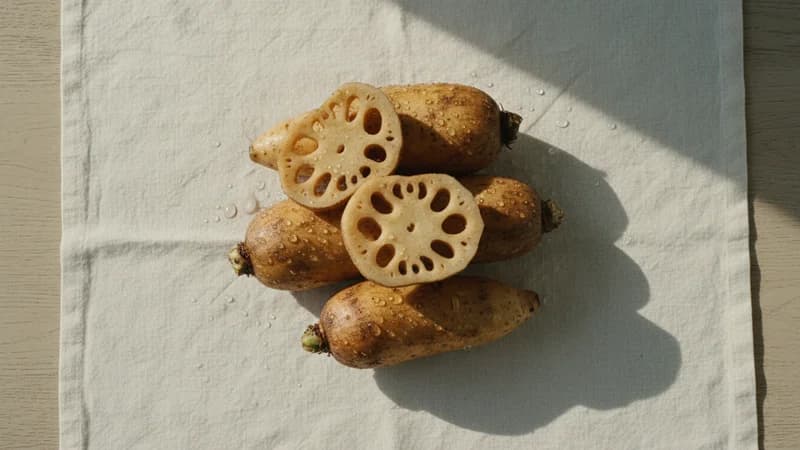
Lotus Root is best suited to Vata and Pitta, which it helps pacify. In excess it can raise Kapha. The astringent (kashaya) rasa with its light and dry guna makes lotus root gently binding, traditionally used to firm loose motions and tone a lax digestive tract.. Best enjoyed during winter.
Ayurvedic Profile
Lotus Root (Kamala Nala (कमल नाल)) is a nourishing vegetables treasured in Ayurvedic nutrition. Referenced in Raja Nighantu, it is characterised by sweet and astringent rasa (taste), cooling virya (potency), and sweet vipaka (post-digestive effect). Kamala Nala is described in Bhavaprakasha Nighantu as Hridya (cardiac tonic) and Raktapittahara (alleviating bleeding disorders). The lotus plant is sacred in Ayurveda, and its root provides starchy nourishment while maintaining Laghu quality that supports easy digestion. Its light and dry gunas make it particularly suited for specific constitutional types. It pacifies Vata, pacifies Pitta, and can aggravate Kapha when consumed in excess. From a nutritional standpoint, lotus root provides approximately 74 calories per 100g, with 2.6g protein, 17.2g carbohydrates, and is a valuable source of Vitamin C, Potassium, Copper. Best enjoyed during winter, lotus root supports healthy Agni (digestive fire) when prepared according to Ayurvedic principles, helping prevent Ama (toxin) accumulation and nourish the dhatus (body tissues).
Ayurvedic Properties
Rasa (Taste)
sweet, astringent
Virya (Potency)
cold
Vipaka (Post-digestive)
sweet
Guna (Qualities)
light, dry
How Lotus Root Affects Vata, Pitta & Kapha
Ayurveda reads every food through the three doshas. Here is how lotus root’s qualities interact with each: Not sure which is yours? Take the free dosha quiz — about 4 minutes.
Lotus Root helps pacify Vata. Its cold virya (potency) and light and dry qualities, with its sweet and astringent rasa (taste), counterbalance Vata's tendencies — which is why it traditionally suits Vata dosha in regular use. Vata meal plan
Lotus Root helps pacify Pitta. Its cold virya (potency) and light and dry qualities, with its sweet and astringent rasa (taste), counterbalance Pitta's tendencies — which is why it traditionally suits Pitta dosha in regular use. Pitta meal plan
Lotus Root is well tolerated by those with Kapha dosha in normal amounts, but its cold virya and light and dry qualities may aggravate Kapha in excess — so people with Kapha as their leading dosha are best keeping to measured portions. Kapha meal plan
Nutrition Facts (per 100g)
74kcal
Calories
2.6g
Protein
17.2g
Carbs
0.1g
Fat
4.9g
Fibre
Ayurvedic Benefits
- The astringent (kashaya) rasa with its light and dry guna makes lotus root gently binding, traditionally used to firm loose motions and tone a lax digestive tract.
- Cold virya and sweet vipaka let it cool and calm aggravated Pitta while its grounding, sweet undertone quietly steadies Vata — a rare combination in a starchy root.
- Its crisp flesh is a notable source of Vitamin C and copper, nutrients that support the building of healthy Rakta dhatu (blood) and resilient connective tissue.
- Being high in potassium yet light in quality, it is a cold-season staple that nourishes without the dampening heaviness of most winter roots.
- The firm fibre supports unhurried, regular elimination and, with its astringent tone, is traditionally favoured when the system needs a little drying and consolidation.
How to Use
- As lotus root is cooling (shita virya), favour it in warmer weather and pair it with warming spices like ginger or black pepper when the seasons turn cold.
- Lotus Root is at its best during winter — eating it in season keeps its Prana (vital energy) and benefit at their peak.
- Peel and slice the root into thin rounds — revealing its lace-like pattern of holes — and stir-fry with ginger and sesame so it keeps its signature crunch.
- Simmer thicker slices slowly in a spiced broth or kanji until tender; the long cook softens its dry guna and makes it gentler for Vata.
- Grate raw lotus root and bind it with besan, ajwain and coriander into small pan-fried kebabs or tikkis, cooked in a little ghee.
- Soak cut pieces in water with a little lemon while you prep, as the pale flesh browns quickly once exposed to air.
- Choose firm, unblemished segments that feel heavy and sound solid; pass over any that are soft, hollow-sounding or leaking, and always scrub the muddy skin well before peeling.
Contraindications
- Its light and dry guna can aggravate Vata when eaten raw or under-cooked; Vata types should always cook it soft and pair it with a little ghee or oil.
- As lotus root grows in ponds and paddy water, it must be peeled and thoroughly cooked — never eaten raw off the plant — to avoid water-borne parasites.
- The binding, astringent quality can add to dryness and hard stools if the bowels are already tight; those prone to constipation should keep portions small and well-oiled.
“Ayurveda classifies Lotus Root by its sweet, astringent rasa (taste), cold virya (thermal potency), and sweet vipaka (post-digestive effect). InnerVeda reads these three lenses together to map Lotus Root to your dosha and season.”
Frequently Asked Questions
It is best not to. Lotus root grows submerged in pond mud and can carry water-borne parasites, so it should always be peeled and cooked through. In Ayurvedic terms cooking also softens its dry, light guna, making it far kinder to Vata and easier to digest.
It is valued for its sweet-astringent rasa and cooling nature — the astringent (kashaya) note is traditionally chosen to gently firm loose digestion, while the sweet vipaka and cold virya help cool an aggravated Pitta system, especially in the cold season. It is prepared soft and spiced so its dryness does not disturb Vata.
The pale flesh oxidises quickly once exposed to air, much like an apple. Drop the cut pieces into water with a squeeze of lemon while you prepare the rest, and cook them soon after. The browning is harmless but the acidulated water keeps the slices bright and crisp.
Your dosha is the balance of Vata, Pitta and Kapha you were born with. Take the dosha quiz — free, about 4 minutes.
Three questions towards your dosha
These are the first three questions of the full dosha quiz. Answer them here and carry on where you left off.
Prefer to start from the beginning? Take the full dosha quiz.
Dietary information provided is for educational purposes only and is rooted in Ayurvedic tradition. It is not a substitute for professional nutritional or medical advice. Consult a qualified healthcare provider before making significant changes to your diet, especially if you have food allergies, intolerances, or a medical condition.
Want a meal plan matched to your dosha?
Take the free dosha assessment (about 4 minutes) and get a personalised nutrition plan with nearly 300 foods in the app, rated for your body.
Find Your Dosha: FreeAbout 4 minutes