Peanuts: Benefits & Dosha Effects
Sanskrit: Bhuchana (भूचन)
Peanuts is especially balancing for Vata and tends to aggravate Pitta and Kapha. With sweet rasa (taste), hot virya (potency) and sweet vipaka, it is heavy and oily in quality and a source of niacin.

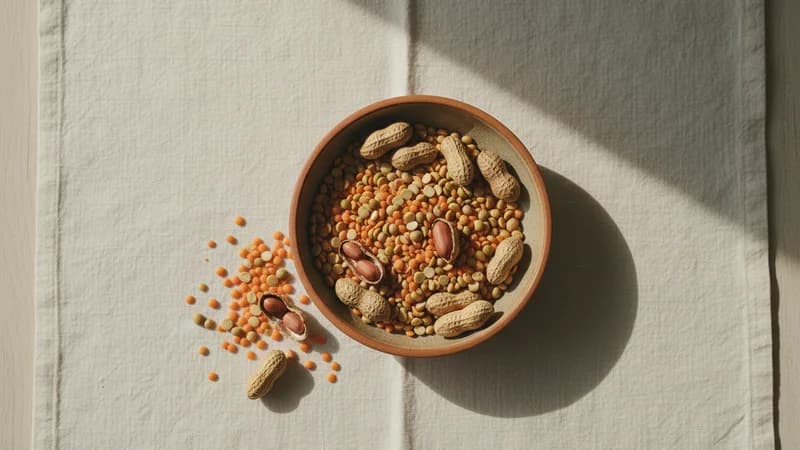
Peanuts is best suited to Vata, which it helps pacify. It can aggravate Pitta and Kapha, so people with Pitta and Kapha as their leading dosha should use it sparingly. Botanically a legume, the peanut carries a sweet rasa and sweet vipaka that make it richly nourishing, traditionally valued as an oily, sustaining food that supports strength and healthy body tissue.. Best enjoyed during winter.
Ayurvedic Profile
Peanuts (Bhuchana (भूचन)) is a protein-rich legumes treasured in Ayurvedic nutrition. Referenced in Ashtanga Hridaya, it is characterised by sweet rasa (taste), heating virya (potency), and sweet vipaka (post-digestive effect). Though botanically a legume, peanuts possess Snigdha (oily) and Guru (heavy) qualities similar to nuts in Ayurvedic classification; they are excellent for building body mass and Vata pacification but should be limited in Kapha and Pitta excess. Its heavy and oily gunas make it particularly suited for specific constitutional types. It pacifies Vata, may increase Pitta, and may increase Kapha. From a nutritional standpoint, peanuts provides approximately 567 calories per 100g, with 25.8g protein, 16.1g carbohydrates, and is a valuable source of Niacin, Folate, Manganese. Best enjoyed during winter, peanuts supports healthy Agni (digestive fire) when prepared according to Ayurvedic principles, helping prevent Ama (toxin) accumulation and nourish the dhatus (body tissues).
Ayurvedic Properties
Rasa (Taste)
sweet
Virya (Potency)
hot
Vipaka (Post-digestive)
sweet
Guna (Qualities)
heavy, oily
How Peanuts Affects Vata, Pitta & Kapha
Ayurveda reads every food through the three doshas. Here is how peanuts’s qualities interact with each: Not sure which is yours? Take the free dosha quiz — about 4 minutes.
Peanuts helps pacify Vata. Its hot virya (potency) and heavy and oily qualities, with its sweet rasa (taste), counterbalance Vata's tendencies — which is why it traditionally suits Vata dosha in regular use. Vata meal plan
Peanuts tends to increase Pitta. Its hot virya and heavy and oily qualities, with its sweet rasa, align with Pitta's own nature, so those with Pitta dosha are best using it sparingly and pairing it with Pitta-pacifying foods. Pitta meal plan
Peanuts tends to increase Kapha. Its hot virya and heavy and oily qualities, with its sweet rasa, align with Kapha's own nature, so those with Kapha dosha are best using it sparingly and pairing it with Kapha-pacifying foods. Kapha meal plan
Nutrition Facts (per 100g)
567kcal
Calories
25.8g
Protein
16.1g
Carbs
49.2g
Fat
8.5g
Fibre
Ayurvedic Benefits
- Botanically a legume, the peanut carries a sweet rasa and sweet vipaka that make it richly nourishing, traditionally valued as an oily, sustaining food that supports strength and healthy body tissue.
- Its heavy, oily (snigdha) guna lubricates a dry system and strongly pacifies Vata (V↓), so a handful of warm roasted peanuts is traditionally used as a grounding, energy-dense snack in cold, dry weather.
- Peanuts are an excellent source of niacin and other B-vitamins that support normal energy metabolism, helping the body turn food into steady fuel rather than leaving you reaching for quick sugar.
- Their manganese supports normal antioxidant defences and, alongside the fat-and-fibre combination, helps a peanut-based snack feel satisfying and slow-releasing rather than quickly hunger-inducing.
- The folate in peanuts supports healthy cell formation, making them a useful, portable plant food for anyone wanting to keep up folate and plant protein on the go.
How to Use
- As peanuts is heating (ushna virya), balance it with cooling accompaniments such as coriander, fennel or a little ghee — especially through the warmer months.
- Peanuts is at its best during winter — eating it in season keeps its Prana (vital energy) and benefit at their peak.
- Dry-roast raw peanuts in a warm pan until fragrant, then eat them warm as a winter snack; roasting suits their hot virya far better than eating them cold and raw, which sits heavily on Agni.
- Grind roasted peanuts into a fresh chutney with roasted cumin, a little tamarind, green chilli and salt, a South Indian preparation that adds digestive spice to the oily nut.
- Stir a spoon of peanut butter or crushed peanuts into a warm porridge, or scatter them over cooked poha and upma, keeping the portion to a small handful so the richness does not overwhelm.
- Boil raw peanuts in salted water as a soft, warming monsoon-and-winter snack; boiling softens them and makes the heavy, oily quality a little gentler to digest than deep-fried versions.
- Pair with warming spices such as jaggery, ginger or roasted cumin, as in a peanut-and-jaggery chikki, rather than eating large salted-fried quantities that overload Pitta and Kapha.
Contraindications
- Best limited by those with strong Pitta or Kapha (P↑ K↑): the hot virya can aggravate acidity, heat and skin issues, while the very high fat and heavy, oily quality can worsen congestion, sluggishness and weight gain.
- Anyone with a known peanut allergy must avoid them completely, as reactions can be severe and life-threatening; this is a genuine safety matter, not merely a question of constitution.
- Those with weak Agni, a tendency to acidity, or gallbladder trouble should keep portions small and favour roasted or boiled over deep-fried, salted peanuts, which are the hardest to digest.
“Ayurveda classifies Peanuts by its sweet rasa (taste), hot virya (thermal potency), and sweet vipaka (post-digestive effect). InnerVeda reads these three lenses together to map Peanuts to your dosha and season.”
Frequently Asked Questions
Botanically the peanut is a legume that grows underground, not a tree nut, and Ayurveda treats it much like other oily pulses: sweet in taste, heavy and oily in quality, warming in potency and strongly Vata-pacifying. That is why it behaves more like a rich dal than like an almond or walnut.
Roasted, and eaten warm, suits their nature best. Their hot virya and heavy, oily quality make cold raw peanuts slow and heavy on Agni, whereas gentle dry-roasting or boiling, ideally with a little cumin or ginger, makes them far easier to digest as a warming winter snack.
They can if you are already Pitta-prone. The virya is hot and the fat content is high, so large amounts, especially deep-fried and salted, may aggravate acidity, heat and skin flare-ups. Keep portions to a small handful, favour roasted or boiled, and balance with cooling foods if you tend to run hot.
Your dosha is the balance of Vata, Pitta and Kapha you were born with. Take the dosha quiz — free, about 4 minutes.
Three questions towards your dosha
These are the first three questions of the full dosha quiz. Answer them here and carry on where you left off.
Prefer to start from the beginning? Take the full dosha quiz.
Dietary information provided is for educational purposes only and is rooted in Ayurvedic tradition. It is not a substitute for professional nutritional or medical advice. Consult a qualified healthcare provider before making significant changes to your diet, especially if you have food allergies, intolerances, or a medical condition.
Want a meal plan matched to your dosha?
Take the free dosha assessment (about 4 minutes) and get a personalised nutrition plan with nearly 300 foods in the app, rated for your body.
Find Your Dosha: FreeAbout 4 minutes