Pecans: Benefits & Dosha Effects
Sanskrit: Pekan (पीकन)
Pecans is especially balancing for Vata but can raise Pitta when eaten in excess and tends to aggravate Kapha. With sweet rasa (taste), hot virya (potency) and sweet vipaka, it is heavy and oily in quality and a source of manganese.

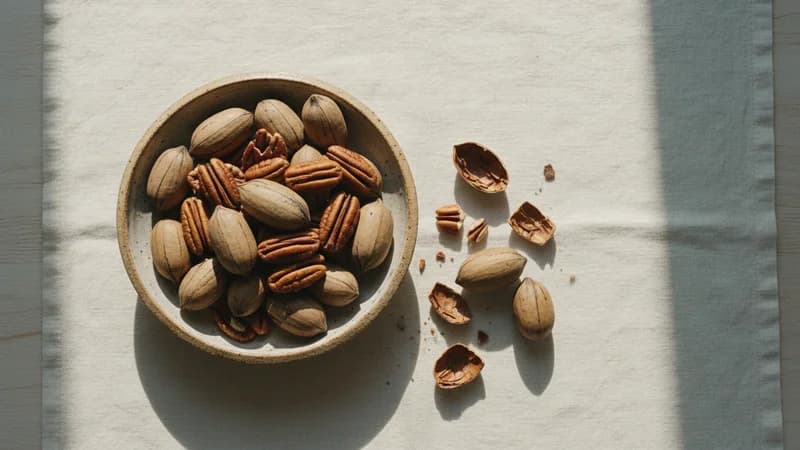
Pecans is best suited to Vata, which it helps pacify. It can aggravate Kapha, so people with Kapha as their leading dosha should use it sparingly. With their sweet rasa and heavy, oily guna, pecans are warming and grounding, traditionally welcomed in cold weather to steady a restless, depleted Vata and bring a sense of comfort and nourishment.. Best enjoyed during winter.
Ayurvedic Profile
Pecans (Pekan (पीकन)) is a strengthening nuts seeds treasured in Ayurvedic nutrition. Referenced in Raja Nighantu, it is characterised by sweet rasa (taste), heating virya (potency), and sweet vipaka (post-digestive effect). Pecans are among the most Snigdha (oily) of all nuts, with rich monounsaturated fats that deeply nourish Vata and Majja dhatu. Their Madhura-Ushna properties make them excellent for winter consumption, building strength and insulation, though Kapha types should limit intake due to their extreme heaviness. Its heavy and oily gunas make it particularly suited for specific constitutional types. It pacifies Vata, can aggravate Pitta when consumed in excess, and may increase Kapha. From a nutritional standpoint, pecans provides approximately 691 calories per 100g, with 9.2g protein, 13.9g carbohydrates, and is a valuable source of Manganese, Copper, Thiamine. Best enjoyed during winter, pecans supports healthy Agni (digestive fire) when prepared according to Ayurvedic principles, helping prevent Ama (toxin) accumulation and nourish the dhatus (body tissues).
Ayurvedic Properties
Rasa (Taste)
sweet
Virya (Potency)
hot
Vipaka (Post-digestive)
sweet
Guna (Qualities)
heavy, oily
How Pecans Affects Vata, Pitta & Kapha
Ayurveda reads every food through the three doshas. Here is how pecans’s qualities interact with each: Not sure which is yours? Take the free dosha quiz — about 4 minutes.
Pecans helps pacify Vata. Its hot virya (potency) and heavy and oily qualities, with its sweet rasa (taste), counterbalance Vata's tendencies — which is why it traditionally suits Vata dosha in regular use. Vata meal plan
Pecans is well tolerated by those with Pitta dosha in normal amounts, but its hot virya and heavy and oily qualities may aggravate Pitta in excess — so people with Pitta as their leading dosha are best keeping to measured portions. Pitta meal plan
Pecans tends to increase Kapha. Its hot virya and heavy and oily qualities, with its sweet rasa, align with Kapha's own nature, so those with Kapha dosha are best using it sparingly and pairing it with Kapha-pacifying foods. Kapha meal plan
Nutrition Facts (per 100g)
691kcal
Calories
9.2g
Protein
13.9g
Carbs
72g
Fat
9.6g
Fibre
Ayurvedic Benefits
- With their sweet rasa and heavy, oily guna, pecans are warming and grounding, traditionally welcomed in cold weather to steady a restless, depleted Vata and bring a sense of comfort and nourishment.
- Their hot virya supports a gentle kindling of Agni while their rich oils lubricate dry tissues, so they may help ease the internal dryness and irregularity that Vata brings through winter.
- Pecans are among the most antioxidant-rich of tree nuts, supplying flavonoids and vitamin E that support the body's own defences against the oxidative, Ama-forming load of stress and cold.
- A good source of manganese and copper, they provide minerals the body uses in bone maintenance and enzyme function, complementing their reputation as a nourishing, dhatu-building food.
- Their thiamine (vitamin B1) and monounsaturated fats support steady energy and satiety, so a small handful settles winter hunger without the lightness and unrest of dry, crunchy snacks.
How to Use
- As pecans is heating (ushna virya), balance it with cooling accompaniments such as coriander, fennel or a little ghee — especially through the warmer months.
- Pecans is at its best during winter — eating it in season keeps its Prana (vital energy) and benefit at their peak.
- Toast a small handful of about ten halves in a dry pan until fragrant to lift their buttery, faintly maple-like sweetness before eating.
- Fold chopped pecans into warm winter baking such as spiced apple or banana loaf, where their sweet rasa and warming nature suit cinnamon and nutmeg.
- Scatter them over warm porridge or a baked pear with a little ghee for a grounding, Vata-soothing winter breakfast.
- Blend soaked pecans into a spiced date and pecan warm milk for a comforting, tissue-nourishing evening drink.
- Buy little and often and keep them airtight in a cool place or the fridge: pecans are especially prone to going rancid, and rancid oil is Ama-forming and best avoided.
Contraindications
- Their warming virya means those of a Pitta constitution or with active heat signs such as acidity or inflammation should keep portions small and occasional.
- As a heavy, oily nut they are Kapha-increasing and best limited by anyone with sluggish digestion, congestion, heaviness or a tendency to gain weight, particularly in damp weather.
- They are calorie-dense and, being a true tree nut, unsuitable for those with tree-nut allergy; enjoy in modest handfuls rather than by the bowl if watching your weight.
“Ayurveda classifies Pecans by its sweet rasa (taste), hot virya (thermal potency), and sweet vipaka (post-digestive effect). InnerVeda reads these three lenses together to map Pecans to your dosha and season.”
Frequently Asked Questions
Both are sweet, warming, oily nuts that ground Vata, but pecans are softer, sweeter and less astringent, with a mellow maple-like note, while walnuts are more tannic and slightly bitter. Pecans suit those who find walnuts a touch sharp.
Pecans are warming, with a hot virya (potency). This makes them well suited to cold winter days and to a dry, cold Vata constitution, but a reason for anyone with a fiery Pitta tendency to eat them sparingly.
Keep them airtight in a cool place or, better, the fridge or freezer, and buy small amounts often. Pecans are among the quickest nuts to turn rancid, and from an Ayurvedic view rancid, spoiled oil is Ama-forming and best not eaten.
Your dosha is the balance of Vata, Pitta and Kapha you were born with. Take the dosha quiz — free, about 4 minutes.
Three questions towards your dosha
These are the first three questions of the full dosha quiz. Answer them here and carry on where you left off.
Prefer to start from the beginning? Take the full dosha quiz.
Dietary information provided is for educational purposes only and is rooted in Ayurvedic tradition. It is not a substitute for professional nutritional or medical advice. Consult a qualified healthcare provider before making significant changes to your diet, especially if you have food allergies, intolerances, or a medical condition.
Want a meal plan matched to your dosha?
Take the free dosha assessment (about 4 minutes) and get a personalised nutrition plan with nearly 300 foods in the app, rated for your body.
Find Your Dosha: FreeAbout 4 minutes