Star Anise: Benefits & Dosha Effects
Sanskrit: Chakraphula (चक्रफूल)
Star Anise is especially balancing for Vata and Kapha but can raise Pitta when eaten in excess. With sweet and pungent rasa (taste), hot virya (potency) and sweet vipaka, it is light and oily in quality and a source of iron.

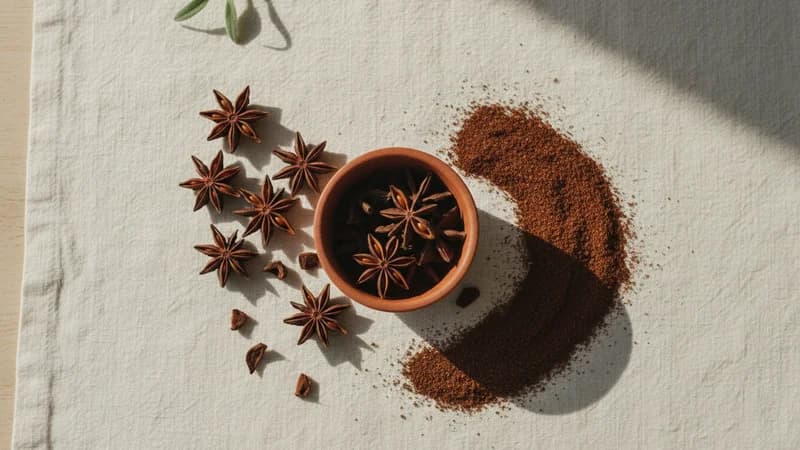
Star Anise is best suited to Vata and Kapha, which it helps pacify. In excess it can raise Pitta. Its warm, liquorice-sweet anethole and sweet vipaka make star anise a gentle Deepana-Pachana (kindler of Agni) that supports Vata-pacifying digestion without leaving the gut cold or heavy after a meal.. Best enjoyed during winter.
Ayurvedic Profile
Star Anise (Chakraphula (चक्रफूल)) is a therapeutic spices treasured in Ayurvedic nutrition. Referenced in Kaiyadeva Nighantu, it is characterised by sweet and pungent rasa (taste), heating virya (potency), and sweet vipaka (post-digestive effect). Star anise contains anethole, the same therapeutic compound found in fennel, making it a potent Vata-Kapha pacifier; Ayurvedic practitioners use it to warm the digestive tract and clear cold-type respiratory congestion. Its light and oily gunas make it particularly suited for specific constitutional types. It pacifies Vata, can aggravate Pitta when consumed in excess, and pacifies Kapha. From a nutritional standpoint, star anise provides approximately 337 calories per 100g, with 17.6g protein, 50.0g carbohydrates, and is a valuable source of Iron, Calcium, Manganese. Best enjoyed during winter, star anise supports healthy Agni (digestive fire) when prepared according to Ayurvedic principles, helping prevent Ama (toxin) accumulation and nourish the dhatus (body tissues).
Ayurvedic Properties
Rasa (Taste)
sweet, pungent
Virya (Potency)
hot
Vipaka (Post-digestive)
sweet
Guna (Qualities)
light, oily
How Star Anise Affects Vata, Pitta & Kapha
Ayurveda reads every food through the three doshas. Here is how star anise’s qualities interact with each: Not sure which is yours? Take the free dosha quiz — about 4 minutes.
Star Anise helps pacify Vata. Its hot virya (potency) and light and oily qualities, with its sweet and pungent rasa (taste), counterbalance Vata's tendencies — which is why it traditionally suits Vata dosha in regular use. Vata meal plan
Star Anise is well tolerated by those with Pitta dosha in normal amounts, but its hot virya and light and oily qualities may aggravate Pitta in excess — so people with Pitta as their leading dosha are best keeping to measured portions. Pitta meal plan
Star Anise helps pacify Kapha. Its hot virya (potency) and light and oily qualities, with its sweet and pungent rasa (taste), counterbalance Kapha's tendencies — which is why it traditionally suits Kapha dosha in regular use. Kapha meal plan
Nutrition Facts (per 100g)
337kcal
Calories
17.6g
Protein
50g
Carbs
15.9g
Fat
14.6g
Fibre
Ayurvedic Benefits
- Its warm, liquorice-sweet anethole and sweet vipaka make star anise a gentle Deepana-Pachana (kindler of Agni) that supports Vata-pacifying digestion without leaving the gut cold or heavy after a meal.
- The hot virya paired with light guna gives it a warming, decongesting quality valued in cold, damp Kapha weather, which is why a single pod is traditionally simmered into winter kadha and warming teas.
- Its carminative, faintly oily nature is traditionally used to ease Vata-driven bloating, trapped wind and post-meal gurgling, supporting the downward flow of Apana Vata.
- Contributing iron and calcium, it adds mineral depth to a warming winter spice blend, complementing the Rakta and Asthi dhatu when used regularly in cooking.
- The sweet-pungent rasa and aromatic volatile oils act as a natural breath-freshener and mild Mukha Shodhana, leaving the mouth clean and warm after a rich, oily meal.
How to Use
- As star anise is heating (ushna virya), balance it with cooling accompaniments such as coriander, fennel or a little ghee — especially through the warmer months.
- Star Anise is at its best during winter — eating it in season keeps its Prana (vital energy) and benefit at their peak.
- Drop one whole star into slow-cooked biryani, pulao or a meat curry at the start of cooking so the eight-pointed pod perfumes the oil, then lift it out before serving.
- Simmer a single point (not the whole star) in water with cinnamon and ginger for 8-10 minutes to make a warming winter kadha; it is potent, so half a star flavours two cups.
- Add a pod to the poaching liquid for pears, plums or a spiced fruit compote, where its liquorice sweetness pairs naturally with the sweet vipaka.
- Toast lightly and grind a small pinch into homemade five-spice or garam masala for stews and braises eaten in the cold Hemanta and Shishira seasons.
- Steep one point in hot milk with a little jaggery as a soothing Vata-pacifying nightcap, straining well before drinking.
Contraindications
- Those with high Pitta, acid reflux or a burning tendency should keep it minimal, as the hot virya can aggravate Pitta when used in excess or out of season.
- Buy only culinary Chinese star anise from a trusted source: the toxic Japanese star anise (Illicium anisatum) looks similar and must never be used, and star-anise tea should not be given to infants or young children.
- If pregnant, breastfeeding, or taking prescribed medication, use it only as an occasional culinary spice and seek guidance from a qualified practitioner before any concentrated or therapeutic dose.
“Ayurveda classifies Star Anise by its sweet, pungent rasa (taste), hot virya (thermal potency), and sweet vipaka (post-digestive effect). InnerVeda reads these three lenses together to map Star Anise to your dosha and season.”
Star Anise by Dosha
See how star anise interacts with each dosha and get personalised guidance.
Frequently Asked Questions
No. Aniseed and fennel are small seeds, while star anise is the dried, eight-pointed woody fruit of an evergreen tree. They share the anethole compound that gives all three a liquorice note, which is why Ayurveda treats them as kindred warming, Vata-pacifying carminatives, but they are botanically unrelated.
Very little. One whole pod is enough to flavour a full pot of biryani or curry for four to six people, and a single point suffices for a cup of tea. It is intensely aromatic with a hot virya, so overusing it turns a dish medicinal and bitter and can aggravate Pitta.
In small culinary amounts, simmering one point with ginger and cinnamon makes a warming kadha traditionally taken for comfort during a cold-type, Kapha season. Keep it modest, avoid it if you run hot or have acidity, and never give star-anise tea to babies or young children.
Your dosha is the balance of Vata, Pitta and Kapha you were born with. Take the dosha quiz — free, about 4 minutes.
Three questions towards your dosha
These are the first three questions of the full dosha quiz. Answer them here and carry on where you left off.
Prefer to start from the beginning? Take the full dosha quiz.
Dietary information provided is for educational purposes only and is rooted in Ayurvedic tradition. It is not a substitute for professional nutritional or medical advice. Consult a qualified healthcare provider before making significant changes to your diet, especially if you have food allergies, intolerances, or a medical condition.
Want a meal plan matched to your dosha?
Take the free dosha assessment (about 4 minutes) and get a personalised nutrition plan with nearly 300 foods in the app, rated for your body.
Find Your Dosha: FreeAbout 4 minutes