Wild Rice: Benefits & Dosha Effects
Sanskrit: Vanya Shali (वन्य शालि)
Wild Rice is especially balancing for Pitta and Kapha but can raise Vata when eaten in excess. With sweet and astringent rasa (taste), cold virya (potency) and sweet vipaka, it is light and dry in quality and a source of zinc.

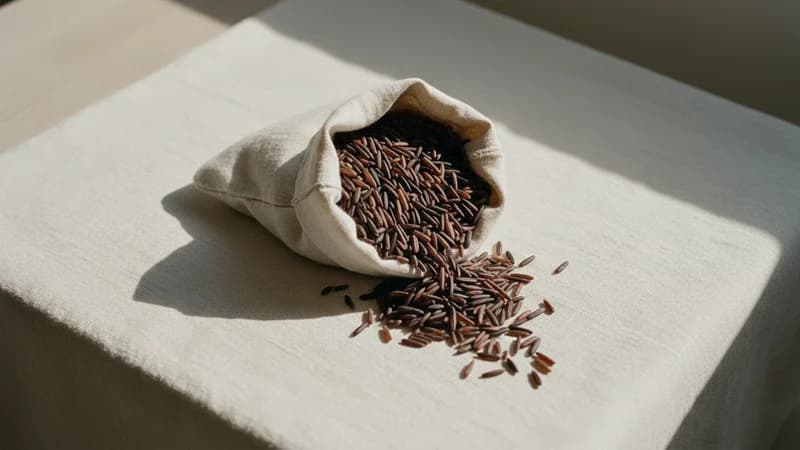
Wild Rice is best suited to Pitta and Kapha, which it helps pacify. In excess it can raise Vata. Wild rice (Vanya Shali) shares the sweet-astringent rasa and cold virya of this cooling grain group, and as the seed of an aquatic grass its long, dark, nutty kernels offer a distinctive, chewy wholegrain that Ayurveda regards as light yet satisfying for Pitta and Kapha.. Best enjoyed during autumn.
Ayurvedic Profile
Wild Rice (Vanya Shali (वन्य शालि)) is a sustaining grains treasured in Ayurvedic nutrition. Referenced in Dhanvantari Nighantu, it is characterised by sweet and astringent rasa (taste), cooling virya (potency), and sweet vipaka (post-digestive effect). Wild rice is not true rice but an aquatic grass seed, yet its Ayurvedic properties align with Laghu varieties of Shali. Its higher protein and fibre content compared to white rice makes it a more Lekhana (scraping) grain that supports Kapha reduction while providing sustained energy. Its light and dry gunas make it particularly suited for specific constitutional types. It can aggravate Vata when consumed in excess, pacifies Pitta, and pacifies Kapha. From a nutritional standpoint, wild rice provides approximately 357 calories per 100g, with 14.7g protein, 74.9g carbohydrates, and is a valuable source of Zinc, Manganese, Phosphorus. Best enjoyed during autumn, wild rice supports healthy Agni (digestive fire) when prepared according to Ayurvedic principles, helping prevent Ama (toxin) accumulation and nourish the dhatus (body tissues).
Ayurvedic Properties
Rasa (Taste)
sweet, astringent
Virya (Potency)
cold
Vipaka (Post-digestive)
sweet
Guna (Qualities)
light, dry
How Wild Rice Affects Vata, Pitta & Kapha
Ayurveda reads every food through the three doshas. Here is how wild rice’s qualities interact with each: Not sure which is yours? Take the free dosha quiz — about 4 minutes.
Wild Rice is well tolerated by those with Vata dosha in normal amounts, but its cold virya and light and dry qualities may aggravate Vata in excess — so people with Vata as their leading dosha are best keeping to measured portions. Vata meal plan
Wild Rice helps pacify Pitta. Its cold virya (potency) and light and dry qualities, with its sweet and astringent rasa (taste), counterbalance Pitta's tendencies — which is why it traditionally suits Pitta dosha in regular use. Pitta meal plan
Wild Rice helps pacify Kapha. Its cold virya (potency) and light and dry qualities, with its sweet and astringent rasa (taste), counterbalance Kapha's tendencies — which is why it traditionally suits Kapha dosha in regular use. Kapha meal plan
Nutrition Facts (per 100g)
357kcal
Calories
14.7g
Protein
74.9g
Carbs
1.1g
Fat
6.2g
Fibre
Ayurvedic Benefits
- Wild rice (Vanya Shali) shares the sweet-astringent rasa and cold virya of this cooling grain group, and as the seed of an aquatic grass its long, dark, nutty kernels offer a distinctive, chewy wholegrain that Ayurveda regards as light yet satisfying for Pitta and Kapha.
- Notably rich in zinc and manganese, wild rice supports the body's natural resilience and the healthy functioning of the dhatus, lending it a nourishing, strengthening quality despite its light, dry guna.
- Its good phosphorus content and slow-digesting nature make wild rice a grounding grain that provides steady, sustained energy, a wholesome autumn choice when harvest-season grains are traditionally welcomed.
- The astringent note gives wild rice a mild, Ama-reducing, absorbent character, and its lighter nature means it sits more easily than white rice on a Kapha-predominant system prone to post-meal heaviness.
- With more protein and fibre than ordinary polished rice, wild rice is a nourishing, non-cloying grain whose cooling, sweet-vipaka profile Ayurveda regards as especially suited to those carrying excess internal heat.
How to Use
- As wild rice is cooling (shita virya), favour it in warmer weather and pair it with warming spices like ginger or black pepper when the seasons turn cold.
- Wild Rice is at its best during autumn — eating it in season keeps its Prana (vital energy) and benefit at their peak.
- Rinse well and simmer one part wild rice to three parts water for around 40 to 50 minutes until the kernels split and curl, revealing their pale, tender interior.
- Because it is firm, dry and Vata-aggravating, cook it until fully softened and dress it with ghee or a warm oil, toasted nuts and warming spices to keep it gentle on the digestion.
- Blend wild rice half-and-half with a softer grain such as little millet or basmati for a lighter, more forgiving texture and a shorter cooking time.
- Fold cooked, cooled wild rice into an autumn salad with roasted squash, herbs and a citrus dressing, where its nutty chew and cooling nature shine.
- Simmer it slowly into a savoury pilaf with sautéed vegetables, ginger and a little ghee for a grounding, warming main that offsets its natural dryness.
Contraindications
- Wild rice is dry, light and firm with a cold virya, so it aggravates Vata; those prone to dryness, wind or bloating are best limiting it, cooking it thoroughly soft, and always pairing it with ghee, oil or warming spices.
- Its cooling potency makes it less suited to people with weak Agni or who feel the cold easily; in the cold season favour warmer, more unctuous grains and keep wild rice for milder days.
- Its long cooking time and chewy texture make it harder to digest if underdone, so cook it fully until the kernels split and soften; introduce it gradually if your gut is sensitive, and keep portions modest at first.
“Ayurveda classifies Wild Rice by its sweet, astringent rasa (taste), cold virya (thermal potency), and sweet vipaka (post-digestive effect). InnerVeda reads these three lenses together to map Wild Rice to your dosha and season.”
Frequently Asked Questions
Botanically it is not true rice but the seed of an aquatic grass, which gives it its long, dark kernels and nutty, chewy character. Ayurveda groups it with cooling, sweet-astringent grains, and its cold virya and light nature make it a suitable wholegrain for Pitta and Kapha types.
Its firm outer bran is intact, so wild rice needs around 40 to 50 minutes of simmering in plenty of water until the kernels split open and soften. Cooking it fully matters in Ayurveda too, as underdone, dry grain is harder on the digestion and more aggravating to Vata.
It is not a matter of better, but different: wild rice is lighter, drier and richer in zinc, manganese, protein and fibre, which suits Kapha and Pitta, whereas soft white rice is more grounding and unctuous for Vata. Choosing between them depends on your constitution, the season and how the grain is cooked.
Your dosha is the balance of Vata, Pitta and Kapha you were born with. Take the dosha quiz — free, about 4 minutes.
Three questions towards your dosha
These are the first three questions of the full dosha quiz. Answer them here and carry on where you left off.
Prefer to start from the beginning? Take the full dosha quiz.
Dietary information provided is for educational purposes only and is rooted in Ayurvedic tradition. It is not a substitute for professional nutritional or medical advice. Consult a qualified healthcare provider before making significant changes to your diet, especially if you have food allergies, intolerances, or a medical condition.
Want a meal plan matched to your dosha?
Take the free dosha assessment (about 4 minutes) and get a personalised nutrition plan with nearly 300 foods in the app, rated for your body.
Find Your Dosha: FreeAbout 4 minutes