Brazil Nuts: Benefits & Dosha Effects
Sanskrit: Brazili Akshota (ब्राजीली अक्षोट)
Brazil Nuts is especially balancing for Vata but can raise Pitta when eaten in excess and tends to aggravate Kapha. With sweet rasa (taste), hot virya (potency) and sweet vipaka, it is heavy and oily in quality and a source of selenium.

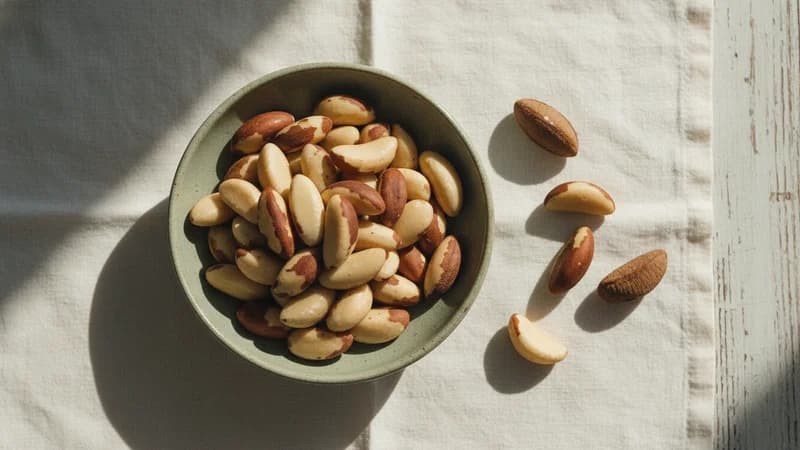
Brazil Nuts is best suited to Vata, which it helps pacify. It can aggravate Kapha, so people with Kapha as their leading dosha should use it sparingly. With their sweet rasa and unctuous, heavy guna, Brazil nuts are deeply grounding and traditionally used to calm an aggravated Vata, easing the dryness, restlessness and depletion that build up through a cold, windy winter.. Best enjoyed during winter.
Ayurvedic Profile
Brazil Nuts (Brazili Akshota (ब्राजीली अक्षोट)) is a strengthening nuts seeds treasured in Ayurvedic nutrition. Referenced in Raja Nighantu, it is characterised by sweet rasa (taste), heating virya (potency), and sweet vipaka (post-digestive effect). Brazil nuts are the richest natural source of selenium, a trace mineral essential for thyroid function aligned with Agni regulation in Ayurveda. Just 1-2 nuts provide daily selenium needs, supporting Dhatvagni (tissue-level metabolism) while their heavy-oily nature requires mindful portion control. Its heavy and oily gunas make it particularly suited for specific constitutional types. It pacifies Vata, can aggravate Pitta when consumed in excess, and may increase Kapha. From a nutritional standpoint, brazil nuts provides approximately 656 calories per 100g, with 14.3g protein, 12.3g carbohydrates, and is a valuable source of Selenium, Magnesium, Copper. Best enjoyed during winter, brazil nuts supports healthy Agni (digestive fire) when prepared according to Ayurvedic principles, helping prevent Ama (toxin) accumulation and nourish the dhatus (body tissues).
Ayurvedic Properties
Rasa (Taste)
sweet
Virya (Potency)
hot
Vipaka (Post-digestive)
sweet
Guna (Qualities)
heavy, oily
How Brazil Nuts Affects Vata, Pitta & Kapha
Ayurveda reads every food through the three doshas. Here is how brazil nuts’s qualities interact with each: Not sure which is yours? Take the free dosha quiz — about 4 minutes.
Brazil Nuts helps pacify Vata. Its hot virya (potency) and heavy and oily qualities, with its sweet rasa (taste), counterbalance Vata's tendencies — which is why it traditionally suits Vata dosha in regular use. Vata meal plan
Brazil Nuts is well tolerated by those with Pitta dosha in normal amounts, but its hot virya and heavy and oily qualities may aggravate Pitta in excess — so people with Pitta as their leading dosha are best keeping to measured portions. Pitta meal plan
Brazil Nuts tends to increase Kapha. Its hot virya and heavy and oily qualities, with its sweet rasa, align with Kapha's own nature, so those with Kapha dosha are best using it sparingly and pairing it with Kapha-pacifying foods. Kapha meal plan
Nutrition Facts (per 100g)
656kcal
Calories
14.3g
Protein
12.3g
Carbs
66.4g
Fat
7.5g
Fibre
Ayurvedic Benefits
- With their sweet rasa and unctuous, heavy guna, Brazil nuts are deeply grounding and traditionally used to calm an aggravated Vata, easing the dryness, restlessness and depletion that build up through a cold, windy winter.
- Their hot virya kindles a sluggish Agni and their rich oils lubricate dry dhatus, so they may help nourish the deeper tissues and support the building of Ojas, the subtle essence behind vitality and steady immunity.
- A single nut is famously dense in selenium, a mineral the body uses to support healthy thyroid function and its own antioxidant defences against Ama-forming oxidative load.
- Their generous magnesium content works with their Vata-settling nature to support relaxed muscles and steady, restful sleep, which classical texts prize as a ground of good health.
- Copper and their rich monounsaturated fats support the maintenance of connective tissue and skin suppleness, in keeping with their reputation as a snigdha (oily) rasayana-style food when eaten in small, considered amounts.
How to Use
- As brazil nuts is heating (ushna virya), balance it with cooling accompaniments such as coriander, fennel or a little ghee — especially through the warmer months.
- Brazil Nuts is at its best during winter — eating it in season keeps its Prana (vital energy) and benefit at their peak.
- Eat just one to two nuts a day, no more: their selenium is so concentrated that a small handful can tip past a safe daily intake, so treat them as a mineral-rich morsel rather than a snack.
- Soak two nuts overnight and peel them in the morning to soften their heavy, oily quality and make them gentler on a delicate Agni.
- Chop finely over warm winter porridge or spiced stewed apples, where their buttery richness and hot virya complement cinnamon, cardamom and ginger.
- Blend one soaked nut into a warm turmeric or date milk at night as a grounding, Vata-pacifying nightcap.
- Keep them refrigerated in an airtight jar and eat within a few weeks: their high oil content turns rancid quickly, and rancid oil is Ama-forming and best avoided.
Contraindications
- Because of their heating virya and rich oils, those of a Pitta constitution or with active heat signs (acidity, skin flare-ups, inflammation) should keep to one nut occasionally and prefer cooling nuts instead.
- Their heavy, oily, Kapha-increasing nature makes them best limited by anyone with sluggish digestion, congestion, or a tendency to weight gain, especially in damp weather.
- Selenium is genuinely toxic in excess; more than a couple of nuts daily over time can cause selenosis (brittle nails, hair loss, breath odour), so never treat them as a casual munching nut and speak to a clinician if you already take selenium supplements.
“Ayurveda classifies Brazil Nuts by its sweet rasa (taste), hot virya (thermal potency), and sweet vipaka (post-digestive effect). InnerVeda reads these three lenses together to map Brazil Nuts to your dosha and season.”
Frequently Asked Questions
One or two is ample. A single nut can already supply a full day's selenium, so from an Ayurvedic view of measured, mindful eating this suits its concentrated nature perfectly, and it also keeps you well within safe selenium limits.
They are warming, with a hot virya (potency). That is why they suit cold winter days and a dry Vata constitution, and why anyone with a fiery Pitta tendency or active heat signs should take them sparingly.
Soaking a nut or two overnight softens their heavy, oily guna and loosens the skin so it peels away easily, making them lighter on the digestion, which is especially helpful if your Agni is delicate.
Your dosha is the balance of Vata, Pitta and Kapha you were born with. Take the dosha quiz — free, about 4 minutes.
Three questions towards your dosha
These are the first three questions of the full dosha quiz. Answer them here and carry on where you left off.
Prefer to start from the beginning? Take the full dosha quiz.
Dietary information provided is for educational purposes only and is rooted in Ayurvedic tradition. It is not a substitute for professional nutritional or medical advice. Consult a qualified healthcare provider before making significant changes to your diet, especially if you have food allergies, intolerances, or a medical condition.
Want a meal plan matched to your dosha?
Take the free dosha assessment (about 4 minutes) and get a personalised nutrition plan with nearly 300 foods in the app, rated for your body.
Find Your Dosha: FreeAbout 4 minutes