Green Gram Sprouts: Benefits & Dosha Effects
Sanskrit: Ankurita Mudga (अंकुरित मुद्ग)
Green Gram Sprouts is especially balancing for Pitta and Kapha but can raise Vata when eaten in excess. With sweet and astringent rasa (taste), cold virya (potency) and sweet vipaka, it is light and dry in quality and a source of vitamin c.

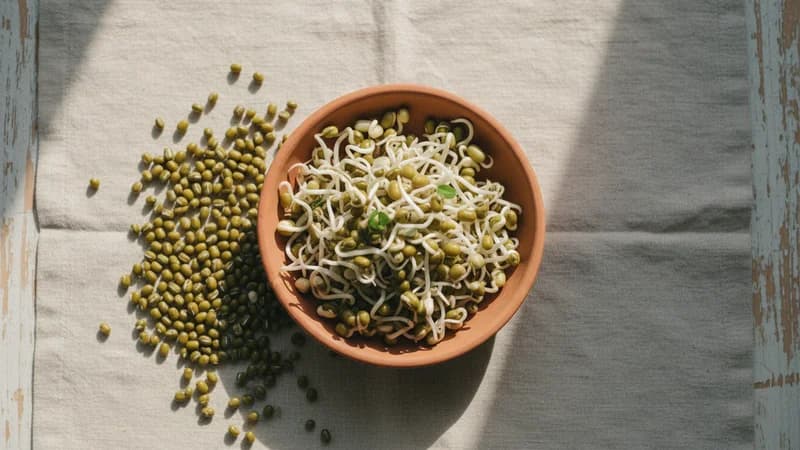
Green Gram Sprouts is best suited to Pitta and Kapha, which it helps pacify. In excess it can raise Vata. The sweet vipaka and cooling virya make sprouted green gram one of the gentlest legumes for Pitta, traditionally used to settle a sense of heat and acidity without the heaviness of a whole dal. Best enjoyed during spring.
Ayurvedic Profile
Green Gram Sprouts (Ankurita Mudga (अंकुरित मुद्ग)) is a protein-rich legumes treasured in Ayurvedic nutrition. Referenced in Bhavaprakasha Nighantu, it is characterised by sweet and astringent rasa (taste), cooling virya (potency), and sweet vipaka (post-digestive effect). Ankurita Mudga (sprouted mung) transforms the already Laghu Mudga into an even lighter, more bioavailable form. Charaka Samhita recommends sprouts as Pathya (wholesome) in spring to clear winter Kapha, as sprouting increases Vitamin C content and reduces anti-nutritional factors. Its light and dry gunas make it particularly suited for specific constitutional types. It can aggravate Vata when consumed in excess, pacifies Pitta, and pacifies Kapha. From a nutritional standpoint, green gram sprouts provides approximately 30 calories per 100g, with 3.0g protein, 5.9g carbohydrates, and is a valuable source of Vitamin C, Folate, Iron. Best enjoyed during spring, green gram sprouts supports healthy Agni (digestive fire) when prepared according to Ayurvedic principles, helping prevent Ama (toxin) accumulation and nourish the dhatus (body tissues).
Ayurvedic Properties
Rasa (Taste)
sweet, astringent
Virya (Potency)
cold
Vipaka (Post-digestive)
sweet
Guna (Qualities)
light, dry
How Green Gram Sprouts Affects Vata, Pitta & Kapha
Ayurveda reads every food through the three doshas. Here is how green gram sprouts’s qualities interact with each: Not sure which is yours? Take the free dosha quiz — about 4 minutes.
Green Gram Sprouts is well tolerated by those with Vata dosha in normal amounts, but its cold virya and light and dry qualities may aggravate Vata in excess — so people with Vata as their leading dosha are best keeping to measured portions. Vata meal plan
Green Gram Sprouts helps pacify Pitta. Its cold virya (potency) and light and dry qualities, with its sweet and astringent rasa (taste), counterbalance Pitta's tendencies — which is why it traditionally suits Pitta dosha in regular use. Pitta meal plan
Green Gram Sprouts helps pacify Kapha. Its cold virya (potency) and light and dry qualities, with its sweet and astringent rasa (taste), counterbalance Kapha's tendencies — which is why it traditionally suits Kapha dosha in regular use. Kapha meal plan
Nutrition Facts (per 100g)
30kcal
Calories
3g
Protein
5.9g
Carbs
0.2g
Fat
1.8g
Fibre
Ayurvedic Benefits
- The sweet vipaka and cooling virya make sprouted green gram one of the gentlest legumes for Pitta, traditionally used to settle a sense of heat and acidity without the heaviness of a whole dal
- Sprouting predigests the bean's starches and lightens its guna further, so it sits lightly on the stomach and is a classic choice while recovering from illness or during a reset
- Its astringent (kashaya) taste has a mild drying, toning action that supports Kapha balance and helps ease the sense of sluggish heaviness after rich meals
- A notably good plant source of folate and vitamin C, both of which rise during sprouting, supporting the blood-building (rakta dhatu) qualities Ayurveda attributes to well-cooked mung
- Light and easy to assimilate, it kindles rather than smothers Agni when spiced well, making it a supportive protein for those with a delicate or convalescent digestion
How to Use
- As green gram sprouts is cooling (shita virya), favour it in warmer weather and pair it with warming spices like ginger or black pepper when the seasons turn cold.
- Green Gram Sprouts is at its best during spring — eating it in season keeps its Prana (vital energy) and benefit at their peak.
- Sprout whole green mung for 1-2 days until tails are short (about 1 cm), then steam or lightly cook rather than eating fully raw, which softens the dry, Vata-raising quality
- Make a warm sprout chaat tempered with cumin, hing and fresh ginger, finished with lime and coriander, best eaten at midday as a spring lunch
- Simmer the sprouts into a thin, brothy soup with a little turmeric and rock salt for convalescence, when a whole mung dal would feel too heavy
- Stir a handful of steamed sprouts into khichdi in the last few minutes for extra folate and a fresh, green note without lengthening cooking time
- Add a teaspoon of ghee and a pinch of black pepper on serving to offset the cold virya and improve absorption, especially in cooler weather
Contraindications
- Because raw sprouts are light and dry, eating them uncooked in large amounts can aggravate Vata, causing gas, bloating or a distended feeling; steam them and pair with warming spices instead
- Raw or under-rinsed sprouts carry a real food-safety risk of bacterial contamination, so rinse thoroughly, sprout in clean conditions and always cook them well for children, the elderly, pregnant women and immunocompromised people
- Those with weak Agni or loose stools should limit raw sprouts and favour the well-cooked, spiced forms, or seek guidance from a qualified vaidya before using them as part of a therapeutic routine
“Ayurveda classifies Green Gram Sprouts by its sweet, astringent rasa (taste), cold virya (thermal potency), and sweet vipaka (post-digestive effect). InnerVeda reads these three lenses together to map Green Gram Sprouts to your dosha and season.”
Frequently Asked Questions
Lightly cooked is preferred. Sprouting already lightens and predigests the bean, but the raw sprout keeps a dry, rough quality that can unsettle Vata and slow a weak Agni. A quick steam or a tempering with cumin, hing and ginger keeps it light while making it far easier to digest, and it also addresses the food-safety concern with raw sprouts.
With its cooling virya, sweet vipaka and astringent taste, sprouted green gram is a cooling food that Pitta types tend to find settling rather than heating, which is why it suits warm spring days. If anything, add a little ghee and black pepper so the coolness does not dampen digestion in cold weather.
Soak overnight, then rinse and keep moist for roughly a day to a day and a half until short tails of about a centimetre appear. Short sprouts are the most digestible; over-long sprouts turn fibrous and drying. Rinse well at each stage and cook them well before serving to the vulnerable.
Your dosha is the balance of Vata, Pitta and Kapha you were born with. Take the dosha quiz — free, about 4 minutes.
Three questions towards your dosha
These are the first three questions of the full dosha quiz. Answer them here and carry on where you left off.
Prefer to start from the beginning? Take the full dosha quiz.
Dietary information provided is for educational purposes only and is rooted in Ayurvedic tradition. It is not a substitute for professional nutritional or medical advice. Consult a qualified healthcare provider before making significant changes to your diet, especially if you have food allergies, intolerances, or a medical condition.
Want a meal plan matched to your dosha?
Take the free dosha assessment (about 4 minutes) and get a personalised nutrition plan with nearly 300 foods in the app, rated for your body.
Find Your Dosha: FreeAbout 4 minutes