Couscous: Benefits & Dosha Effects
Sanskrit: Godhuma Kanaka (गोधूम कणक)
Couscous is especially balancing for Vata but can raise Kapha when eaten in excess. With sweet rasa (taste), hot virya (potency) and sweet vipaka, it is light and dry in quality and a source of selenium.

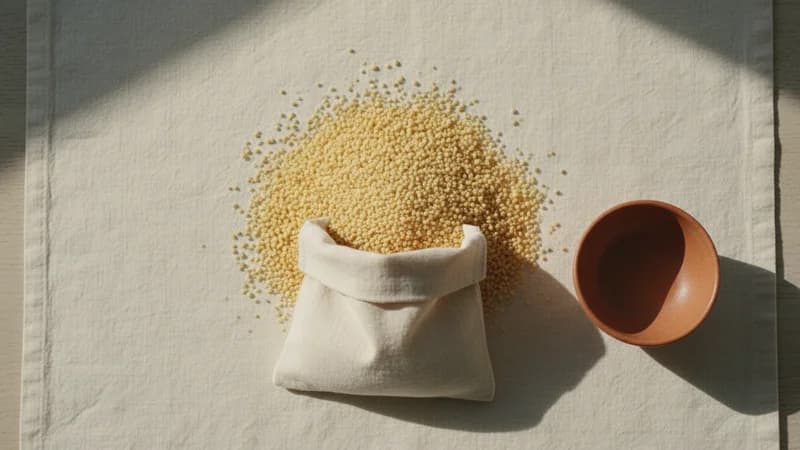
Couscous is best suited to Vata, which it helps pacify. In excess it can raise Kapha. Though it looks like a grain, couscous is really tiny steamed pasta rolled from durum semolina; light and dry (laghu, ruksha) in guna, it cooks in minutes and sits gently on Agni, making it an easy, grounding base for Vata.. Suitable year-round.
Ayurvedic Profile
Couscous (Godhuma Kanaka (गोधूम कणक)) is a sustaining grains treasured in Ayurvedic nutrition. Referenced in Sushruta Samhita, it is characterised by sweet rasa (taste), heating virya (potency), and sweet vipaka (post-digestive effect). Couscous is a form of processed Godhuma (wheat semolina) with Laghu quality due to its small granular form. Its rapid cooking time and gentle nature on Agni make it suitable as a quick Sattvic grain option, though it shares wheat's tendency to increase Kapha in excess. Its light and dry gunas make it particularly suited for specific constitutional types. It pacifies Vata, has a neutral effect on Pitta, and can aggravate Kapha when consumed in excess. From a nutritional standpoint, couscous provides approximately 376 calories per 100g, with 12.8g protein, 77.4g carbohydrates, and is a valuable source of Selenium, Thiamine, Niacin. Best enjoyed during all-seasons, couscous supports healthy Agni (digestive fire) when prepared according to Ayurvedic principles, helping prevent Ama (toxin) accumulation and nourish the dhatus (body tissues).
Ayurvedic Properties
Rasa (Taste)
sweet
Virya (Potency)
hot
Vipaka (Post-digestive)
sweet
Guna (Qualities)
light, dry
How Couscous Affects Vata, Pitta & Kapha
Ayurveda reads every food through the three doshas. Here is how couscous’s qualities interact with each: Not sure which is yours? Take the free dosha quiz — about 4 minutes.
Couscous helps pacify Vata. Its hot virya (potency) and light and dry qualities, with its sweet rasa (taste), counterbalance Vata's tendencies — which is why it traditionally suits Vata dosha in regular use. Vata meal plan
Couscous has a broadly neutral effect on Pitta. Its sweet rasa and light and dry qualities neither strongly aggravate nor pacify Pitta, so those with Pitta dosha can enjoy it in moderation within a varied diet. Pitta meal plan
Couscous is well tolerated by those with Kapha dosha in normal amounts, but its hot virya and light and dry qualities may aggravate Kapha in excess — so people with Kapha as their leading dosha are best keeping to measured portions. Kapha meal plan
Nutrition Facts (per 100g)
376kcal
Calories
12.8g
Protein
77.4g
Carbs
0.6g
Fat
5g
Fibre
Ayurvedic Benefits
- Though it looks like a grain, couscous is really tiny steamed pasta rolled from durum semolina; light and dry (laghu, ruksha) in guna, it cooks in minutes and sits gently on Agni, making it an easy, grounding base for Vata.
- Its sweet rasa and sweet vipaka give quiet, comforting nourishment, while the warming virya keeps this fine, fluffy staple from feeling cold, suiting it to meals in any season.
- A useful source of selenium, which contributes to antioxidant defences, together with thiamine and niacin, B vitamins that support normal energy metabolism.
- The mild sweetness and airy texture offer steady, easily assimilated fuel that Ayurveda associates with helping to settle a restless Vata and providing gentle, uncomplicated satiety.
- It readily takes on the flavours of the broth and spices it is steamed with, making it a versatile carrier for warming tagines, herbs and vegetables that support its digestibility.
How to Use
- As couscous is heating (ushna virya), balance it with cooling accompaniments such as coriander, fennel or a little ghee — especially through the warmer months.
- The classic quick method: pour an equal volume of boiling stock over the couscous, cover, and leave for 5 minutes, then fluff through with a fork and a little ghee or olive oil to separate the grains.
- Steam it over a simmering vegetable or chickpea tagine so it absorbs the fragrant, spiced broth, the traditional way to serve it alongside a warming North African stew.
- Fold through warm roasted vegetables, herbs and a squeeze of lemon for a quick grain-style salad, served warm rather than chilled to stay kind to Agni.
- Toast whole wholewheat couscous or the larger pearled variety briefly in ghee before adding liquid for a nuttier flavour and a slightly firmer bite.
- Season generously as it steams, with cinnamon, cumin, saffron or dried fruit, since couscous is mild and eagerly takes on whatever warming spices you give it.
Contraindications
- Because it is warming and Kapha-aggravating in excess and made from refined semolina, those with sluggish digestion or a tendency to weight gain are best keeping portions modest and choosing the wholewheat version where possible.
- Couscous is a wheat pasta and contains gluten, so it is unsuitable for anyone with coeliac disease or a wheat allergy.
- As a refined, starchy food it can raise blood sugar quickly; those watching blood sugar are best pairing it with vegetables, pulses or protein and keeping servings small.
“Ayurveda classifies Couscous by its sweet rasa (taste), hot virya (thermal potency), and sweet vipaka (post-digestive effect). InnerVeda reads these three lenses together to map Couscous to your dosha and season.”
Frequently Asked Questions
Usually not. Standard couscous is tiny pasta rolled from refined durum semolina, so it behaves like a light, starchy staple. Wholewheat couscous, made with the bran retained, offers more fibre and a nuttier flavour, and is the better choice if you want a more sustaining, wholegrain-style dish.
Use an equal volume of hot liquid, cover it and let it steam undisturbed for 5 minutes, then fluff thoroughly with a fork and a little ghee or oil to separate the grains. Too much liquid or stirring while hot is what makes it clump into a paste.
It shares its raw material with semolina but is not the same food. Couscous is semolina that has been moistened, rolled into tiny beads and steamed, making it a form of pasta. Bulgur, by contrast, is wholegrain wheat that is parboiled and cracked. Couscous is the finest and softest of the three in texture.
Your dosha is the balance of Vata, Pitta and Kapha you were born with. Take the dosha quiz — free, about 4 minutes.
Three questions towards your dosha
These are the first three questions of the full dosha quiz. Answer them here and carry on where you left off.
Prefer to start from the beginning? Take the full dosha quiz.
Dietary information provided is for educational purposes only and is rooted in Ayurvedic tradition. It is not a substitute for professional nutritional or medical advice. Consult a qualified healthcare provider before making significant changes to your diet, especially if you have food allergies, intolerances, or a medical condition.
Want a meal plan matched to your dosha?
Take the free dosha assessment (about 4 minutes) and get a personalised nutrition plan with nearly 300 foods in the app, rated for your body.
Find Your Dosha: FreeAbout 4 minutes