Cucumber: Benefits & Dosha Effects
Sanskrit: Trapusha (त्रपुष)
Cucumber is especially balancing for Vata and Pitta but can raise Kapha when eaten in excess. With sweet rasa (taste), cold virya (potency) and sweet vipaka, it is light and oily in quality and a source of vitamin k.

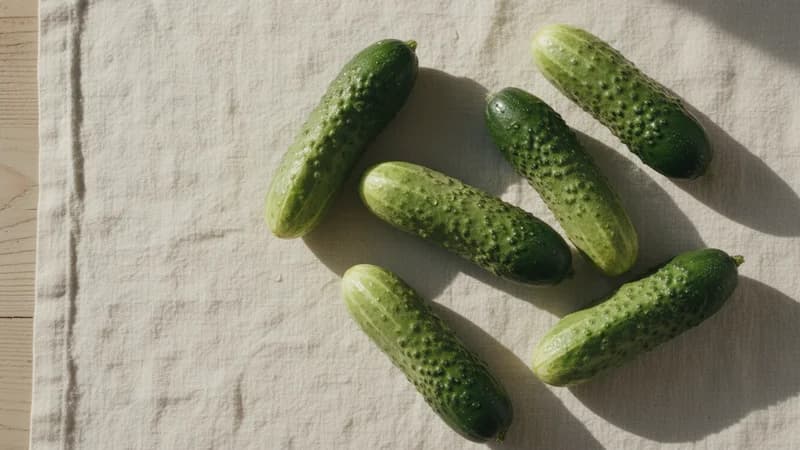
Cucumber is best suited to Vata and Pitta, which it helps pacify. In excess it can raise Kapha. With its sweet rasa, cold virya and roughly 96% water, cucumber is a classic summer coolant that traditionally soothes an overheated, aggravated Pitta and eases the burning, thirst and irritability that hot weather can bring.. Best enjoyed during summer.
Ayurvedic Profile
Cucumber (Trapusha (त्रपुष)) is a nourishing vegetables treasured in Ayurvedic nutrition. Referenced in Ashtanga Hridaya, it is characterised by sweet rasa (taste), cooling virya (potency), and sweet vipaka (post-digestive effect). Trapusha is celebrated in Bhavaprakasha Nighantu as an excellent Pitta-shamaka that cools the body, quenches thirst, and purifies Mutravahasrotas (urinary channels), making it indispensable during the intense heat of Grishma Ritu. Its light and oily gunas make it particularly suited for specific constitutional types. It pacifies Vata, pacifies Pitta, and can aggravate Kapha when consumed in excess. From a nutritional standpoint, cucumber provides approximately 15 calories per 100g, with 0.7g protein, 3.6g carbohydrates, and is a valuable source of Vitamin K, Potassium, Magnesium. Best enjoyed during summer, cucumber supports healthy Agni (digestive fire) when prepared according to Ayurvedic principles, helping prevent Ama (toxin) accumulation and nourish the dhatus (body tissues).
Ayurvedic Properties
Rasa (Taste)
sweet
Virya (Potency)
cold
Vipaka (Post-digestive)
sweet
Guna (Qualities)
light, oily
How Cucumber Affects Vata, Pitta & Kapha
Ayurveda reads every food through the three doshas. Here is how cucumber’s qualities interact with each: Not sure which is yours? Take the free dosha quiz — about 4 minutes.
Cucumber helps pacify Vata. Its cold virya (potency) and light and oily qualities, with its sweet rasa (taste), counterbalance Vata's tendencies — which is why it traditionally suits Vata dosha in regular use. Vata meal plan
Cucumber helps pacify Pitta. Its cold virya (potency) and light and oily qualities, with its sweet rasa (taste), counterbalance Pitta's tendencies — which is why it traditionally suits Pitta dosha in regular use. Pitta meal plan
Cucumber is well tolerated by those with Kapha dosha in normal amounts, but its cold virya and light and oily qualities may aggravate Kapha in excess — so people with Kapha as their leading dosha are best keeping to measured portions. Kapha meal plan
Nutrition Facts (per 100g)
15kcal
Calories
0.7g
Protein
3.6g
Carbs
0.1g
Fat
0.5g
Fibre
Ayurvedic Benefits
- With its sweet rasa, cold virya and roughly 96% water, cucumber is a classic summer coolant that traditionally soothes an overheated, aggravated Pitta and eases the burning, thirst and irritability that hot weather can bring.
- Its light, faintly oily guna makes it gentle on Agni, so the crisp flesh sits easily even when the digestive fire is tired by heat, supporting comfortable digestion without heaviness.
- The high water content and potassium help replenish Rasa Dhatu (the plasma and fluid tissue), which Ayurveda sees as the foundation of glowing skin and steady energy through summer.
- Rich in silica and water, cucumber is a long-favoured skin food: eaten or applied as a cooling pulp, it traditionally supports a clear, hydrated complexion and reflects its Pitta-pacifying nature.
- Chilled slices laid over the eyes are a well-loved home practice that may help refresh tired, puffy eyes, expressing cucumber's cooling, heat-relieving quality applied topically.
How to Use
- As cucumber is cooling (shita virya), favour it in warmer weather and pair it with warming spices like ginger or black pepper when the seasons turn cold.
- Cucumber is at its best during summer — eating it in season keeps its Prana (vital energy) and benefit at their peak.
- Grate or dice into a cooling raita with fresh yoghurt, roasted cumin and mint for a Pitta-soothing side alongside a summer thali.
- Blend the peeled flesh with a little water, lime and a pinch of rock salt into a light, hydrating cooler for hot afternoons.
- Slice into a salad with tomato and coriander, adding a squeeze of lime and roasted cumin so the crisp raw texture stays refreshing.
- Cut into batons with a yoghurt-and-herb dip as an easy, water-rich snack that takes the edge off midday heat.
- Because its virya is cold, favour cucumber at lunch when Agni is strongest, and go easy in the cool damp of monsoon or winter when it can feel too chilling.
Contraindications
- Its cold virya can dampen an already weak Agni, so those prone to bloating, gas or loose stools should keep portions small and avoid it late in the day.
- Kapha-dominant people, and anyone with a cough, cold or sinus congestion, should limit cucumber, as its cold, watery quality can add to heaviness and mucus.
- Eating large amounts raw and unpeeled on a delicate stomach may cause wind or discomfort; peeling and lightly salting first makes it easier to digest.
“Ayurveda classifies Cucumber by its sweet rasa (taste), cold virya (thermal potency), and sweet vipaka (post-digestive effect). InnerVeda reads these three lenses together to map Cucumber to your dosha and season.”
Frequently Asked Questions
Yes. With its sweet taste, cold potency and sweet post-digestive effect, cucumber is one of the friendliest foods for aggravated Pitta. It traditionally cools the excess heat behind irritability, thirst and burning sensations, which is why it feels so welcome in hot weather. Enjoy it at lunch for best effect.
Both are fine, but the skin adds roughage and a slightly harder-to-digest quality. If your Agni is strong you can leave a well-washed skin on for extra fibre; if you tend towards bloating or wind, peel it and add a pinch of roasted cumin or rock salt to make it gentler.
Ayurveda generally prefers cooling, watery foods earlier in the day. At night, when Agni naturally dips, cucumber's cold quality can feel heavy or increase Kapha and mucus in some people. If you enjoy it in the evening, keep the portion small and pair it with warming cumin rather than eating it plain and chilled.
Your dosha is the balance of Vata, Pitta and Kapha you were born with. Take the dosha quiz — free, about 4 minutes.
Three questions towards your dosha
These are the first three questions of the full dosha quiz. Answer them here and carry on where you left off.
Prefer to start from the beginning? Take the full dosha quiz.
Dietary information provided is for educational purposes only and is rooted in Ayurvedic tradition. It is not a substitute for professional nutritional or medical advice. Consult a qualified healthcare provider before making significant changes to your diet, especially if you have food allergies, intolerances, or a medical condition.
Want a meal plan matched to your dosha?
Take the free dosha assessment (about 4 minutes) and get a personalised nutrition plan with nearly 300 foods in the app, rated for your body.
Find Your Dosha: FreeAbout 4 minutes