Fish (Salmon): Benefits & Dosha Effects
Sanskrit: Matsya (मत्स्य)
Fish (Salmon) is especially balancing for Vata and tends to aggravate Pitta and Kapha. With sweet rasa (taste), hot virya (potency) and sweet vipaka, it is heavy and oily in quality and a source of omega-3.

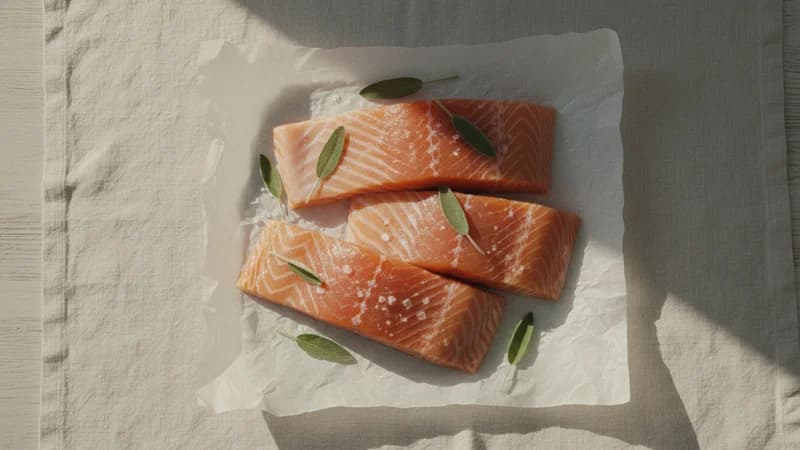
Fish (Salmon) is best suited to Vata, which it helps pacify. It can aggravate Pitta and Kapha, so people with Pitta and Kapha as their leading dosha should use it sparingly. Salmon is prized in Ayurveda as a deeply nourishing (brimhana) matsya, its sweet rasa and sweet vipaka building rasa and mamsa dhatu, which traditionally supports those who feel depleted, underweight or run-down after winter illness.. Best enjoyed during winter.
Ayurvedic Profile
Fish (Salmon) (Matsya (मत्स्य)) is a tissue-building meats proteins treasured in Ayurvedic nutrition. Referenced in Ashtanga Hridaya, it is characterised by sweet rasa (taste), heating virya (potency), and sweet vipaka (post-digestive effect). Matsya is classified in Charaka Samhita as Guru and Snigdha, best for Vata constitution but Pitta-Kapha aggravating; Ayurveda specifically warns against combining fish with dairy (Viruddha Ahara), as this creates toxic Ama. Its heavy and oily gunas make it particularly suited for specific constitutional types. It pacifies Vata, may increase Pitta, and may increase Kapha. From a nutritional standpoint, fish (salmon) provides approximately 208 calories per 100g, with 20.4g protein, 0.0g carbohydrates, and is a valuable source of Omega-3, Vitamin D, Selenium. Best enjoyed during winter, fish (salmon) supports healthy Agni (digestive fire) when prepared according to Ayurvedic principles, helping prevent Ama (toxin) accumulation and nourish the dhatus (body tissues).
Ayurvedic Properties
Rasa (Taste)
sweet
Virya (Potency)
hot
Vipaka (Post-digestive)
sweet
Guna (Qualities)
heavy, oily
How Fish (Salmon) Affects Vata, Pitta & Kapha
Ayurveda reads every food through the three doshas. Here is how fish (salmon)’s qualities interact with each: Not sure which is yours? Take the free dosha quiz — about 4 minutes.
Fish (Salmon) helps pacify Vata. Its hot virya (potency) and heavy and oily qualities, with its sweet rasa (taste), counterbalance Vata's tendencies — which is why it traditionally suits Vata dosha in regular use. Vata meal plan
Fish (Salmon) tends to increase Pitta. Its hot virya and heavy and oily qualities, with its sweet rasa, align with Pitta's own nature, so those with Pitta dosha are best using it sparingly and pairing it with Pitta-pacifying foods. Pitta meal plan
Fish (Salmon) tends to increase Kapha. Its hot virya and heavy and oily qualities, with its sweet rasa, align with Kapha's own nature, so those with Kapha dosha are best using it sparingly and pairing it with Kapha-pacifying foods. Kapha meal plan
Nutrition Facts (per 100g)
208kcal
Calories
20.4g
Protein
0g
Carbs
13.4g
Fat
0g
Fibre
Ayurvedic Benefits
- Salmon is prized in Ayurveda as a deeply nourishing (brimhana) matsya, its sweet rasa and sweet vipaka building rasa and mamsa dhatu, which traditionally supports those who feel depleted, underweight or run-down after winter illness.
- With a heavy, oily (snigdha) guna and hot virya, it kindles a sluggish Agni and lubricates dry, cracking joints and skin, making it well suited to Vata-predominant people in the cold, dry months (V↓).
- Its abundant long-chain omega-3 fats (EPA and DHA) are among the best dietary sources for supporting a calm, well-oiled nervous system and healthy Majja dhatu, qualities Ayurveda associates with steady Ojas.
- Salmon is one of very few natural food sources of vitamin D, which may help support bone strength and steady mood during dark winters when sunlight-driven synthesis falls short.
- Rich in selenium and complete protein, it is traditionally used to help rebuild strength and stamina during convalescence, feeding the tissues without the heaviness of red meat.
How to Use
- As fish (salmon) is heating (ushna virya), balance it with cooling accompaniments such as coriander, fennel or a little ghee — especially through the warmer months.
- Fish (Salmon) is at its best during winter — eating it in season keeps its Prana (vital energy) and benefit at their peak.
- Bake or gently poach a fillet with warming spices such as black pepper, ginger and a little garlic; these help offset its heaviness and keep it easy to digest.
- Favour it as a midday meal rather than at night, when Agni is strongest and its heavy, oily quality is least likely to sit undigested.
- Pair with astringent, light greens (rocket, watercress, steamed spinach) and a squeeze of lemon to balance the oiliness and aid digestion.
- Serve it warm and freshly cooked rather than cold or leftover; Ayurveda regards reheated or stale fish as harder to digest and more likely to form Ama.
- Reach for it most in autumn and winter, the season that best matches its unctuous, heating nature; scale back in high summer.
Contraindications
- Best limited by those with high Pitta or inflammatory skin conditions, as its hot virya can aggravate heat, and by anyone prone to Kapha-type sluggishness, congestion or weight gain (P↑ K↑).
- Ayurveda traditionally cautions against combining fish with milk or dairy in the same meal, a pairing (viruddha ahara) held to be incompatible and to burden digestion.
- Choose lower-mercury, well-sourced salmon and moderate portions during pregnancy or breastfeeding, and avoid entirely if you have a fish or shellfish allergy.
“Ayurveda classifies Fish (Salmon) by its sweet rasa (taste), hot virya (thermal potency), and sweet vipaka (post-digestive effect). InnerVeda reads these three lenses together to map Fish (Salmon) to your dosha and season.”
Frequently Asked Questions
Salmon has a hot virya (heating potency), which is why it suits cold-weather Vata but can aggravate Pitta. Its sweet rasa and sweet vipaka mean it still nourishes and grounds; the heat sits in its post-digestive warming effect rather than a fiery taste.
Occasionally is fine for robust Vata types in winter, but daily oily fish can overload a weaker Agni and increase Kapha. Two to three modest, well-spiced portions a week is a more balanced rhythm for most constitutions.
Fish and milk are a classic viruddha ahara (incompatible combination) in the texts — their differing qualities are held to disturb digestion and, over time, foster Ama. Keep them in separate meals a few hours apart.
Your dosha is the balance of Vata, Pitta and Kapha you were born with. Take the dosha quiz — free, about 4 minutes.
Three questions towards your dosha
These are the first three questions of the full dosha quiz. Answer them here and carry on where you left off.
Prefer to start from the beginning? Take the full dosha quiz.
Dietary information provided is for educational purposes only and is rooted in Ayurvedic tradition. It is not a substitute for professional nutritional or medical advice. Consult a qualified healthcare provider before making significant changes to your diet, especially if you have food allergies, intolerances, or a medical condition.
Want a meal plan matched to your dosha?
Take the free dosha assessment (about 4 minutes) and get a personalised nutrition plan with nearly 300 foods in the app, rated for your body.
Find Your Dosha: FreeAbout 4 minutes