Besan Ladoo: Benefits & Dosha Effects
Sanskrit: Chanaka Laddu (चणक लड्डु)
Besan Ladoo is especially balancing for Vata and tends to aggravate Kapha. With sweet rasa (taste), hot virya (potency) and sweet vipaka, it is heavy and oily in quality and a source of protein.

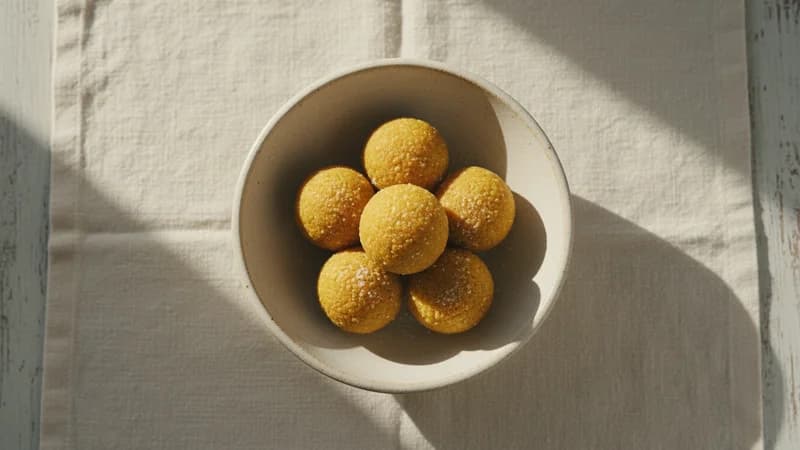
Besan Ladoo is best suited to Vata, which it helps pacify. It can aggravate Kapha, so people with Kapha as their leading dosha should use it sparingly. Made from roasted gram (chickpea) flour bound in ghee and jaggery or sugar, besan ladoo is a nourishing, grounding sweet whose heavy and oily (guru-snigdha) qualities pacify Vata, making it traditionally welcomed in winter when the body craves stable, warming energy.. Best enjoyed during winter.
Ayurvedic Profile
Besan Ladoo (Chanaka Laddu (चणक लड्डु)) is a wholesome prepared foods treasured in Ayurvedic nutrition. Referenced in Kaiyadeva Nighantu, it is characterised by sweet rasa (taste), heating virya (potency), and sweet vipaka (post-digestive effect). Besan Ladoo exemplifies the Ayurvedic Samskara of roasting gram flour in ghee to transform its Vata-aggravating properties into a Snigdha, Brimhana (nourishing) sweet; traditionally prepared during festivals, its combination of protein and ghee deeply nourishes Mamsa and Shukra dhatus. Its heavy and oily gunas make it particularly suited for specific constitutional types. It pacifies Vata, has a neutral effect on Pitta, and may increase Kapha. From a nutritional standpoint, besan ladoo provides approximately 420 calories per 100g, with 8.0g protein, 50.0g carbohydrates, and is a valuable source of Protein, Iron, Ghee. Best enjoyed during winter, besan ladoo supports healthy Agni (digestive fire) when prepared according to Ayurvedic principles, helping prevent Ama (toxin) accumulation and nourish the dhatus (body tissues).
Ayurvedic Properties
Rasa (Taste)
sweet
Virya (Potency)
hot
Vipaka (Post-digestive)
sweet
Guna (Qualities)
heavy, oily
How Besan Ladoo Affects Vata, Pitta & Kapha
Ayurveda reads every food through the three doshas. Here is how besan ladoo’s qualities interact with each: Not sure which is yours? Take the free dosha quiz — about 4 minutes.
Besan Ladoo helps pacify Vata. Its hot virya (potency) and heavy and oily qualities, with its sweet rasa (taste), counterbalance Vata's tendencies — which is why it traditionally suits Vata dosha in regular use. Vata meal plan
Besan Ladoo has a broadly neutral effect on Pitta. Its sweet rasa and heavy and oily qualities neither strongly aggravate nor pacify Pitta, so those with Pitta dosha can enjoy it in moderation within a varied diet. Pitta meal plan
Besan Ladoo tends to increase Kapha. Its hot virya and heavy and oily qualities, with its sweet rasa, align with Kapha's own nature, so those with Kapha dosha are best using it sparingly and pairing it with Kapha-pacifying foods. Kapha meal plan
Nutrition Facts (per 100g)
420kcal
Calories
8g
Protein
50g
Carbs
22g
Fat
3g
Fibre
Ayurvedic Benefits
- Made from roasted gram (chickpea) flour bound in ghee and jaggery or sugar, besan ladoo is a nourishing, grounding sweet whose heavy and oily (guru-snigdha) qualities pacify Vata, making it traditionally welcomed in winter when the body craves stable, warming energy.
- The slow roasting of besan in ghee kindles its sweetness and, in Ayurvedic terms, makes it gentler on Agni than raw gram flour, so the ladoo is generally easier to digest than uncooked besan and may help sustain steady energy through a long, cold morning.
- Gram flour is a genuinely protein-rich pulse and, paired with the modest iron naturally present in chickpeas and jaggery, besan ladoo offers a plant-based contribution to protein and iron intake that traditionally supports the building of rasa and rakta dhatu (nourishment and blood tissue).
- The generous ghee content carries fat-soluble nourishment deep into the tissues and is classically valued for building Ojas, the subtle essence of vitality, which is why a small ladoo is often given to those who are depleted or convalescing to rebuild strength.
- With its sweet rasa and sweet vipaka, besan ladoo is deeply satiating and grounding for an anxious, over-active Vata mind, and a single piece taken with warm milk is traditionally used to settle restlessness and support sound, grounded sleep.
How to Use
- As besan ladoo is heating (ushna virya), balance it with cooling accompaniments such as coriander, fennel or a little ghee — especially through the warmer months.
- Besan Ladoo is at its best during winter — eating it in season keeps its Prana (vital energy) and benefit at their peak.
- Enjoy one small ladoo (roughly 30-40g) mid-morning or as an evening treat with warm spiced milk; the warm liquid suits its hot virya and helps the ghee digest smoothly.
- Reserve it for the cold months (late autumn through winter) when Kapha is naturally lower and the body can handle a heavy, oily sweet; in humid summer, cut back sharply.
- Add a pinch of cardamom or dried ginger while roasting the besan, both to deepen the flavour and to lighten the ladoo's heaviness so it sits more easily on a sluggish Agni.
- Roast the besan patiently in ghee on a low flame until it turns golden and releases a nutty aroma; under-roasted besan tastes raw and is harder to digest, so this step is not optional.
- Keep the portion genuinely small and eat it earlier in the day rather than late at night, since its richness needs a well-kindled digestive fire to break down properly.
Contraindications
- Its heavy, oily, sweet nature increases Kapha, so those with a Kapha tendency, sluggish digestion, or a tendency to congestion and lethargy are best limiting it, especially in cold-damp weather.
- Because it is bound in jaggery or sugar and is calorie-dense (around 420 kcal per 100g), those managing blood sugar or weight are best treating it as an occasional small indulgence rather than a daily food, and following their doctor's guidance.
- Gram flour is a chickpea product, so anyone with a legume or chickpea allergy must avoid it; the ghee also makes it unsuitable for those advised to restrict dairy, unless a suitable substitute is used.
“Ayurveda classifies Besan Ladoo by its sweet rasa (taste), hot virya (thermal potency), and sweet vipaka (post-digestive effect). InnerVeda reads these three lenses together to map Besan Ladoo to your dosha and season.”
Frequently Asked Questions
It can support healthy weight gain in someone who is genuinely depleted, because the ghee, gram flour protein and jaggery together nourish the tissues and build strength. At roughly 420 kcal per 100g it is calorie-dense, so it adds up quickly. In Ayurveda we would offer it to a thin, Vata-depleted person needing to rebuild, but for someone carrying excess Kapha or watching their weight, it is best kept as an occasional small treat.
A single small ladoo daily can be fine for a robust person with strong digestion during the cold months, ideally taken earlier in the day with something warm. Because its qualities are heavy and oily and it increases Kapha, daily use is not wise in summer, for anyone with sluggish digestion, or for those managing blood sugar or weight. Listen to your Agni: if you feel heavy or coated afterwards, that is a sign to reduce the frequency.
Jaggery (gur) is generally the more nourishing choice in Ayurveda, as it retains some iron and minerals and is considered less refined, which pairs naturally with the iron in the gram flour. That said, jaggery is warming and still a concentrated sweet, so it does not make the ladoo a free food. Whichever sweetener is used, the portion and the quality of the roasting matter far more than the sugar-versus-jaggery choice alone.
Your dosha is the balance of Vata, Pitta and Kapha you were born with. Take the dosha quiz — free, about 4 minutes.
Three questions towards your dosha
These are the first three questions of the full dosha quiz. Answer them here and carry on where you left off.
Prefer to start from the beginning? Take the full dosha quiz.
Dietary information provided is for educational purposes only and is rooted in Ayurvedic tradition. It is not a substitute for professional nutritional or medical advice. Consult a qualified healthcare provider before making significant changes to your diet, especially if you have food allergies, intolerances, or a medical condition.
Want a meal plan matched to your dosha?
Take the free dosha assessment (about 4 minutes) and get a personalised nutrition plan with nearly 300 foods in the app, rated for your body.
Find Your Dosha: FreeAbout 4 minutes