Butter: Benefits & Dosha Effects
Sanskrit: Navanita (नवनीत)
Butter is especially balancing for Vata and Pitta and tends to aggravate Kapha. With sweet rasa (taste), cold virya (potency) and sweet vipaka, it is heavy, oily, smooth and soft in quality and a source of vitamin a.

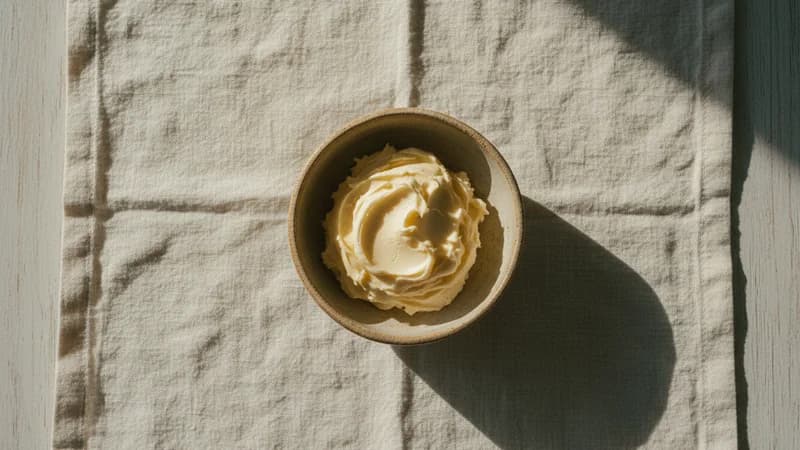
Butter is best suited to Vata and Pitta, which it helps pacify. It can aggravate Kapha, so people with Kapha as their leading dosha should use it sparingly. Fresh unsalted butter (makhan) is cooling, sweet and nourishing, pacifying Vata and Pitta and building Ojas. Best enjoyed during winter.
Ayurvedic Profile
Butter (Navanita (नवनीत)) is a ojas-building dairy treasured in Ayurvedic nutrition. Referenced in Kaiyadeva Nighantu, it is characterised by sweet rasa (taste), cooling virya (potency), and sweet vipaka (post-digestive effect). Navanita (fresh butter) holds a special place in Charaka Samhita as distinct from Ghrita (ghee); it is described as Agni-deepana, Ruchya (taste-enhancing), and Grahi (absorbent). Fresh butter specifically pacifies Vata and Pitta while building Bala (strength) and improving complexion. Its heavy and oily and smooth and soft gunas make it particularly suited for specific constitutional types. It pacifies Vata, pacifies Pitta, and may increase Kapha. From a nutritional standpoint, butter provides approximately 717 calories per 100g, with 0.9g protein, 0.1g carbohydrates, and is a valuable source of Vitamin A, Vitamin D, Vitamin E. Best enjoyed during winter, butter supports healthy Agni (digestive fire) when prepared according to Ayurvedic principles, helping prevent Ama (toxin) accumulation and nourish the dhatus (body tissues).
Ayurvedic Properties
Rasa (Taste)
sweet
Virya (Potency)
cold
Vipaka (Post-digestive)
sweet
Guna (Qualities)
heavy, oily, smooth, soft
How Butter Affects Vata, Pitta & Kapha
Ayurveda reads every food through the three doshas. Here is how butter’s qualities interact with each: Not sure which is yours? Take the free dosha quiz — about 4 minutes.
Butter helps pacify Vata. Its cold virya (potency) and heavy, oily, smooth and soft qualities, with its sweet rasa (taste), counterbalance Vata's tendencies — which is why it traditionally suits Vata dosha in regular use. Vata meal plan
Butter helps pacify Pitta. Its cold virya (potency) and heavy, oily, smooth and soft qualities, with its sweet rasa (taste), counterbalance Pitta's tendencies — which is why it traditionally suits Pitta dosha in regular use. Pitta meal plan
Butter tends to increase Kapha. Its cold virya and heavy, oily, smooth and soft qualities, with its sweet rasa, align with Kapha's own nature, so those with Kapha dosha are best using it sparingly and pairing it with Kapha-pacifying foods. Kapha meal plan
Nutrition Facts (per 100g)
717kcal
Calories
0.9g
Protein
0.1g
Carbs
81.1g
Fat
0g
Fibre
Ayurvedic Benefits
- Fresh unsalted butter (makhan) is cooling, sweet and nourishing, pacifying Vata and Pitta and building Ojas
- Its soft, unctuous quality lubricates dry tissues, the colon and the joints, easing Vata dryness
- Traditionally valued as gentle and soothing — fresh white butter is considered lighter than cream
- A source of fat-soluble vitamins A, D and E for the eyes, skin and tissues
- Clarified over gentle heat, it becomes ghee, the most prized of Ayurvedic fats
How to Use
- As butter is cooling (shita virya), favour it in warmer weather and pair it with warming spices like ginger or black pepper when the seasons turn cold.
- Butter is at its best during winter — eating it in season keeps its Prana (vital energy) and benefit at their peak.
- Prefer fresh, unsalted white butter (makhan) — Ayurveda considers it lighter and more wholesome than salted or aged butter
- Spread a little on warm roti, or add a small knob to cooked vegetables and dal for Vata nourishment
- Clarify fresh butter into ghee for a more digestible, longer-keeping, Agni-friendly fat
- Favour it in the cooler months, when its richness is best handled
- Keep amounts small — its benefit is in quality and moderation, not quantity
Contraindications
- Salted and aged butter are heavier and more Kapha-increasing; those managing weight, cholesterol or congestion should limit butter and prefer ghee
- Its heavy, oily nature increases Kapha and can add heaviness if used freely
- Best avoided in large amounts by those with sluggish digestion or a tendency to weight gain
“Ayurveda classifies Butter by its sweet rasa (taste), cold virya (thermal potency), and sweet vipaka (post-digestive effect). InnerVeda reads these three lenses together to map Butter to your dosha and season.”
Frequently Asked Questions
Fresh unsalted butter (makhan) in small amounts is nourishing, cooling and Vata-pacifying, and a source of fat-soluble vitamins. It becomes a problem only in excess or when salted and aged, which is heavier and more Kapha-increasing. For daily use, Ayurveda prefers ghee, which is more digestible.
Ghee is generally preferred for daily use — clarifying butter removes the milk solids and water, making ghee more digestible, Agni-kindling and longer-keeping. Fresh butter (makhan) is prized too, being cooling and soothing, but ghee is the more universally suitable fat.
Makhan is fresh, unsalted butter churned from cream or curd, soft and pale, and considered lighter and more wholesome in Ayurveda than salted, aged yellow butter. It is cooling and Vata-pacifying, and is the starting point for making ghee.
Your dosha is the balance of Vata, Pitta and Kapha you were born with. Take the dosha quiz — free, about 4 minutes.
Three questions towards your dosha
These are the first three questions of the full dosha quiz. Answer them here and carry on where you left off.
Prefer to start from the beginning? Take the full dosha quiz.
Dietary information provided is for educational purposes only and is rooted in Ayurvedic tradition. It is not a substitute for professional nutritional or medical advice. Consult a qualified healthcare provider before making significant changes to your diet, especially if you have food allergies, intolerances, or a medical condition.
Want a meal plan matched to your dosha?
Take the free dosha assessment (about 4 minutes) and get a personalised nutrition plan with nearly 300 foods in the app, rated for your body.
Find Your Dosha: FreeAbout 4 minutes