Fenugreek Seeds: Benefits & Dosha Effects
Sanskrit: Methika (मेथिका)
Fenugreek Seeds is especially balancing for Vata and Kapha but can raise Pitta when eaten in excess. With bitter and pungent rasa (taste), hot virya (potency) and pungent vipaka, it is light and oily in quality and a source of iron.

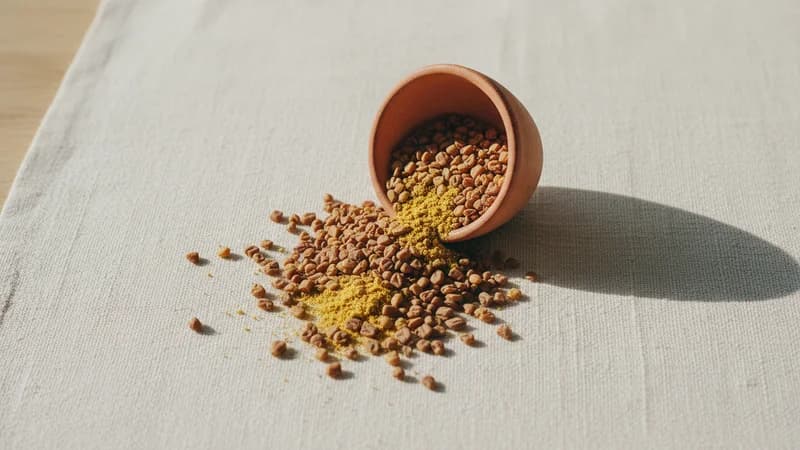
Fenugreek Seeds is best suited to Vata and Kapha, which it helps pacify. In excess it can raise Pitta. The bitter-pungent rasa and pungent vipaka kindle Agni and help clear Ama, so a soaked spoonful before a heavy meal traditionally eases the bloating and sluggish digestion that follow rich winter food.. Best enjoyed during winter.
Ayurvedic Profile
Fenugreek Seeds (Methika (मेथिका)) is a therapeutic spices treasured in Ayurvedic nutrition. Referenced in Raja Nighantu, it is characterised by bitter and pungent rasa (taste), heating virya (potency), and pungent vipaka (post-digestive effect). Methika is a versatile Ayurvedic spice-medicine praised in Charaka Samhita as Deepaniya (appetite-stimulating) and Vatanashaka; its galactomannan fibre uniquely supports healthy blood sugar levels and lactation. Its light and oily gunas make it particularly suited for specific constitutional types. It pacifies Vata, can aggravate Pitta when consumed in excess, and pacifies Kapha. From a nutritional standpoint, fenugreek seeds provides approximately 323 calories per 100g, with 23.0g protein, 58.4g carbohydrates, and is a valuable source of Iron, Manganese, Magnesium. Best enjoyed during winter, fenugreek seeds supports healthy Agni (digestive fire) when prepared according to Ayurvedic principles, helping prevent Ama (toxin) accumulation and nourish the dhatus (body tissues).
Ayurvedic Properties
Rasa (Taste)
bitter, pungent
Virya (Potency)
hot
Vipaka (Post-digestive)
pungent
Guna (Qualities)
light, oily
How Fenugreek Seeds Affects Vata, Pitta & Kapha
Ayurveda reads every food through the three doshas. Here is how fenugreek seeds’s qualities interact with each: Not sure which is yours? Take the free dosha quiz — about 4 minutes.
Fenugreek Seeds helps pacify Vata. Its hot virya (potency) and light and oily qualities, with its bitter and pungent rasa (taste), counterbalance Vata's tendencies — which is why it traditionally suits Vata dosha in regular use. Vata meal plan
Fenugreek Seeds is well tolerated by those with Pitta dosha in normal amounts, but its hot virya and light and oily qualities may aggravate Pitta in excess — so people with Pitta as their leading dosha are best keeping to measured portions. Pitta meal plan
Fenugreek Seeds helps pacify Kapha. Its hot virya (potency) and light and oily qualities, with its bitter and pungent rasa (taste), counterbalance Kapha's tendencies — which is why it traditionally suits Kapha dosha in regular use. Kapha meal plan
Nutrition Facts (per 100g)
323kcal
Calories
23g
Protein
58.4g
Carbs
6.4g
Fat
24.6g
Fibre
Ayurvedic Benefits
- The bitter-pungent rasa and pungent vipaka kindle Agni and help clear Ama, so a soaked spoonful before a heavy meal traditionally eases the bloating and sluggish digestion that follow rich winter food.
- Fenugreek's oily, unctuous guna makes it one of the classic galactagogue seeds of Indian postnatal kitchens, where methi laddoo and methi water are traditionally given to support a new mother's milk and to rebuild strength after childbirth.
- Its heating virya and Kapha-reducing action help loosen thick, stuck mucus, which is why a warm methi decoction is a household staple for a rattly, phlegmy winter chest and a coated tongue.
- Rich in soluble galactomannan fibre, the seeds swell into a gel that slows the release of sugars from a meal, a property long used to steady energy and support balanced blood sugar after eating.
- With roughly 33 mg of iron per 100 g plus manganese and magnesium, fenugreek nourishes Rakta dhatu and supports the steady, unhurried energy Vata types need through the cold months.
How to Use
- As fenugreek seeds is heating (ushna virya), balance it with cooling accompaniments such as coriander, fennel or a little ghee — especially through the warmer months.
- Fenugreek Seeds is at its best during winter — eating it in season keeps its Prana (vital energy) and benefit at their peak.
- Soak a teaspoon of seeds overnight in water; drink the strained, faintly bitter water on an empty stomach and, if you like, chew the softened, sprout-ready seeds.
- Sprout the soaked seeds over two to three days and toss the tender shoots into salads or a light stir-fry, which softens the bitterness and adds a fresh, grassy crunch.
- Dry-roast the seeds on a low flame only until they turn reddish-gold and smell nutty, then grind — over-roasting to dark brown turns them harshly bitter and acrid.
- Add a pinch of whole seeds to the tempering oil at the very start of a dal or sambar so their bitterness mellows and perfumes the whole pot.
- Steep a teaspoon of crushed seeds in hot water with a slice of ginger for a warming winter tea; a little jaggery or honey rounds off the bitter edge.
Contraindications
- Its heating virya can aggravate Pitta (V↓ P↑ in excess), so those prone to acidity, heartburn or loose, hot stools should keep to small culinary amounts, especially in summer.
- Fenugreek has a traditional reputation for stimulating the uterus and is best limited to ordinary food quantities in pregnancy; concentrated seed doses or supplements should only be taken on a practitioner's advice.
- Because the soluble fibre and the seeds' action on blood sugar are genuine, anyone on diabetes medication or blood-thinners should mention regular use to their doctor, as timing and dose may need watching.
“Ayurveda classifies Fenugreek Seeds by its bitter, pungent rasa (taste), hot virya (thermal potency), and pungent vipaka (post-digestive effect). InnerVeda reads these three lenses together to map Fenugreek Seeds to your dosha and season.”
Fenugreek Seeds by Dosha
See how fenugreek seeds interacts with each dosha and get personalised guidance.
Frequently Asked Questions
Both work, and the difference is in what you want. Overnight-soaked seed water carries the bitter, Agni-kindling compounds and is gentlest on digestion — ideal first thing on an empty stomach. Chewing the softened seeds gives you the full galactomannan fibre for slower digestion and steadier energy, but eat them soaked or sprouted rather than raw and hard, which can feel heavy.
Raw and over-roasted seeds are both to blame. Soaking or sprouting mellows the bitterness considerably, and dry-roasting only to a reddish-gold (never dark brown) keeps them nutty rather than acrid. Pairing them with jaggery in a tea, or hiding a pinch in a tempering, also softens the edge while keeping the benefit.
It is one of the classic postnatal seeds in Indian kitchens, given as methi laddoo or methi water in the weeks after birth to support milk and rebuild strength — its oily, nourishing guna suits this well. Treat it as a traditional food, though, not a fix: if supply is a real worry, work with a feeding specialist, and keep to culinary amounts unless a practitioner guides otherwise.
Your dosha is the balance of Vata, Pitta and Kapha you were born with. Take the dosha quiz — free, about 4 minutes.
Three questions towards your dosha
These are the first three questions of the full dosha quiz. Answer them here and carry on where you left off.
Prefer to start from the beginning? Take the full dosha quiz.
Dietary information provided is for educational purposes only and is rooted in Ayurvedic tradition. It is not a substitute for professional nutritional or medical advice. Consult a qualified healthcare provider before making significant changes to your diet, especially if you have food allergies, intolerances, or a medical condition.
Want a meal plan matched to your dosha?
Take the free dosha assessment (about 4 minutes) and get a personalised nutrition plan with nearly 300 foods in the app, rated for your body.
Find Your Dosha: FreeAbout 4 minutes