Long Pepper (Pippali): Benefits & Dosha Effects
Sanskrit: Pippali (पिप्पली)
Long Pepper (Pippali) is especially balancing for Vata and Kapha but can raise Pitta when eaten in excess. With pungent rasa (taste), hot virya (potency) and sweet vipaka, it is light, oily and sharp in quality and a source of piperine.

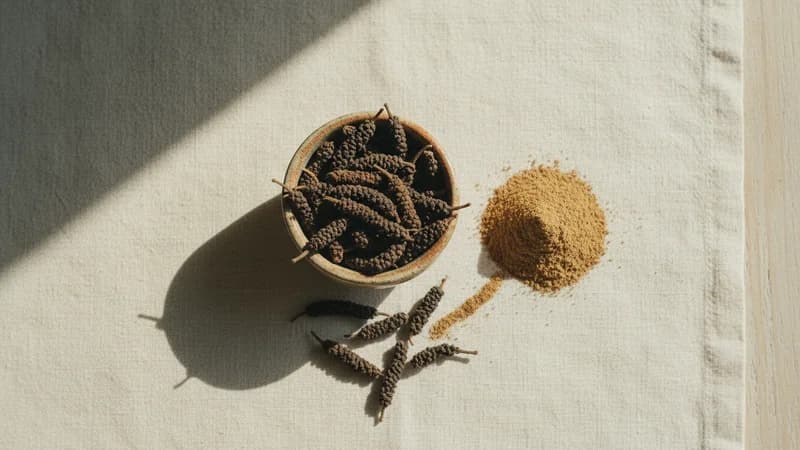
Long Pepper (Pippali) is best suited to Vata and Kapha, which it helps pacify. In excess it can raise Pitta. Pippali is one of Ayurveda's most prized dipana-pachana spices, revered for its power to rekindle a weak Agni; its sharp, penetrating quality is traditionally used where digestion has grown cold, dull and unable to fully break down food.. Best enjoyed during winter.
Ayurvedic Profile
Long Pepper (Pippali) (Pippali (पिप्पली)) is a therapeutic spices treasured in Ayurvedic nutrition. Referenced in Charaka Samhita, it is characterised by pungent rasa (taste), heating virya (potency), and sweet vipaka (post-digestive effect). Pippali is one of the most revered spices in Charaka Samhita, uniquely possessing Katu rasa with Madhura vipaka. It is a key component of Trikatu and is classified as Rasayana, renowned for its ability to rejuvenate Pranavaha srotas (respiratory channels) and kindle Agni without excessively aggravating Pitta. Its light and oily and sharp gunas make it particularly suited for specific constitutional types. It pacifies Vata, can aggravate Pitta when consumed in excess, and pacifies Kapha. From a nutritional standpoint, long pepper (pippali) provides approximately 296 calories per 100g, with 10.4g protein, 63.9g carbohydrates, and is a valuable source of Piperine, Iron, Manganese. Best enjoyed during winter, long pepper (pippali) supports healthy Agni (digestive fire) when prepared according to Ayurvedic principles, helping prevent Ama (toxin) accumulation and nourish the dhatus (body tissues).
Ayurvedic Properties
Rasa (Taste)
pungent
Virya (Potency)
hot
Vipaka (Post-digestive)
sweet
Guna (Qualities)
light, oily, sharp
How Long Pepper (Pippali) Affects Vata, Pitta & Kapha
Ayurveda reads every food through the three doshas. Here is how long pepper (pippali)’s qualities interact with each: Not sure which is yours? Take the free dosha quiz — about 4 minutes.
Long Pepper (Pippali) helps pacify Vata. Its hot virya (potency) and light, oily and sharp qualities, with its pungent rasa (taste), counterbalance Vata's tendencies — which is why it traditionally suits Vata dosha in regular use. Vata meal plan
Long Pepper (Pippali) is well tolerated by those with Pitta dosha in normal amounts, but its hot virya and light, oily and sharp qualities may aggravate Pitta in excess — so people with Pitta as their leading dosha are best keeping to measured portions. Pitta meal plan
Long Pepper (Pippali) helps pacify Kapha. Its hot virya (potency) and light, oily and sharp qualities, with its pungent rasa (taste), counterbalance Kapha's tendencies — which is why it traditionally suits Kapha dosha in regular use. Kapha meal plan
Nutrition Facts (per 100g)
296kcal
Calories
10.4g
Protein
63.9g
Carbs
3.3g
Fat
25.3g
Fibre
Ayurvedic Benefits
- Pippali is one of Ayurveda's most prized dipana-pachana spices, revered for its power to rekindle a weak Agni; its sharp, penetrating quality is traditionally used where digestion has grown cold, dull and unable to fully break down food.
- Classically valued for supporting the respiratory channels, warm pippali with honey is a time-honoured winter remedy traditionally used to move and clear thick Kapha from the chest and to keep breathing feeling open in cold, damp weather.
- Pippali is the key ingredient in Trikatu (with black pepper and ginger) and famed as a yogavahi, a bioavailability enhancer; its piperine content is the compound modern science credits with helping the body absorb other nutrients and herbs more efficiently.
- Traditionally regarded as a rasayana when used in the graduated pippali (vardhamana) regimen, it is valued for kindling metabolic strength and supporting the lungs and digestion over time, rebuilding vigour after the sluggishness of a long, cold season.
- Its hot virya and downward-moving action pacify Vata and Kapha together, so pippali is traditionally used to ease a cold, gassy, congested feeling in both the gut and the chest, warming from within.
How to Use
- As long pepper (pippali) is heating (ushna virya), balance it with cooling accompaniments such as coriander, fennel or a little ghee — especially through the warmer months.
- Long Pepper (Pippali) is at its best during winter — eating it in season keeps its Prana (vital energy) and benefit at their peak.
- Grind one dried pippali catkin to a fine powder and take a small pinch (about 250-500 mg) stirred into a teaspoon of honey after meals to support digestion; add the honey only once anything warm has cooled to lukewarm.
- For a warming winter chest drink, simmer a little pippali powder in milk with a pinch of turmeric; this classical golden milk variant is a traditional Kapha-season comfort for the throat and chest.
- Combine equal parts pippali, dried ginger and black pepper to make Trikatu, and take a small pinch before meals to stoke a genuinely sluggish digestive fire, ideally under a practitioner's guidance.
- Add a whole dried pippali or a little powder when tempering dals, kanji and slow-cooked winter broths; unlike black pepper it brings a sweeter, deeper, almost liquorice-like heat to the dish.
- Because pippali is a bioavailability enhancer, a tiny amount is traditionally added alongside turmeric or other herbal preparations to help the body absorb them, rather than being taken in large quantities on its own.
Contraindications
- Pippali is intensely hot and sharp and strongly aggravates Pitta (P↑), so those with a fiery constitution, acidity, heartburn, ulcers, gastritis or any active heat or bleeding tendency should avoid or strictly limit it.
- It is markedly more potent than everyday kitchen spices and, in the traditional rasayana regimen, is used in a carefully escalating and then tapering dose; do not self-dose large or prolonged amounts, and use it only in small culinary quantities without guidance.
- Pippali is best avoided in pregnancy and while breastfeeding, and its piperine can meaningfully alter how the body processes many medicines, so anyone on regular medication should consult a qualified practitioner before using it therapeutically.
“Ayurveda classifies Long Pepper (Pippali) by its pungent rasa (taste), hot virya (thermal potency), and sweet vipaka (post-digestive effect). InnerVeda reads these three lenses together to map Long Pepper (Pippali) to your dosha and season.”
Long Pepper (Pippali) by Dosha
See how long pepper (pippali) interacts with each dosha and get personalised guidance.
Frequently Asked Questions
Though related, they are distinct spices. Black pepper is drier, sharper and more purely pungent. Pippali (long pepper) is a slender dried catkin with a sweeter, warmer, almost liquorice-like heat and a sweet vipaka, which is why Ayurveda values it more as a rasayana and lung tonic than black pepper. In Trikatu the two work together, each contributing its own quality.
It is a classical graduated regimen in which the daily amount of pippali is increased step by step over some days and then tapered back down, taken with milk, to build digestive and respiratory strength. Because it uses rising doses of a very potent spice, it should only be followed under the guidance of a qualified Ayurvedic practitioner, never improvised at home.
In tiny culinary pinches to season winter dals, broths and warm milk, occasional daily use suits Vata and Kapha types who feel cold and congested. As a concentrated therapeutic remedy, however, pippali is meant for defined courses rather than indefinite daily intake, and is not suitable for Pitta-prone people or in pregnancy. When in doubt, keep it small and seasonal.
Your dosha is the balance of Vata, Pitta and Kapha you were born with. Take the dosha quiz — free, about 4 minutes.
Three questions towards your dosha
These are the first three questions of the full dosha quiz. Answer them here and carry on where you left off.
Prefer to start from the beginning? Take the full dosha quiz.
Dietary information provided is for educational purposes only and is rooted in Ayurvedic tradition. It is not a substitute for professional nutritional or medical advice. Consult a qualified healthcare provider before making significant changes to your diet, especially if you have food allergies, intolerances, or a medical condition.
Want a meal plan matched to your dosha?
Take the free dosha assessment (about 4 minutes) and get a personalised nutrition plan with nearly 300 foods in the app, rated for your body.
Find Your Dosha: FreeAbout 4 minutes