Oats: Benefits & Dosha Effects
Sanskrit: Yavana (Modern Adaptation)
Oats is especially balancing for Vata and Pitta but can raise Kapha when eaten in excess. With sweet rasa (taste), cold virya (potency) and sweet vipaka, it is heavy and oily in quality and a source of beta-glucan.

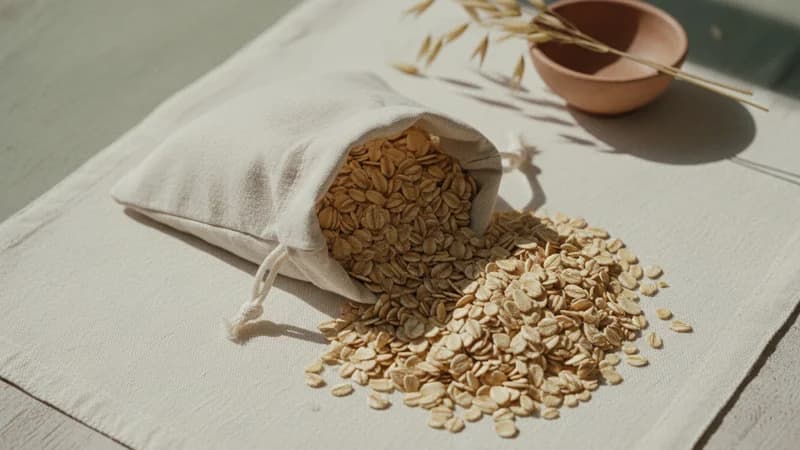
Oats is best suited to Vata and Pitta, which it helps pacify. In excess it can raise Kapha. Oats are a sweet, cooling, nourishing grain whose heavy, oily guna makes them genuinely satisfying, traditionally used to build strength and steadiness over cold, dry winter mornings.. Best enjoyed during winter.
Ayurvedic Profile
Oats, while not a classical Ayurvedic grain, can be understood in relation to Yava (barley), its cereal grain cousin. Modern Ayurvedic practitioners analyse oats through the Dravyaguna lens and find them possessing Madhura (sweet) rasa, Sheeta (cold) virya, and Madhura (sweet) vipaka. Their gunas are Guru (heavy) and Snigdha (oily), particularly when cooked into porridge, which gives them a distinctly Vata-pacifying and tissue-nourishing quality.
The heavy and unctuous nature of cooked oats makes them an excellent Brinhana (nourishing) food for Vata-dominant constitutions and underweight individuals. Like the classical Peya (gruel) preparations described in the Charaka Samhita's Yajjapurushiya chapter, oat porridge provides easily accessible nutrition that soothes the nervous system and builds Rasa and Mamsa Dhatus (plasma and muscle tissues). However, these same qualities mean that Kapha types should consume oats more judiciously.
Oats' soluble fibre, beta-glucan, aligns with the Ayurvedic concept of Mriduvirechana (gentle laxative action), supporting healthy bowel movements without irritation. This gentle, bulk-forming quality also helps manage cholesterol levels, which from an Ayurvedic perspective relates to healthy Meda Dhatu Agni (the metabolic fire governing fat tissue). The Charaka Samhita's approach to Meda Roga (fat tissue disorders) emphasises foods that are both nourishing and supportive of proper tissue metabolism, a description that fits oats well.
Preparation method significantly affects oats' Ayurvedic properties. Cooked oatmeal with warm milk, ghee, cinnamon, and cardamom becomes a profoundly Sattvic breakfast that calms the mind and nourishes deeply. In contrast, raw overnight oats prepared cold are heavier, damper, and more Kapha-provoking. The Ayurvedic principle of Agni-friendly preparation consistently favours warm, cooked food over cold, raw preparations.
For those concerned about gluten sensitivity, certified gluten-free oats are available and remove this concern. Oats themselves do not contain classical gluten proteins (gliadin and glutenin) but are often contaminated during processing. From an Ayurvedic standpoint, the purity of the food (Shuddhi) is always a primary consideration.
Ayurvedic Properties
Rasa (Taste)
sweet
Virya (Potency)
cold
Vipaka (Post-digestive)
sweet
Guna (Qualities)
heavy, oily
How Oats Affects Vata, Pitta & Kapha
Ayurveda reads every food through the three doshas. Here is how oats’s qualities interact with each: Not sure which is yours? Take the free dosha quiz — about 4 minutes.
Oats helps pacify Vata. Its cold virya (potency) and heavy and oily qualities, with its sweet rasa (taste), counterbalance Vata's tendencies — which is why it traditionally suits Vata dosha in regular use. Vata meal plan
Oats helps pacify Pitta. Its cold virya (potency) and heavy and oily qualities, with its sweet rasa (taste), counterbalance Pitta's tendencies — which is why it traditionally suits Pitta dosha in regular use. Pitta meal plan
Oats is well tolerated by those with Kapha dosha in normal amounts, but its cold virya and heavy and oily qualities may aggravate Kapha in excess — so people with Kapha as their leading dosha are best keeping to measured portions. Kapha meal plan
Nutrition Facts (per 100g)
389kcal
Calories
16.9g
Protein
66.3g
Carbs
6.9g
Fat
10.6g
Fibre
Ayurvedic Benefits
- Oats are a sweet, cooling, nourishing grain whose heavy, oily guna makes them genuinely satisfying, traditionally used to build strength and steadiness over cold, dry winter mornings.
- Their soluble beta-glucan fibre forms a soft gel as it cooks, supporting comfortable, regular bowel movement and a slow, even release of energy that helps you feel full for longer.
- Beta-glucan is well studied for supporting healthy cholesterol levels already within the normal range, which is part of why a warm bowl of oats is regarded as a heart-friendly everyday breakfast.
- The sweet vipaka and unctuous quality are grounding for Vata, offering warmth and stability when the weather is cold, rough and windy and the body craves substance.
- Manganese and phosphorus in oats support bone strength and energy metabolism, complementing their classical role as a building, Ojas-friendly grain.
How to Use
- As oats is cooling (shita virya), favour it in warmer weather and pair it with warming spices like ginger or black pepper when the seasons turn cold.
- Oats is at its best during winter — eating it in season keeps its Prana (vital energy) and benefit at their peak.
- Cook oats warm as porridge rather than eating them cold or raw; heat and moisture offset their heavy quality and make them far kinder to Agni.
- Simmer in water or warm milk with a pinch of cinnamon, ginger or cardamom, which counters the cold virya and helps stop the heavy grain from increasing Kapha.
- Favour oats in autumn and winter mornings when their grounding, building nature best matches the season and a Vata-aggravating climate.
- Add a little ghee or a few soaked, chopped almonds for extra nourishment and to make the meal more digestible and satisfying for a dry Vata constitution.
- Choose rolled or steel-cut oats and cook them until soft; the longer, softer cooking reduces heaviness compared with quick, barely-cooked instant oats.
Contraindications
- Because of their heavy, oily guna and Kapha-increasing tendency, those with sluggish digestion, congestion, a strong Kapha nature, or anyone watching their weight are best keeping portions modest and always eating them warm and well spiced.
- Their cooling virya makes cold, uncooked overnight oats poorly suited to weak or slow Agni; if digestion is delicate, cook them hot and add warming spices instead.
- Those with coeliac disease or gluten sensitivity should choose certified gluten-free oats, as standard oats are frequently cross-contaminated with gluten during processing.
“Ayurveda classifies Oats by its sweet rasa (taste), cold virya (thermal potency), and sweet vipaka (post-digestive effect). InnerVeda reads these three lenses together to map Oats to your dosha and season.”
Frequently Asked Questions
Not for most people. Oats already carry a cold virya and heavy guna, and eating them cold and uncooked compounds both, which can dull Agni and increase Kapha. A warm, spiced porridge is far easier to digest; if you love overnight oats, at least add ginger or cinnamon and let them come to room temperature.
Yes, their sweet, heavy, oily nature does tend to increase Kapha. You can still enjoy them by cooking them hot, keeping the portion modest, using water rather than heavy milk, and adding warming spices such as ginger, cinnamon or cardamom to balance the heaviness.
Beta-glucan is the soluble fibre that gives cooked oats their soft, gel-like texture. It supports comfortable digestion, a steady release of energy, and healthy cholesterol levels already within the normal range, which is a large part of why oats are considered a heart-friendly grain.
Your dosha is the balance of Vata, Pitta and Kapha you were born with. Take the dosha quiz — free, about 4 minutes.
Three questions towards your dosha
These are the first three questions of the full dosha quiz. Answer them here and carry on where you left off.
Prefer to start from the beginning? Take the full dosha quiz.
Dietary information provided is for educational purposes only and is rooted in Ayurvedic tradition. It is not a substitute for professional nutritional or medical advice. Consult a qualified healthcare provider before making significant changes to your diet, especially if you have food allergies, intolerances, or a medical condition.
Want a meal plan matched to your dosha?
Take the free dosha assessment (about 4 minutes) and get a personalised nutrition plan with nearly 300 foods in the app, rated for your body.
Find Your Dosha: FreeAbout 4 minutes