Passion Fruit: Benefits & Dosha Effects
Sanskrit: Krishna Phala (कृष्ण फल)
Passion Fruit is especially balancing for Pitta and Kapha. With sour, sweet and astringent rasa (taste), cold virya (potency) and sweet vipaka, it is light and oily in quality and a source of vitamin c.

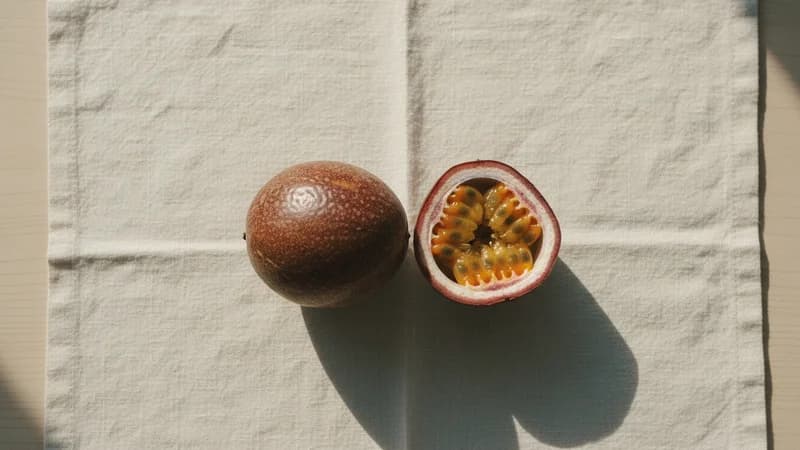
Passion Fruit is best suited to Pitta and Kapha, which it helps pacify. The passion fruit's pronounced sour-sweet-astringent rasa paired with a cooling virya makes it a refreshing summer fruit that helps settle Pitta and lighten Kapha (V= P↓ K↓), a welcome quality in the season's heat.. Best enjoyed during summer.
Ayurvedic Profile
Passion Fruit (Krishna Phala (कृष्ण फल)) is a rejuvenating fruits treasured in Ayurvedic nutrition. Referenced in Sushruta Samhita, it is characterised by sour and sweet and astringent rasa (taste), cooling virya (potency), and sweet vipaka (post-digestive effect). Passion fruit combines three rasas in a single fruit, offering comprehensive taste satisfaction aligned with Ayurvedic Shadrasa principles. Its exceptional fibre content supports Purishavaha srotas (colon channels), while its cooling virya makes it suitable for Pitta constitutions. Its light and oily gunas make it particularly suited for specific constitutional types. It has a neutral effect on Vata, pacifies Pitta, and pacifies Kapha. From a nutritional standpoint, passion fruit provides approximately 97 calories per 100g, with 2.2g protein, 23.4g carbohydrates, and is a valuable source of Vitamin C, Vitamin A, Iron. Best enjoyed during summer, passion fruit supports healthy Agni (digestive fire) when prepared according to Ayurvedic principles, helping prevent Ama (toxin) accumulation and nourish the dhatus (body tissues).
Ayurvedic Properties
Rasa (Taste)
sour, sweet, astringent
Virya (Potency)
cold
Vipaka (Post-digestive)
sweet
Guna (Qualities)
light, oily
How Passion Fruit Affects Vata, Pitta & Kapha
Ayurveda reads every food through the three doshas. Here is how passion fruit’s qualities interact with each: Not sure which is yours? Take the free dosha quiz — about 4 minutes.
Passion Fruit has a broadly neutral effect on Vata. Its sour, sweet and astringent rasa and light and oily qualities neither strongly aggravate nor pacify Vata, so those with Vata dosha can enjoy it in moderation within a varied diet. Vata meal plan
Passion Fruit helps pacify Pitta. Its cold virya (potency) and light and oily qualities, with its sour, sweet and astringent rasa (taste), counterbalance Pitta's tendencies — which is why it traditionally suits Pitta dosha in regular use. Pitta meal plan
Passion Fruit helps pacify Kapha. Its cold virya (potency) and light and oily qualities, with its sour, sweet and astringent rasa (taste), counterbalance Kapha's tendencies — which is why it traditionally suits Kapha dosha in regular use. Kapha meal plan
Nutrition Facts (per 100g)
97kcal
Calories
2.2g
Protein
23.4g
Carbs
0.7g
Fat
10.4g
Fibre
Ayurvedic Benefits
- The passion fruit's pronounced sour-sweet-astringent rasa paired with a cooling virya makes it a refreshing summer fruit that helps settle Pitta and lighten Kapha (V= P↓ K↓), a welcome quality in the season's heat.
- Because its vipaka is sweet, the fruit ultimately nourishes rather than depletes, so its bracing sourness on the tongue gives way to a settling, tissue-supporting after-effect once digested.
- The seedy pulp is notably high in fibre, which supports regular elimination and a healthy gut, complementing the light guna that keeps this small, aromatic fruit easy to enjoy despite its richer 97 kcal per 100 g.
- Rich in vitamin C and in vitamin A from its carotenoids, passion fruit supports everyday immune function and healthy skin and vision, sitting comfortably with the Ayurvedic view of a fresh fruit that helps nurture Ojas.
- Its useful plant iron makes passion fruit a thoughtful addition for those looking to support healthy blood and vitality, best paired with its own vitamin C, which aids the absorption of plant iron.
How to Use
- As passion fruit is cooling (shita virya), favour it in warmer weather and pair it with warming spices like ginger or black pepper when the seasons turn cold.
- Passion Fruit is at its best during summer — eating it in season keeps its Prana (vital energy) and benefit at their peak.
- Scoop the fresh pulp and crunchy seeds straight from the halved shell with a spoon as a cooling summer treat, ideally mid-morning when Agni is strongest; the seeds are edible and carry most of the fibre.
- Stir the pulp through cool (but not ice-cold) coconut water or a light summer cooler to temper Pitta on a hot afternoon.
- Strain the pulp into a smooth juice and sweeten lightly with a little jaggery or maple if the fruit is very tart, which softens the sourness for sensitive stomachs.
- Spoon it over a bowl of plain, cooled sago or a light chia pudding for a Pitta-pacifying dessert, keeping the dish free of heavy cream so it stays easy to digest.
- Drizzle the pulp over cut sweet summer fruits such as ripe mango or melon, letting its aromatic sourness lift a fresh fruit bowl without adding milk or dairy to the mix.
Contraindications
- Its strong sour note means passion fruit is best limited by those with a marked Pitta excess showing as heartburn or acidity, and by anyone with a sensitive stomach or reflux, who are better favouring riper, sweeter fruit in small amounts.
- People with a fragile or Vata-prone digestion should take it sparingly and well-ripened, as the raw, tart pulp can feel sharp on a variable Agni; a lightly sweetened juice is gentler.
- Passion fruit is a recognised allergen for some, and its seeds add roughage that can irritate an inflamed or diverticular gut; those with a known latex-fruit sensitivity or bowel flare-ups should avoid it and consult a qualified practitioner.
“Ayurveda classifies Passion Fruit by its sour, sweet, astringent rasa (taste), cold virya (thermal potency), and sweet vipaka (post-digestive effect). InnerVeda reads these three lenses together to map Passion Fruit to your dosha and season.”
Frequently Asked Questions
On the tongue passion fruit is distinctly sour, but its overall virya is cooling and its vipaka is sweet, so a ripe fruit in moderation actually helps pacify Pitta (P↓) rather than inflame it. The caveat is quantity and ripeness: large amounts of very tart, underripe fruit can aggravate an already hot, acidic Pitta, so choose ripe fruit and keep portions modest.
The seeds are edible and hold most of the fruit's fibre, so eating them supports healthy elimination and suits a Kapha-lightening intention. If you have a sensitive, inflamed or diverticular gut, straining them into a smooth juice is gentler while keeping the cooling, vitamin-C-rich pulp.
Summer is the season when Pitta naturally rises with the heat, and a cooling, hydrating, light fruit helps counter that. Passion fruit is at its aromatic ripe best in summer, so eating it in season lets its cooling virya and Pitta-settling quality meet the body's seasonal need, best enjoyed at cool room temperature rather than ice-cold.
Your dosha is the balance of Vata, Pitta and Kapha you were born with. Take the dosha quiz — free, about 4 minutes.
Three questions towards your dosha
These are the first three questions of the full dosha quiz. Answer them here and carry on where you left off.
Prefer to start from the beginning? Take the full dosha quiz.
Dietary information provided is for educational purposes only and is rooted in Ayurvedic tradition. It is not a substitute for professional nutritional or medical advice. Consult a qualified healthcare provider before making significant changes to your diet, especially if you have food allergies, intolerances, or a medical condition.
Want a meal plan matched to your dosha?
Take the free dosha assessment (about 4 minutes) and get a personalised nutrition plan with nearly 300 foods in the app, rated for your body.
Find Your Dosha: FreeAbout 4 minutes