Pineapple: Benefits & Dosha Effects
Sanskrit: Anannasa (अनन्नास)
Pineapple is especially balancing for Vata and Kapha but can raise Pitta when eaten in excess. With sour and sweet rasa (taste), hot virya (potency) and sour vipaka, it is light, oily and sharp in quality and a source of vitamin c.

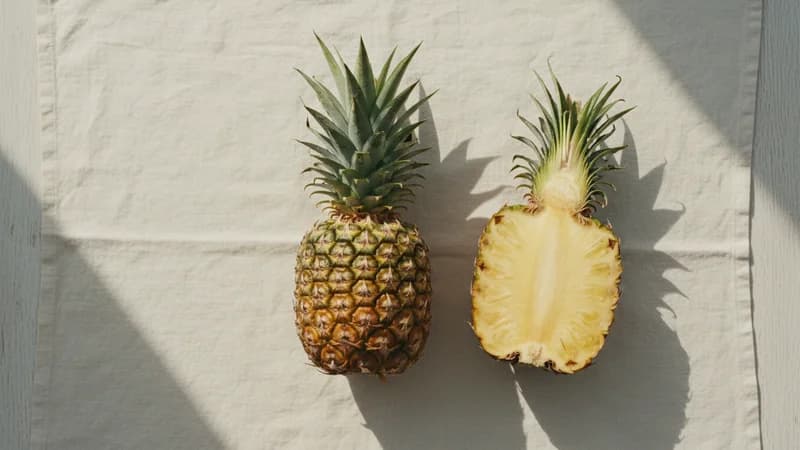
Pineapple is best suited to Vata and Kapha, which it helps pacify. In excess it can raise Pitta. Its sweet-sour rasa with light, oily and notably sharp (Tikshna) guna gives pineapple a penetrating quality that traditionally helps cut through Kapha stickiness and stimulate a sluggish appetite. Best enjoyed during summer.
Ayurvedic Profile
Pineapple (Anannasa (अनन्नास)) is a rejuvenating fruits treasured in Ayurvedic nutrition. Referenced in Raja Nighantu, it is characterised by sour and sweet rasa (taste), heating virya (potency), and sour vipaka (post-digestive effect). Pineapple contains the enzyme bromelain which aligns with Ayurvedic principles of Pachana (digestion of Ama); its Tikshna quality penetrates channels and clears mucus, though excess consumption can aggravate Pitta. Its light and oily and sharp gunas make it particularly suited for specific constitutional types. It pacifies Vata, can aggravate Pitta when consumed in excess, and pacifies Kapha. From a nutritional standpoint, pineapple provides approximately 50 calories per 100g, with 0.5g protein, 13.1g carbohydrates, and is a valuable source of Vitamin C, Manganese, Bromelain. Best enjoyed during summer, pineapple supports healthy Agni (digestive fire) when prepared according to Ayurvedic principles, helping prevent Ama (toxin) accumulation and nourish the dhatus (body tissues).
Ayurvedic Properties
Rasa (Taste)
sour, sweet
Virya (Potency)
hot
Vipaka (Post-digestive)
sour
Guna (Qualities)
light, oily, sharp
How Pineapple Affects Vata, Pitta & Kapha
Ayurveda reads every food through the three doshas. Here is how pineapple’s qualities interact with each: Not sure which is yours? Take the free dosha quiz — about 4 minutes.
Pineapple helps pacify Vata. Its hot virya (potency) and light, oily and sharp qualities, with its sour and sweet rasa (taste), counterbalance Vata's tendencies — which is why it traditionally suits Vata dosha in regular use. Vata meal plan
Pineapple is well tolerated by those with Pitta dosha in normal amounts, but its hot virya and light, oily and sharp qualities may aggravate Pitta in excess — so people with Pitta as their leading dosha are best keeping to measured portions. Pitta meal plan
Pineapple helps pacify Kapha. Its hot virya (potency) and light, oily and sharp qualities, with its sour and sweet rasa (taste), counterbalance Kapha's tendencies — which is why it traditionally suits Kapha dosha in regular use. Kapha meal plan
Nutrition Facts (per 100g)
50kcal
Calories
0.5g
Protein
13.1g
Carbs
0.1g
Fat
1.4g
Fibre
Ayurvedic Benefits
- Its sweet-sour rasa with light, oily and notably sharp (Tikshna) guna gives pineapple a penetrating quality that traditionally helps cut through Kapha stickiness and stimulate a sluggish appetite
- Bromelain, the natural protein-digesting enzyme found in fresh pineapple, is valued for supporting the breakdown of protein-rich meals, echoing the fruit's Agni-kindling, Ama-clearing reputation
- Rich in manganese, a mineral that supports bone, connective-tissue and everyday energy metabolism, aligning with the fruit's dhatu-nourishing role in moderation
- Generous in Vitamin C, traditionally associated with healthy skin, gums and the body's seasonal resilience during hot weather
- The hot virya and sharp quality kindle Agni and, taken in small amounts before eating, may help lift the heavy, water-logged feeling that Kapha types know well
How to Use
- As pineapple is heating (ushna virya), balance it with cooling accompaniments such as coriander, fennel or a little ghee — especially through the warmer months.
- Pineapple is at its best during summer — eating it in season keeps its Prana (vital energy) and benefit at their peak.
- Eat a few small pieces of ripe, fresh fruit before a heavier or protein-rich meal, so its bromelain and sharp quality can prime digestion
- Cut away the fibrous core and eat only the softer flesh, which is gentler on the mouth and stomach than the tough centre
- Sprinkle roasted cumin, a little rock salt and black pepper over the pieces to temper the sourness and make it more Agni-friendly, as is done in Indian fruit chaat
- Choose fully ripened golden fruit over sharp, green pineapple; the unripe fruit is far more sour and irritating to Pitta
- Enjoy it as a summer fruit in modest portions, ideally fresh rather than tinned in syrup, which loses the enzyme and adds heaviness
Contraindications
- Pitta types and anyone with acidity, gastritis, mouth ulcers or a sore, sensitive tongue should limit pineapple; its sour rasa, hot virya and sharp guna can strongly aggravate Pitta and irritate delicate tissue
- Traditionally avoided in pregnancy in many Indian households, and best kept to small amounts if you are pregnant, take blood-thinning medication, or are approaching surgery, given bromelain's activity; check with your doctor if any of these apply
- Very sour, unripe fruit and large portions can leave the mouth and lips tingling or raw and unsettle a delicate stomach, so favour ripe fruit in small servings
“Ayurveda classifies Pineapple by its sour, sweet rasa (taste), hot virya (thermal potency), and sour vipaka (post-digestive effect). InnerVeda reads these three lenses together to map Pineapple to your dosha and season.”
Frequently Asked Questions
In Ayurvedic terms, pineapple has a hot virya and a sharp (Tikshna) quality that kindle Agni, which is why a small amount before a meal is used to wake up a sluggish appetite. Fresh fruit also contains bromelain, a natural enzyme that supports the breakdown of protein-rich food. Tinned pineapple is heated and loses this enzyme, so choose fresh fruit for this purpose.
That tingle comes from the fruit's sharp, penetrating quality together with its enzyme content acting on the soft tissue of the mouth, and it is more pronounced with unripe, very sour fruit. Choosing fully ripe pineapple, removing the fibrous core, and eating modest portions all reduce it. A sprinkle of rock salt over the pieces also helps take the edge off.
Not especially. Pineapple's sweet-sour rasa, hot virya and sharp guna make it a Pitta-aggravating fruit when eaten in excess, so those who run hot or are prone to acidity are asked to keep to a small portion. It is far better suited to Kapha types, who benefit from its light, sharp, Agni-kindling nature during the summer season.
Your dosha is the balance of Vata, Pitta and Kapha you were born with. Take the dosha quiz — free, about 4 minutes.
Three questions towards your dosha
These are the first three questions of the full dosha quiz. Answer them here and carry on where you left off.
Prefer to start from the beginning? Take the full dosha quiz.
Dietary information provided is for educational purposes only and is rooted in Ayurvedic tradition. It is not a substitute for professional nutritional or medical advice. Consult a qualified healthcare provider before making significant changes to your diet, especially if you have food allergies, intolerances, or a medical condition.
Want a meal plan matched to your dosha?
Take the free dosha assessment (about 4 minutes) and get a personalised nutrition plan with nearly 300 foods in the app, rated for your body.
Find Your Dosha: FreeAbout 4 minutes