Papaya: Benefits & Dosha Effects
Sanskrit: Erandakarkati (एरण्डकर्कटी)
Papaya is especially balancing for Vata and Kapha but can raise Pitta when eaten in excess. With sweet and bitter rasa (taste), hot virya (potency) and sweet vipaka, it is light and oily in quality and a source of vitamin c.

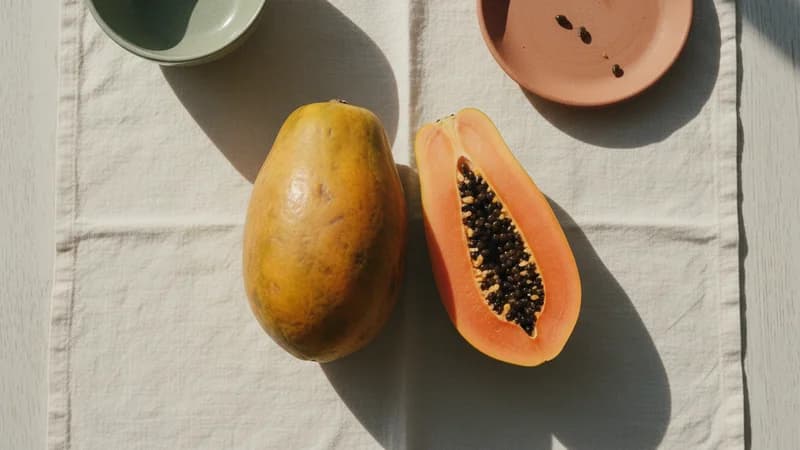
Papaya is best suited to Vata and Kapha, which it helps pacify. In excess it can raise Pitta. Rich in papain enzyme, a natural Pachana (digestive) agent that breaks down Ama. Best enjoyed during summer.
Ayurvedic Profile
Papaya, referred to in some Ayurvedic traditions as Erandakarkati, is a tropical fruit valued for its exceptional digestive enzyme content and its capacity to support Agni. While not extensively described in the most ancient texts due to its New World origins, modern Ayurvedic practitioners have analysed papaya through classical Dravyaguna methods. It exhibits Madhura-Tikta (sweet-bitter) rasa, Ushna (hot) virya, and Madhura (sweet) vipaka, with Laghu (light) and Snigdha (slightly oily) gunas.
The most therapeutically significant property of papaya is its natural papain content, a proteolytic enzyme that directly supports Pachaka Pitta (the digestive fire component governing protein digestion). In Ayurvedic terms, papaya acts as a potent Pachana (digestive) agent that helps break down Ama (undigested food residue) and supports the transformation of food into nourishing Rasa Dhatu. This enzymatic action is most concentrated in raw and semi-ripe papaya.
Papaya's Ushna (hot) virya combined with Laghu (light) guna creates a uniquely effective combination for kindling Agni without causing heaviness. The Ayurvedic approach to digestive disorders often begins with Deepana (appetite stimulation) and Pachana (digestion of Ama), and papaya accomplishes both. For individuals with Mandagni (sluggish digestion) and Ama accumulation, regular papaya consumption can help restart proper digestive function.
The fruit's notable Vitamin A and C content supports Bhrajaka Pitta (skin-governing Pitta) and Twak (skin tissue) health. Traditional remedies use papaya both internally and externally for skin conditions, reflecting its dual-action therapeutic profile. The Ayurvedic observation that foods benefiting the skin often have both Pitta-managing and Ama-reducing properties is well exemplified by papaya.
Ripe papaya is milder than unripe and is the preferred form for general dietary use. Unripe (green) papaya has stronger enzymatic activity and is more heating, making it therapeutically powerful but also more likely to aggravate Pitta. The distinction between ripe and unripe forms follows the classical Ayurvedic principle that a food's therapeutic action changes with its stage of maturity.
Ayurvedic Properties
Rasa (Taste)
sweet, bitter
Virya (Potency)
hot
Vipaka (Post-digestive)
sweet
Guna (Qualities)
light, oily
How Papaya Affects Vata, Pitta & Kapha
Ayurveda reads every food through the three doshas. Here is how papaya’s qualities interact with each: Not sure which is yours? Take the free dosha quiz — about 4 minutes.
Papaya helps pacify Vata. Its hot virya (potency) and light and oily qualities, with its sweet and bitter rasa (taste), counterbalance Vata's tendencies — which is why it traditionally suits Vata dosha in regular use. Vata meal plan
Papaya is well tolerated by those with Pitta dosha in normal amounts, but its hot virya and light and oily qualities may aggravate Pitta in excess — so people with Pitta as their leading dosha are best keeping to measured portions. Pitta meal plan
Papaya helps pacify Kapha. Its hot virya (potency) and light and oily qualities, with its sweet and bitter rasa (taste), counterbalance Kapha's tendencies — which is why it traditionally suits Kapha dosha in regular use. Kapha meal plan
Nutrition Facts (per 100g)
43kcal
Calories
0.5g
Protein
10.8g
Carbs
0.3g
Fat
1.7g
Fibre
Ayurvedic Benefits
- Rich in papain enzyme, a natural Pachana (digestive) agent that breaks down Ama
- Kindles Agni while remaining light, ideal for Mandagni (sluggish digestion)
- Supports Bhrajaka Pitta and skin health through Vitamins A and C
- Kapha-reducing properties help manage excess mucus and sluggishness
- Light and nourishing, providing gentle nutrition without burdening digestion
How to Use
- As papaya is heating (ushna virya), balance it with cooling accompaniments such as coriander, fennel or a little ghee — especially through the warmer months.
- Papaya is at its best during summer — eating it in season keeps its Prana (vital energy) and benefit at their peak.
- Eat a bowl of ripe papaya mid-morning as a natural digestive tonic
- Squeeze lime juice and sprinkle black salt on papaya for enhanced digestive action
- Use green papaya in cooked preparations like curries and salads for stronger enzymatic benefit
- Blend into smoothies with ginger for a morning Agni-kindling drink
- Eat between meals rather than after heavy food for maximum digestive enzyme benefit
Contraindications
- Ushna virya may aggravate Pitta in excess; Pitta types should consume moderately
- Traditional wisdom strongly advises against papaya consumption during pregnancy, especially unripe
- Excessive consumption may cause loose stools due to its strong Pachana action
“Ayurveda classifies Papaya by its sweet, bitter rasa (taste), hot virya (thermal potency), and sweet vipaka (post-digestive effect). InnerVeda reads these three lenses together to map Papaya to your dosha and season.”
Frequently Asked Questions
Traditional Ayurvedic wisdom advises caution with papaya during pregnancy, especially unripe papaya which contains concentrated papain and latex. Many practitioners recommend avoiding it entirely during pregnancy. Always consult your healthcare provider for personalised guidance.
Mid-morning on a relatively empty stomach maximises its digestive enzyme benefit. The papain works most effectively when there is food to digest but not an overwhelming amount. Avoid eating papaya late at night due to its heating virya and enzymatic activity.
Ripe papaya is milder, sweeter, and safer for regular dietary consumption. Unripe (green) papaya is more therapeutically potent with higher papain content but also more heating and potentially Pitta-aggravating. Use ripe for daily eating and green for therapeutic cooking.
Your dosha is the balance of Vata, Pitta and Kapha you were born with. Take the dosha quiz — free, about 4 minutes.
Three questions towards your dosha
These are the first three questions of the full dosha quiz. Answer them here and carry on where you left off.
Prefer to start from the beginning? Take the full dosha quiz.
Dietary information provided is for educational purposes only and is rooted in Ayurvedic tradition. It is not a substitute for professional nutritional or medical advice. Consult a qualified healthcare provider before making significant changes to your diet, especially if you have food allergies, intolerances, or a medical condition.
Want a meal plan matched to your dosha?
Take the free dosha assessment (about 4 minutes) and get a personalised nutrition plan with nearly 300 foods in the app, rated for your body.
Find Your Dosha: FreeAbout 4 minutes