Black Beans: Benefits & Dosha Effects
Sanskrit: Krishna Rajmasha
Black Beans is especially balancing for Kapha and tends to aggravate Vata. With sweet and astringent rasa (taste), cold virya (potency) and pungent vipaka, it is heavy, dry and rough in quality and a source of protein.

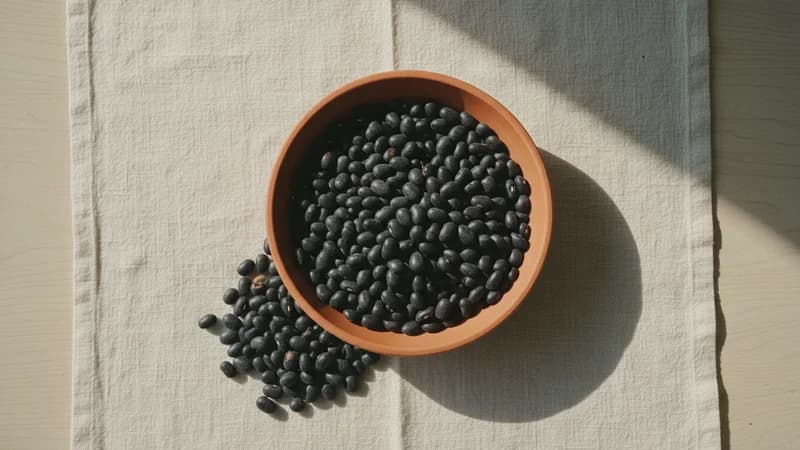
Black Beans is best suited to Kapha, which it helps pacify. It can aggravate Vata, so people with Vata as their leading dosha should use it sparingly. Anthocyanin-rich dark pigmentation supports cardiovascular and cellular health. Best enjoyed during winter.
Ayurvedic Profile
Black beans, analysed through the Ayurvedic Dravyaguna framework, exhibit the characteristic properties common to the larger legume family while carrying unique attributes from their dark pigmentation. They possess Madhura-Kashaya (sweet-astringent) rasa, Sheeta (cold) virya, and Katu (pungent) vipaka with Guru (heavy), Ruksha (dry), and Khara (rough) gunas. The pungent vipaka distinguishes them from moong and most lentils, giving them a stronger metabolic stimulating effect.
The dark black colour of these beans is significant from an Ayurvedic perspective. The Charaka Samhita's principle of colour-tissue correspondence suggests that dark-coloured foods have particular affinity for Rakta Dhatu (blood tissue) and Asthi Dhatu (bone tissue). Modern science validates this through the identification of anthocyanins, the powerful antioxidant pigments responsible for the black colour, which demonstrate significant cardiovascular and cellular protective properties.
Black beans share the common legume characteristic of being Vistambhi (potentially constipating) and Vatala (Vata-provoking) when not prepared with proper Samskara (processing). Their heavy, dry, and rough gunas make them the most Vata-challenging of the legumes discussed here. However, these same qualities make them excellent Kapha reducers, providing satisfying protein-rich meals that do not accumulate as excess tissue.
The Ayurvedic approach to black bean preparation emphasises extended soaking (ideally 8-12 hours), thorough cooking until very soft, and generous use of Vata-pacifying spices and fats. The Mexican tradition of cooking black beans with epazote, cumin, and lard, while culturally distant from Indian cuisine, intuitively follows the same Ayurvedic principles of counterbalancing heaviness and dryness with appropriate spices and fats.
For Kapha-dominant individuals with strong Agni seeking substantial plant protein, black beans offer excellent nutritional value. Their combination of protein, fibre, iron, and anthocyanins creates a nutrient-dense food that supports healthy weight management while providing lasting satiety. The key is respecting their inherent heaviness through proper preparation and consuming them primarily at midday.
Ayurvedic Properties
Rasa (Taste)
sweet, astringent
Virya (Potency)
cold
Vipaka (Post-digestive)
pungent
Guna (Qualities)
heavy, dry, rough
How Black Beans Affects Vata, Pitta & Kapha
Ayurveda reads every food through the three doshas. Here is how black beans’s qualities interact with each: Not sure which is yours? Take the free dosha quiz — about 4 minutes.
Black Beans tends to increase Vata. Its cold virya and heavy, dry and rough qualities, with its sweet and astringent rasa, align with Vata's own nature, so those with Vata dosha are best using it sparingly and pairing it with Vata-pacifying foods. Vata meal plan
Black Beans has a broadly neutral effect on Pitta. Its sweet and astringent rasa and heavy, dry and rough qualities neither strongly aggravate nor pacify Pitta, so those with Pitta dosha can enjoy it in moderation within a varied diet. Pitta meal plan
Black Beans helps pacify Kapha. Its cold virya (potency) and heavy, dry and rough qualities, with its sweet and astringent rasa (taste), counterbalance Kapha's tendencies — which is why it traditionally suits Kapha dosha in regular use. Kapha meal plan
Nutrition Facts (per 100g)
341kcal
Calories
21.6g
Protein
62.4g
Carbs
1.4g
Fat
15.5g
Fibre
Ayurvedic Benefits
- Anthocyanin-rich dark pigmentation supports cardiovascular and cellular health
- Substantial plant protein with high fibre for lasting satiety and Kapha reduction
- Lekhana-like quality helps reduce excess Meda Dhatu (fat tissue) when prepared properly
- Rich in iron and folate for Rakta Dhatu (blood tissue) nourishment
- Excellent option for Kapha-dominant individuals with strong digestion
How to Use
- As black beans is cooling (shita virya), favour it in warmer weather and pair it with warming spices like ginger or black pepper when the seasons turn cold.
- Black Beans is at its best during winter — eating it in season keeps its Prana (vital energy) and benefit at their peak.
- Soak for 8-12 hours and cook until very soft with cumin, hing, and generous ghee
- Prepare as a spiced black bean soup with ginger, cumin, and coriander
- Combine with rice for complementary amino acids and a more balanced meal
- Cook in a slow cooker with warming spices for maximum tenderness and digestibility
- Mash into a spread or dip with lime, cumin, and cilantro for a lighter preparation
Contraindications
- Strongly Vata-provoking; Vata-dominant individuals should eat sparingly and with careful preparation
- Heavy quality requires strong Agni for proper digestion; avoid if Agni is weak
- May cause significant gas and bloating without proper soaking and anti-flatulent spices
“Ayurveda classifies Black Beans by its sweet, astringent rasa (taste), cold virya (thermal potency), and pungent vipaka (post-digestive effect). InnerVeda reads these three lenses together to map Black Beans to your dosha and season.”
Frequently Asked Questions
Soak for at least 8 hours, discard soaking water, cook until very soft, and use anti-flatulent spices: hing (asafoetida), cumin, ginger, and ajwain. Adding a piece of kombu seaweed during cooking also helps break down oligosaccharides. Start with small portions to build digestive tolerance.
While not a classical Ayurvedic food, black beans can be integrated using Dravyaguna principles. They are best for Kapha types with strong Agni. The key is proper Samskara (processing): long soaking, thorough cooking, and preparation with Vata-pacifying spices and fats.
Always at lunch when Agni is strongest. Their heavy quality makes them inappropriate for dinner. Eat in moderate portions with rice and ghee for a balanced meal. Best consumed during autumn and winter when Agni is naturally stronger. Avoid during spring when Kapha is already elevated.
Your dosha is the balance of Vata, Pitta and Kapha you were born with. Take the dosha quiz — free, about 4 minutes.
Three questions towards your dosha
These are the first three questions of the full dosha quiz. Answer them here and carry on where you left off.
Prefer to start from the beginning? Take the full dosha quiz.
Dietary information provided is for educational purposes only and is rooted in Ayurvedic tradition. It is not a substitute for professional nutritional or medical advice. Consult a qualified healthcare provider before making significant changes to your diet, especially if you have food allergies, intolerances, or a medical condition.
Want a meal plan matched to your dosha?
Take the free dosha assessment (about 4 minutes) and get a personalised nutrition plan with nearly 300 foods in the app, rated for your body.
Find Your Dosha: FreeAbout 4 minutes