Caraway Seeds: Benefits & Dosha Effects
Sanskrit: Krishna Jiraka (कृष्ण जीरक)
Caraway Seeds is especially balancing for Vata and Kapha. With pungent and bitter rasa (taste), hot virya (potency) and pungent vipaka, it is light, dry and sharp in quality and a source of iron.

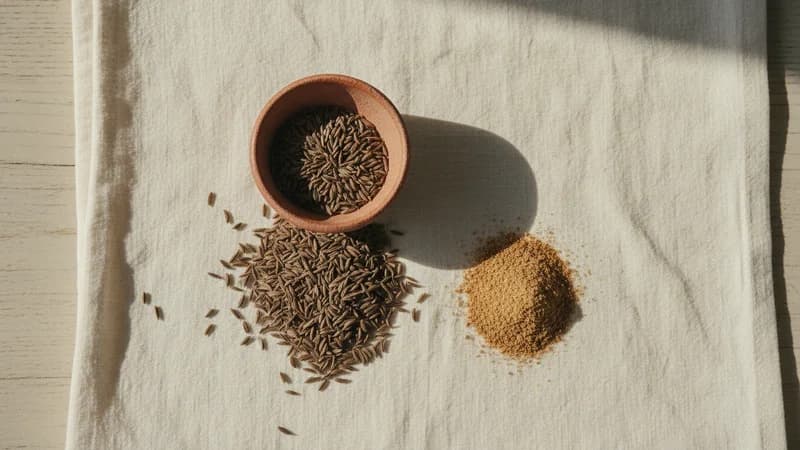
Caraway Seeds is best suited to Vata and Kapha, which it helps pacify. Caraway (Krishna Jiraka) carries the same pungent rasa and hot virya as cumin but with an added sharp (tikshna) quality, so it is traditionally valued as a more penetrating carminative for stubborn gas and post-meal bloating.. Best enjoyed during winter.
Ayurvedic Profile
Caraway Seeds (Krishna Jiraka (कृष्ण जीरक)) is a therapeutic spices treasured in Ayurvedic nutrition. Referenced in Raja Nighantu, it is characterised by pungent and bitter rasa (taste), heating virya (potency), and pungent vipaka (post-digestive effect). Krishna Jiraka is closely related to cumin and is described in Bhavaprakasha Nighantu as a superior carminative. It is particularly valued for its Shula-Prashamana (colic-relieving) properties and its ability to strengthen Agni in Vata and Kapha constitutions without excessively heating Pitta. Its light and dry and sharp gunas make it particularly suited for specific constitutional types. It pacifies Vata, has a neutral effect on Pitta, and pacifies Kapha. From a nutritional standpoint, caraway seeds provides approximately 333 calories per 100g, with 19.8g protein, 49.9g carbohydrates, and is a valuable source of Iron, Calcium, Magnesium. Best enjoyed during winter, caraway seeds supports healthy Agni (digestive fire) when prepared according to Ayurvedic principles, helping prevent Ama (toxin) accumulation and nourish the dhatus (body tissues).
Ayurvedic Properties
Rasa (Taste)
pungent, bitter
Virya (Potency)
hot
Vipaka (Post-digestive)
pungent
Guna (Qualities)
light, dry, sharp
How Caraway Seeds Affects Vata, Pitta & Kapha
Ayurveda reads every food through the three doshas. Here is how caraway seeds’s qualities interact with each: Not sure which is yours? Take the free dosha quiz — about 4 minutes.
Caraway Seeds helps pacify Vata. Its hot virya (potency) and light, dry and sharp qualities, with its pungent and bitter rasa (taste), counterbalance Vata's tendencies — which is why it traditionally suits Vata dosha in regular use. Vata meal plan
Caraway Seeds has a broadly neutral effect on Pitta. Its pungent and bitter rasa and light, dry and sharp qualities neither strongly aggravate nor pacify Pitta, so those with Pitta dosha can enjoy it in moderation within a varied diet. Pitta meal plan
Caraway Seeds helps pacify Kapha. Its hot virya (potency) and light, dry and sharp qualities, with its pungent and bitter rasa (taste), counterbalance Kapha's tendencies — which is why it traditionally suits Kapha dosha in regular use. Kapha meal plan
Nutrition Facts (per 100g)
333kcal
Calories
19.8g
Protein
49.9g
Carbs
14.6g
Fat
38g
Fibre
Ayurvedic Benefits
- Caraway (Krishna Jiraka) carries the same pungent rasa and hot virya as cumin but with an added sharp (tikshna) quality, so it is traditionally valued as a more penetrating carminative for stubborn gas and post-meal bloating.
- Its sharp, light, dry guna makes it especially suited to clearing cold, damp Kapha heaviness (K↓), which is why it is a winter spice, warming a sluggish appetite in the coldest months.
- By reducing Vata (V↓) while cutting through heaviness and dullness, caraway is traditionally used to ease the wind, distension and cramping that follow rich or heavy winter meals.
- Its slender ridged seeds carry a distinctive anise-and-pepper aroma from their aromatic oils, and chewing a few after eating is a traditional way to freshen the breath and support the settling of the stomach.
- Nutritionally caraway supplies iron, calcium and magnesium, minerals that support the body's energy production, bone tissue (asthi dhatu) and the calm, steady function of muscles and nerves.
How to Use
- As caraway seeds is heating (ushna virya), balance it with cooling accompaniments such as coriander, fennel or a little ghee — especially through the warmer months.
- Caraway Seeds is at its best during winter — eating it in season keeps its Prana (vital energy) and benefit at their peak.
- Scatter whole caraway seeds into rye or sourdough bread dough, or over roasting root vegetables like carrots and parsnips, where their warm, faintly aniseed note stands up to hearty winter cooking.
- Add a small pinch to slow-cooked cabbage, sauerkraut or a winter squash braise; caraway is the classic partner to heavy, cold-natured vegetables that can otherwise sit dully in the gut.
- Steep half a teaspoon of lightly crushed seeds in a cup of just-boiled water for five minutes to make a sharp, warming after-dinner tisane for a bloated, over-full stomach.
- Crush the seeds coarsely before use to release their aromatic oils, then fold them into buttery mashed potato, cheese or a lentil stew so the sharpness cuts the richness.
- Chew four or five whole seeds slowly after a heavy meal as a traditional mouth-freshening, gas-easing habit, especially in winter when digestion tends to run heavier.
Contraindications
- Its sharp, hot nature means those with high Pitta or a burning, acidic stomach should use caraway sparingly, as the added tikshna quality makes it more penetrating than ordinary cumin.
- In pregnancy and while breastfeeding, keep to ordinary culinary amounts in food; concentrated caraway preparations, teas taken medicinally or seed oil should only be used on a practitioner's advice.
- Because it is sharp and drying, large medicinal doses can aggravate a very dry, high-Vata gut; use it in food-level amounts and balance with a little fat or warm liquid.
“Ayurveda classifies Caraway Seeds by its pungent, bitter rasa (taste), hot virya (thermal potency), and pungent vipaka (post-digestive effect). InnerVeda reads these three lenses together to map Caraway Seeds to your dosha and season.”
Caraway Seeds by Dosha
See how caraway seeds interacts with each dosha and get personalised guidance.
Frequently Asked Questions
In this classical naming, yes: caraway (Carum carvi) is what Ayurveda often calls Krishna Jiraka, distinct from ordinary jeera. Note it is not the same as kalonji (Nigella sativa), which is also loosely called 'black seed' in English kitchens. Caraway has slender ridged seeds and a warm anise-pepper aroma.
Its pungent, hot and sharp (tikshna) qualities strongly reduce cold, damp Kapha, so it suits the season when appetite runs sluggish and heavy foods sit longer in the gut. Paired with hearty winter dishes like braised cabbage and rye bread, it traditionally helps keep digestion warm and moving.
Both reduce Vata and Kapha and are Pitta-neutral, but caraway carries an extra sharp (tikshna) guna, making it more penetrating and better at cutting cold, heavy Kapha. In the kitchen the two are not interchangeable: cumin gives warm, earthy depth to everyday Indian food, while caraway lends a sharper, aniseed note best suited to winter breads and rich vegetables.
Your dosha is the balance of Vata, Pitta and Kapha you were born with. Take the dosha quiz — free, about 4 minutes.
Three questions towards your dosha
These are the first three questions of the full dosha quiz. Answer them here and carry on where you left off.
Prefer to start from the beginning? Take the full dosha quiz.
Dietary information provided is for educational purposes only and is rooted in Ayurvedic tradition. It is not a substitute for professional nutritional or medical advice. Consult a qualified healthcare provider before making significant changes to your diet, especially if you have food allergies, intolerances, or a medical condition.
Want a meal plan matched to your dosha?
Take the free dosha assessment (about 4 minutes) and get a personalised nutrition plan with nearly 300 foods in the app, rated for your body.
Find Your Dosha: FreeAbout 4 minutes