Urad Dal: Benefits & Dosha Effects
Sanskrit: Masha (माष)
Urad Dal is especially balancing for Vata and tends to aggravate Pitta and Kapha. With sweet rasa (taste), hot virya (potency) and sweet vipaka, it is heavy and oily in quality and a source of iron.

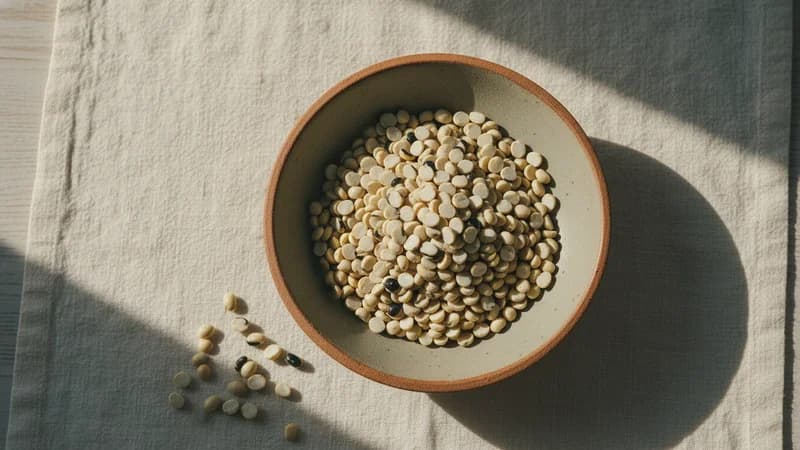
Urad Dal is best suited to Vata, which it helps pacify. It can aggravate Pitta and Kapha, so people with Pitta and Kapha as their leading dosha should use it sparingly. Its sweet rasa and sweet vipaka make urad dal deeply nourishing to the dhatus, and classical texts prize Masha as one of the most building of all pulses, traditionally used to strengthen the body and support healthy muscle tissue.. Best enjoyed during winter.
Ayurvedic Profile
Urad Dal (Masha (माष)) is a protein-rich legumes treasured in Ayurvedic nutrition. Referenced in Ashtanga Hridaya, it is characterised by sweet rasa (taste), heating virya (potency), and sweet vipaka (post-digestive effect). Masha is unique among legumes in Charaka Samhita as the most Brimhana (nourishing) and Vata-shamaka pulse; it is prescribed as Vajikarana (aphrodisiac) for building Shukra dhatu and is the traditional base for Masha Vasti. Its heavy and oily gunas make it particularly suited for specific constitutional types. It pacifies Vata, may increase Pitta, and may increase Kapha. From a nutritional standpoint, urad dal provides approximately 341 calories per 100g, with 25.2g protein, 59.6g carbohydrates, and is a valuable source of Iron, Folate, Magnesium. Best enjoyed during winter, urad dal supports healthy Agni (digestive fire) when prepared according to Ayurvedic principles, helping prevent Ama (toxin) accumulation and nourish the dhatus (body tissues).
Ayurvedic Properties
Rasa (Taste)
sweet
Virya (Potency)
hot
Vipaka (Post-digestive)
sweet
Guna (Qualities)
heavy, oily
How Urad Dal Affects Vata, Pitta & Kapha
Ayurveda reads every food through the three doshas. Here is how urad dal’s qualities interact with each: Not sure which is yours? Take the free dosha quiz — about 4 minutes.
Urad Dal helps pacify Vata. Its hot virya (potency) and heavy and oily qualities, with its sweet rasa (taste), counterbalance Vata's tendencies — which is why it traditionally suits Vata dosha in regular use. Vata meal plan
Urad Dal tends to increase Pitta. Its hot virya and heavy and oily qualities, with its sweet rasa, align with Pitta's own nature, so those with Pitta dosha are best using it sparingly and pairing it with Pitta-pacifying foods. Pitta meal plan
Urad Dal tends to increase Kapha. Its hot virya and heavy and oily qualities, with its sweet rasa, align with Kapha's own nature, so those with Kapha dosha are best using it sparingly and pairing it with Kapha-pacifying foods. Kapha meal plan
Nutrition Facts (per 100g)
341kcal
Calories
25.2g
Protein
59.6g
Carbs
1.6g
Fat
18.3g
Fibre
Ayurvedic Benefits
- Its sweet rasa and sweet vipaka make urad dal deeply nourishing to the dhatus, and classical texts prize Masha as one of the most building of all pulses, traditionally used to strengthen the body and support healthy muscle tissue.
- The hot virya kindles Agni gently while the heavy, oily guna lubricates the channels, so urad dal is traditionally valued for supporting comfortable, regular bowel movement and easing the dryness that troubles Vata.
- As a strongly Vata-pacifying food (V↓), it is warming and grounding in cold weather, traditionally used to steady an anxious, depleted or wind-driven constitution through the winter months.
- Rich in iron and folate, urad dal supports healthy red-blood-cell formation and is a useful way to keep up dietary iron on a plant-based diet.
- Its magnesium content supports normal muscle and nerve function, complementing the classical reputation of Masha as a strengthening, restorative pulse for those who feel run down.
How to Use
- As urad dal is heating (ushna virya), balance it with cooling accompaniments such as coriander, fennel or a little ghee — especially through the warmer months.
- Urad Dal is at its best during winter — eating it in season keeps its Prana (vital energy) and benefit at their peak.
- Soak the whole black gram or split skinned dal for 4-6 hours, then pressure-cook until soft; the skinned white urad makes the silky base of a classic dal makhani when simmered slowly with a little ghee.
- Ferment ground urad with rice to make idli and dosa batter overnight; the fermentation lightens its heaviness and makes it far easier on Agni than the plain boiled dal.
- Add warming digestive spices as you cook, such as ginger, cumin, asafoetida (hing) and black pepper, to offset the heavy, oily quality and keep it from feeling stodgy.
- Finish with a tempering of ghee rather than heavy cream, and pair with warm rice or millet flatbread as a grounding winter main rather than a light summer meal.
- Keep portions modest, roughly a cupped-handful of cooked dal, and eat it earlier in the day when your digestive fire is strongest rather than late at night.
Contraindications
- Best limited by those with strong Pitta or Kapha (P↑ K↑): its hot virya can aggravate heat, acidity or skin flare-ups, while its heavy, oily nature can add to congestion, sluggishness and water retention.
- Those prone to weak digestion, bloating or gout should keep portions small and always cook it well with hing and ginger, as this dense, purine-containing pulse can feel heavy and slow to digest.
- Anyone managing kidney concerns or on a potassium- or protein-restricted diet should seek medical advice before relying on urad dal, as pulses are concentrated in both.
“Ayurveda classifies Urad Dal by its sweet rasa (taste), hot virya (thermal potency), and sweet vipaka (post-digestive effect). InnerVeda reads these three lenses together to map Urad Dal to your dosha and season.”
Frequently Asked Questions
Yes. Urad dal (Sanskrit Masha) is black gram. You will see it three ways: whole black with the skin on (sabut urad, used in dal makhani), split with the black skin (chilka), and split-and-skinned white (dhuli urad, used for idli and dosa batter). All share the same warming, building, Vata-pacifying nature.
Its guna is genuinely heavy and oily and its vipaka is sweet, so it is one of the more building, slow-to-digest pulses. Soaking well, cooking thoroughly, tempering with ghee, ginger, cumin and hing, and fermenting it into idli or dosa all make it noticeably lighter on Agni.
It is best suited to winter. Its hot virya and heavy quality can add to heat and sluggishness in hot weather, so in summer keep portions small, favour the fermented idli or dosa form, and balance it with cooling accompaniments like coriander, mint or a little buttermilk.
Your dosha is the balance of Vata, Pitta and Kapha you were born with. Take the dosha quiz — free, about 4 minutes.
Three questions towards your dosha
These are the first three questions of the full dosha quiz. Answer them here and carry on where you left off.
Prefer to start from the beginning? Take the full dosha quiz.
Dietary information provided is for educational purposes only and is rooted in Ayurvedic tradition. It is not a substitute for professional nutritional or medical advice. Consult a qualified healthcare provider before making significant changes to your diet, especially if you have food allergies, intolerances, or a medical condition.
Want a meal plan matched to your dosha?
Take the free dosha assessment (about 4 minutes) and get a personalised nutrition plan with nearly 300 foods in the app, rated for your body.
Find Your Dosha: FreeAbout 4 minutes